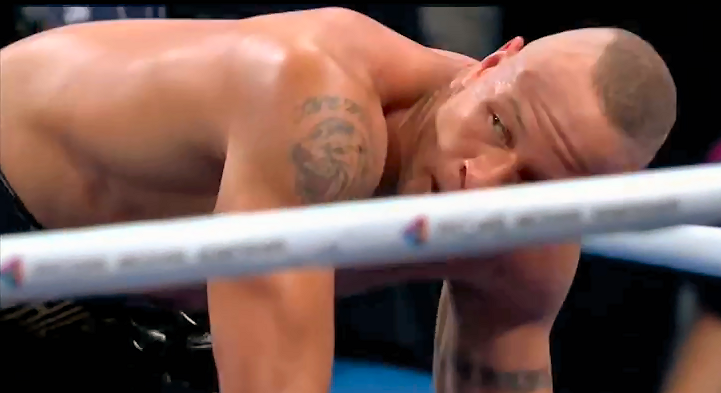
Andre Routis was a very quick and clever boxer, with heart and durability, who during the 1920s fought the best bantamweights and featherweights in the world. Born on July 16, 1900, in Bordeaux, Gironde, France. Routis won the French Amateur Bantamweight title in 1918, before turning professional in 1919.
Starting his career as a bantamweight, Routis was soon facing top class opposition, and would go on to face the very best at both bantamweight and featherweight. Routis would fight top fighters such as, Charles Ledoux, Bugler Harry Lake, Johnny Brown, Kid Francis, Harry Corbett, Jack Kid Berg, Cowboy Eddie Anderson, Tony Canzoneri, Joe Glick, Panama Al Brown, Johnny Cuthbert, Sammy Dorfman, Dick Finnegan, Buster Brown, Al Singer, and Battling Battalino.
Routis was a busy fighter and fought around the world against the best opponents available, and was very popular wherever he fought. In addition to boxing in his native France, he also appeared regularly in rings throughout England and America.
On September 28, 1928, Routis caused a huge upset when he won the NBA and NewYork State World Featherweight title, with a 15-rounds point’s win over Tony Canzonerei, after a thrilling fight. Routis held the title until September 23, 1929, when Battling Battalino out-pointed him over 15 hectic rounds. Battalino would go on to say that he was not crying from happiness after winning the title, he was crying because he had broke both his hands in the 4th round, while boxing Routis.
After losing his world title, Routis had just one more fight. On November 5, 1929, he was out-pointed over 10 rounds by Davey Abad. Routis retired with a final record of 54(12koes)-25-7. Andre Routis would go on to own a bar in France, and upon his 69th birthday, died from a heart attack.
There is nothing that boxing fans love more than a true blue, slam-bang, fists flying, heavyweight brawl. Yes, boxing is the sweet science and some boxing followers still appreciate that side of the sport. But, even those who can appreciate the finer techniques and nuances of the sport, and we seem to be a dying breed, there is still a fascination with boxing at its rawest and most brutal. A fight such as this may be about to break out this Saturday, July 16th, at The Legacy Arena in Birmingham, Alabama, when Deontay Wilder (36-0, 35koes) defends his WBC world heavyweight title against Chris Arreola (36-4-1, 31koes.)
This will be Wilder’s 4th defence of his WBC title since he won it on January 17, 2015, with a point’s win over Bermane Stiverne. Whatever you say about Wilder, he can’t be accused of being inactive. The problem with Wilder has been the standard of his opposition. His rise up to the WBC title was paved with the senseless bodies of no-hopers and a couple of has-beens, and since beating a strangely subdued Stiverne for the title, Wilder’s opposition has hardly improved. Eric Molina, Johann Duhaupass, and Artur Szpilka all entered the ring against Wilder with winning records, but each one was limited, and inexperienced at world level. Wilder was set to defend his title against the number one contender, Alexander Povetkin, and the strong, durable, and experienced Russian is regarded as a genuine test for the champion. Unfortunately, this fight fell through when Povetkin allegedly tested positive for meldonium, something that the Russian now has been cleared of by WADA.
With Povetkin out of the picture, Wilder needed a replacement to defend his title against, and that replacement has turned out to be Chris ’The Nightmare’ Arreola.
At first glance this looks like being a genuinely good fight, pitting two big punchers together for a match, which could go either way. Arreola is one of the division’s higher profile names, due to his colourful personality outside of the ring, and his exciting gung-ho fighting style inside of it. The problem with Arreola is that quite often he has been too colourful for his own good. He has become almost as well known for his love of junk food, as for his efforts inside the ring, and while he always give s 100% during his fights, it has often been a different story when it comes to his training.
Arreola has already challenged for the world title twice in his career. In his first title shot on September 26, 2009, Arreola challenged Vitali Klitschko for the WBC title, and found himself totally out-boxed and out-classed, before being stopped in the 10th round. Arreola’s other world title try came on May 10, 2014, when he faced Bermane Stiverne for the vacant WBC title, and was stopped in the 6th round, after making a good start.
In what is his 3rd attempt to win a World heavyweight title, Arreola is aware that he needs to make it third time lucky, as even in today’s era of multiple championships, there may well be no 4th chance.
Arreola fights just one way, he is a straightforward, come-forward brawler with a solid chin, and a decent punch. The only way he can win is to try and rough up Wilder and land something potent upon Wilder's questionable chin. Wilder has been visibly shaken on the few times that he has been tagged on his jaw, but he has never been caught square enough or often enough by a fighter with Arreola’s strength and power.
This may well be the fight that goes some way to telling us just how durable Wilder really is, if Arreola managed to land one of his heavy swings upon Wilder’s chin.
One of the questions about Arreola is how much he has left at the age of 35 and a number of brutal ring wars behind him? In his three fights since being stopped in 6 rounds by Bermane Stiverne, Arreola has been distinctly unimpressive. He out-pointed Curtis Harper over 8 rounds, was held to a 10 rounds draw by Fred Kassi, and then laboured to a controversial 12-round decision win over Travis Kauffman (Which was then reversed to a no-contest, after Arreola tested positive for marijuana.)
Were Arreola’s less than impressive performances due to a lack of motivation or a sign of age and ring wear?
All the signs are that Arreola is not the same force that he was a couple of years ago.
This is a fight, which is not likely to go many rounds, and will be entertaining while it lasts. Arreola will come to fight as always, and Wilder, with his reach advantage and natural punching power, will look to out-box ’The Nightmare’ early, before dispatching him with one of his bombs before the middle rounds have been reached.
It is ironic that this fight is taking place at The Legacy Arena, as both fighters are seeking to add to their legacies. Wilder is looking to build on his credibility and show that he is on track to a possible showdown with Tyson Fury, who is considered by most to be the ’real’ Heavyweight champion of the world. Arreola on the other hand, is looking to finally fulfill his dream of winning a World heavyweight title, after an exciting up and down career, that has sometimes promised more than it has delivered.
Wilder also has the added pressure of fighting in front of his home Alabama fans, so he will be especially eager to deliver in this fight.
Arreola’s best chance of victory is to jump onto the champion early, and try and get through to that questionable Wilder chin. The problem with this strategy is that it leaves Arreola open to Wilder’s dangerous counter punches.
‘The Nightmare’ is sure to leave it all in the ring again on Saturday night, but the champion Wilder, despite his shortcomings, looks to be just too young, awkward and powerful for the shop-worn Arreola. Look out for a Wilder win within the first 6 rounds. It’s not likely to be pretty, but it will be entertaining.
This Saturday, July 16th, will be the return of Guillermo Rigondeaux (16-0, 10koes) to the ring, defending his WBA world super-bantamweight championship against England’s James ‘Jazza’ Dickens (22-1,), at the Ice Arena in Cardiff, Wales. Rigondeaux is very possibly the best, pound-for-pound, boxer in the world when it comes to pure boxing skill. Yet, he can also claim to be the worst treated boxer in the world as well. For all his ability, indeed because of it, Rigondeaux has become the most avoided boxer in the sport, with other fighters stating that he is too boring, and too unpopular with the fans, to merit fighting.
Since he out-classed Nonito Donaire in April 2013, Guillermo Rigondeaux has been essentially blacklisted. After he beat Donaire, promoter, Bob Arum, turned what should have been a breakthrough victory for The Jackal, onto its head. Arum, who promoted both Rigondeaux and Donaire seemed to take great exception to Rigondeaux beating Donaire, and from that point on set out to criticize, belittle, and discredit Rigondeaux. Eventually ’The Jackal’ cut his promotional ties with Bob Arum and Top Rank, but the damage has already been done to his reputation. When your own promoter is branding you too ‘boring’ and describing executives as being prone to ‘throwing up’ when your name is mentioned, then the effect can be quite devastating.
In the 3 years and 3 months since his bittersweet victory over Donaire, ‘The Jackal’ has fought just 4 times, and the big fights that he had wished for against the likes of Carl Frampton, Scott Quigg, and Leo Santa Cruz, have been no where to be seen. Rigondeaux’s prospective opponents excuse themselves from fighting him by citing the fact that he is boring and cannot draw big money for fights.
Ironically, Frampton and Quigg ended up fighting each other in a ‘super fight’ showdown, which tunrned out to be a dud, and showed just why both boxers had been so keen not to meet Rigondeaux in the ring.
Jazza Dickens, who holds the British Super-bantamweight title, deserves a great amount of respect for taking on the fight that so many ’big names’ have avoided.
Dickens is a boxer with a nicely balanced style, but in Rigondeaux he will be meeting a man who is in a class by himself in many ways. ’The Jackal’ is a counter-puncher with exceptional speed, accuracy, and power, when he chooses to use it.
Against Dickens, we should see ’The Jackal’ produce a dominating performance, which will culminate in him stopping Dickens by the mid-way point of the fight.
For Dickens, this is the kind of fight that can enhance his career, even if he loses, but for Rigondeaux, this fight represents a chance for Rigondeaux to show just what so many fighters at super-bantamweight are so afraid of.
Peter Jackson was known as ‘The Black Prince’ and he did indeed have a royal air about him as a pugilist. Jackson was years ahead of his time as a boxer. He stood 6’ feet and 1 ½” inches tall, and weighed between 190 and 210 pounds, giving him the perfect build for a heavyweight. In the ring he mixed speed, technique and a dangerous punch, making him a catlike, boxer-puncher, of the first degree. He should have been a sure bet to at least fight for the World heavyweight title, but the biggest obstacle that Jackson would face during his lifetime was the fact that he was coloured.
Many of the top white fighters of his day would use ’the colour bar’ as a reason not to fight him. The most notable of these was John L Sullivan, the first internationally recognized Heavyweight champion of the world. Despite receiving many challenges for a fight from Jackson, Sullivan would always state that he would never fight a black man. This was a bar, which would blight Jackson’s life, and always leave the question of ’what if’ hanging over his life. What if Peter Jackson had been able to fight Sullivan (or indeed Jim Corbett) for the World heavyweight title, and had won? How would his life have been different, who would the history of boxing have changed? Unfortunately, Peter Jackson was destined to remain a prince without a crown.
Peter Jackson was born on July 3, 1861, in Christiansted, US Virgin Islands, (there have also been claims that Jackson was born on July 6, July 16 and September 23, 1860.) Jackson moved to Australia in 1879, after working as a seaman on a cargo ship. It was after his move to Australia that Jackson, who was a natural athlete, began to formally learn how to box, trained by the renowned, Larry Foley.
Eventually Jackson turned professional in 1882, and despite the limitations placed upon him, due to his colour, soon became a major attraction. Sometimes Jackson was forced to fight opponents with just one hand, with his right hand ‘banned’ and at other times, he would have to agree to stop an opponent within a specified number of rounds, or else the opponent would be declared the winner of the contest. Despite these handicaps, Jackson was seldom beaten, even in the early days of his career.
On September 25, 1886, Jackson won the Heavyweight championship of Australia, by knocking out Tom Lees in the 30th round. By this time, Jackson had run out of opposition in Australia, and so in April 1888, Jackson sailed for America, hoping to persuade John L. Sullivan to fight him.
Jackson became an instant star in America, but despite securing a number of big fights, he soon found that Sullivan had no intention of fighting him under any circumstances.
In what was to be the highest profile fight of his career, on May 21, 1891, Jackson fought Jim Corbett, with the two men fighting out a classic 61-round draw. Corbett would go on to fight John L. Sullivan, and win the World heavyweight championship, but Jackson found himself left out in the cold.
Jackson spent another year trying to get a fight with Sullivan, and chasing a rematch with Jim Corbett, but it was all to no avail. After Corbett dethroned Sullivan on September 7, 1892, he almost immediately went on a countrywide vaudeville tour, and wasn’t interested in defending his title against anyone, let alone Peter Jackson.
In what would prove to be the last big fight of his career, Jackson faced Frank ‘Paddy’ Slavin on May 30, 1892, for the Australian and Commonwealth heavyweight titles, and won a bitter battle on a 10th round knockout.
After this contest, Jackson seems to have resigned himself to never getting a shot at the world championship, and over the next 6 years, he spent his time performing in exhibitions around America and in England, and also performing in the stage play ‘Uncle Toms Cabin.’ In many of these exhibitions, Jackson ‘fought’ Joe Choynski. When he did finally enter the ring again on March 22, 1898, against future World heavyweight champion Jim Jeffries, Jackson was just a shadow of his former self, overweight and under trained, and after years of over indulgence. Jeffries knocked Jackson out in the 3rd round.
A little over a year after losing to Jeffries, Peter Jackson traveled to Vancouver, Canada, and was knocked out in 4 rounds by Jim Jeffords. He then returned to Australia, by now ailing with tuberculosis.
Peter Jackson’s final fight took place on December 2, 1899, in Melbourne, Australia, when he managed to fight Billy Warren to a 25 round draw, despite being a visibly sick man.
Peter Jackson died on July 13, 1901, of Tuberculosis at the age of 40 years old.
Sergey Kovalev (30-0-1, 26koes) retained his WBO, WBA, and IBF, world light-heavyweight championship against Isaac Chilemba (24-4-2, 10koes) today, July 11, at the DIVS Palace of Sports, in Ekaterinburg, Russia. It was one of ‘The Krusher’s’ more awkward defences against an opponent who spent most of the fight on the retreat. Chilemba is an elusive counter puncher, who can slip, spoil, and generally frustrate his opponents, and he did just this against the champion for the most part of 12 rounds. Yet, Chilemba did little offensive work of his own against the always-pressing Kovalev.
The fight followed the same pattern for most of its 12 rounds, with Kovalev the aggressor against the defensive minded challenger. For the most part, Kovalev showed great patience against an adversary who was constantly looking to avoid any heavy fistic engagements. Chilemba’s strategy seemed clear, to try and catch Sergey on the counter. Although he landed at times with his fast hands, Chilemba’s counters were too infrequent to make a dent on the champion.
While the champion was always the aggressor, he was taking his time early on, and some of the early rounds were close, as the fight resembled a technical chess match. This changed however in the 7th round when Kovalev went up a gear and floored Chilemba heavily. To his credit, the challenger lasted the round, despite being under a heavy assault by ‘The Krusher.’
From then on, Kovalev was pretty dominant, and he had Chilemba hurt again in the 8th and 10 rounds. Chilemba is strong and durable and seemed determined to hang onto his record of never having been stopped during his career. In the 12th and final round Kovalev seemed to be doing his best to score a stoppage, but Chilemba fought back, and the two engaged in the best exchanges of the fight in the closing minutes.
Kovalev won by a unanimous point’s verdict, with scores of 117-110, 116-111, and 118-109. The Boxing Glove had ‘The Krusher’ winning by 10 rounds to 2, with Chilemba sneaking the 4th and 6th rounds with his crafty counter-punches.
This was a memorable night for Sergey in many ways as it was his first appearance in a Russian ring since 2011, when he was involved the tragic fight with Roman Simakov that resulted in Simakov’s death. In what was a brave move by Kovalev, he chose to reappear in front of his home fans in the very same arena where he had fought Simakov 4 and a half years ago.
There were times during his fight with Chilemba when Sergey seemed to be a little distracted and even nervous, and if these emotions were connected to his memories of Simakov, it would hardly be surprising. In his post fight interview Kovalev paid tribute to the memory of Simakov. At that moment he seemed suddenly to be the most relaxed he had been all night, perhaps he felt that at last a burden had been lifted from him, at least a little bit.
‘The Krusher’ will now face the highly regarded Andre Ward in November. At first glance, Chilemba may be seen to have exposed some flaws in the champion, by frustrating him at times and forcing him to go the distance. Ward will have to be much more positive than Chilemba was today if he is to beat Kovalev. It is that need to be positive, which will mean that Kovalev will have more opportunities to land his bombs, and even a defensive master such as Ward will give Kovalev more opportunities to land his bombs than Isaac Chilemba did.
In the end, the 12-round that Kovalev traveled today against Chilemba are just what he needed in the run up to his show down with ‘The Son of God.’
Today is a time when most boxing fans are feeling more than a little cynical about the state of their sport with its never ending politics, which seems determined to deprive them of seeing the best contests being made between the best fighters, even when the fighters in question wish to make the fights. Then, we have some boxers today who seemingly do not want to make the kind of matches that the fans want, and do not want to meet their most dangerous rivals. Yet, there are exceptions to this. Take for instance the WBA, WBO and IBF World light-heavyweight champion Sergey Kovalev (29-0-1, 26koes.) Here we have a world champion who is lined up in November to defend his titles against Andre Ward, considered by many to be one of boxing’s finest fighters, pound-for-pound, in the world. It is a clash that many are hoping will be the biggest fight of 2016; a year that has so far been painfully lacking a ’superfight’ of any kind.
As is the way with modern boxing, it wasn’t an easy fight to make at the beginning. Certainly Ward took some coaxing before he agreed to sign on the dotted line and part of the deal was that Ward would fit in a number of ’warm up’ fights before meeting Kovalev. Finally the deal has been made, and on November 19, Kovalev will defend his world titles against Andre Ward at the T-Mobile Arena, Las Vegas, about 18 months after negotiations for the fight first began.
For Kovalev it is a huge fight. Although he is the champion, he is meeting a fighter who is regarded by many as the best pound-for-pound boxer of his generation. A victory for Kovalev will take him a step closer to genuine ’greatness’ himself. This is the kind of clash, which the great champions of the past thrived on.
The only problem for Kovalev is the wait until the fight with Ward. With such an important career-defining fight coming up, most champions would be content to wait it out, and not risk anything in any kind of ’warm up’ or ’keep busy’ fight in the mean time. Many champions today are content to have one or two fights a year, especially if those fights are ‘big‘ fights. But, Kovalev is a throwback to the champions of the past, both in his fighting style, attitude in the ring, a desire to be a busy fighter, and an active champion.
Instead of waiting it out, and simply relaxing for a few months before facing Ward this winter, Kovalev has opted to fight. Rather than just take a keep busy non-title fight or a soft tough voluntary defence, ‘The Krusher’ will be defending his world title belts against a tough and tricky opponent who will be doing his very best to spoil ‘The Krusher’s’ future plans.
On Monday, July 11, Kovalev will defend his titles against Isaac Chilemba (24-3-2, 10koes) at the DIVS, Arena, Ekaterinburg, and Russia. Rather than being simple ‘keeps busy’ fight, this is a real live defence for Kovalev.
Chilemba is a skilful and crafty counter puncher; capable of making anyone look bad, and giving the very best at his weight a tricky night. The South African turned professional in 2005, but throughout his career, has often found it hard to get fights due to his difficult and slippery style.
In 2013 he fought Britain’s Tony Bellew twice, and was very unlucky to only get a draw in the first fight, and lost a close decision in their second fight. Since these fights, Chilemba has won 4 out of 5 contests, with his only defeat coming in his last fight on November 28, 2015, when he lost on points to unbeaten, Eleider Alvarez, which was seen by many as yet another robbery against Chilemba.
Chilemba has never been stopped in his career, and has speed, technique, and the ability to frustrate. One thing that Chilemba does lack is a knockout punch, but he has the skills and ring guile to make this an interesting fight, and perhaps a dangerous one if Sergey turns up with his mind partly upon the Ward fight. Many champions of the past have been tripped up in such a way, when looking past their most immediate fight, to another fight in the future.
It’s not too difficult to see why Kovalev would choose to take on a fighter like Chilemba, just before he faces Ward. While no one would claim that Chilemba is on the same kind of level as Ward, he does nevertheless have a similarly elusive and awkward counter punching style that is akin to Ward’s. In this way, Chilemba will make an excellent prelude for how Kovalev will deal with Ward’s counter punching skills.
Kovalev has already dealt with one master counter puncher, in the form of ‘The Alien’ Bernard Hopkins, whom he beat on points, in what was close to being a shut out match in November 2014. He is likely to fight Chilemba the same way as he fought Hopkins, with constant pressure, but not just from power punches, but with heavy use of his jab and underrated technical skills.
Like Hopkins did, Chilemba (and Andre Ward in the near future) will find out that Sergey Kovalev is not simply a dynamite punching slugger, he is also a very technically astute boxer when he needs to be. He has an excellent jab, and patience, which should help him avoid falling into the kind of traps that a counter punter like him relies upon.
Kovalev should be able to win this fight by using his underrated technical skills alongside his much-vaunted punching power. He may well become the first man to stop the strong-chinned Chilemba, which in itself will be an impressive performance. Failing a stoppage or a knockout victory from Kovalev, a point’s win would be a workmanlike win for ’The Krusher’ and may well be what he needs before taking on Andre Ward.
Yet Monday’s defence is important for Kovalev for yet another reason, beyond his opponent Chilemba. It marks the first time that Kovalev will be fighting in his homeland of Russia since December 5, 2011. And his last appearance in a Russian ring is a day that will be forever embedded upon Kovalev’s mind. His opponent that day, Roman Simakov, fell into a coma after being stopped in the 7th round, and died of his injuries three days later.
It is one of those fights that you watch and wonder why no one in Simakov’s corner, the referee, or the ring doctor, thought to stop the fight earlier. Kovalev, though noticeably cruder than he is now, was winning the fight from the beginning, and constantly landing his heavy shots to Simakov’s largely unprotected head. Simakov was viewed as a rising prospect, with a record of (19-1-1.) He had no answer to Kovalev’s overwhelming power and strength, except his own strength and courage that allowed him to continue to take punches that he shouldn’t have been allowed to keep taking. He was finally rendered helpless in the 7th round and the fight was finally stopped. By then it was already too late.
In a perverse twist, the aftermath of Simakov’s death found Kovalev being blamed for the tragedy, rather than Simakov's own corner or the doctor or referee, all of whom could have stopped the fight sooner.
Usually when tragedies like this strike in boxing you hear about the families of the fighter who has passed away not wishing to lay any blame upon his opponent. Unfortunately in this case, Simakov’s Father not only blamed Sergey for his son’s death, but also sought to have charges brought against him. Even after an official investigation, in which Kovalev and his team cooperated fully, including submitting the gloves, which Sergey wore on the night of the fight, Simakov’s family is still understood to be bitter and angry with Kovalev.
Until now, Kovalev has never talked publicly about this tragedy that, for a time, made him question his future in the sport. Eventually Kovalev came to the realization that he had to carry on following his path of being a boxer, after having devoted his life to since the age of 11 to boxing. But, the tragedy remains a dark scar that he will always carry.
Perhaps after blocking this tragedy away for the past 4 and a half years, Sergey Kovalev has come to the decision that it is something that he now needs to come face to face with again. When he returns to a Russian boxing ring on Monday against Isaac Chilemba, it will be the same ring and in the same DIVS Arena, where he fought Roman Simakov on that tragic night in December 2011.
Fighters are a tough breed and Sergey Kovalev is among the toughest of them. He is a throw back to the fighters of the past who had the hunger that can only be understood by someone who has grown up in the harsh reality of real poverty.
When he returns to the DIVS arena this Monday, Sergey Kovalev will not simply be looking to defend his world titles successfully against Isaac Chilemba, or keeping busy before his much anticipated November showdown with Andre Ward, he will be hoping to make peace with the past.
Roman Simakov’s parents are believed to still live very near to the DIVS arena, and Sergey has spoken about his wish to see them, something that did not happen in the acrimonious aftermath of Simakov’s death.
Asked what he would say to Simakov’s family if he does come face to face with them, Sergey said “I don’t know,” With his voice betraying the strength of emotions that he is usually able to keep at bay. “I won’t [ask] them to come to the arena, because it’s not a good memory. I’m not going to do that. But I’d like to see them. I don’t know what I can say to them. Just hello, and I’m sorry.”
Just when you think you have seen it all in boxing, something else comes along to shake your faith in the sport.It seems that Gennady Golovkin is going to defend his World middleweight titles against Britain’s Kell Brook, (who holds the IBF world welterweight title), at London’s 02 Arena, on September 10. This is a huge shock when all the recent talk has been of Golovkin defending his titles against Chris Eubank Jr. Golovkin vs. Eubank Jr. had all the makings of a spicy contest. True, Eubank is relatively inexperienced at world level and can be raw and sloppy in his fights at times. Yet despite this, Eubank has undoubted talent that would make a clash with Golovkin intriguing, and most likely exciting. It seemed that Eubank had the mental attitudeas well, as he has spent the last couple of weeks calling Golovkin out, and talking about how he will beat the GGG man. But, somewhere along the way negotiations between the various persons who are involved in these things fell apart, and overnight it seems Golovkin vs. Eubank Jr. is off, and now we are to be given Golovkin vs. Brook. Boxing politics has worked its magic again and boxing fans have been left with a clash, which many are still trying to make their minds up about. So far the reactions range from this being seen as a huge mismatch in some quarters, to others thinking that it could be the fight of the year, or at least the biggest match for years in Britain. Just a few months ago, Canelo Alvarez was subjected to a huge amount of criticism for taking on Amir Khan, rather than going ahead with a showdown against Golovkin. Now Golovkin himself is to face a welterweight, does he deserve the criticism, which Alvarez had faced?
This is a many-sided argument. There are some major differences between Golovkin vs. Brook, and Alvarez vs. Khan. Firstly, Brook is at least a ‘world champion’ at welterweight, while Khan went into the fight with Alvarez with a very thin recent resume. His best wins going into the fight with Canelo was over the shop-worn Luis Collazo and the fading Devon Alexander. Then there is the point that Canelo, despite his protestations to the contrary, is a very big middleweight who usually goes into the ring on fight night at around 180 pounds, while Golovkin scales about 167 on the night of his fights.
It is also a fact that Golovkin has struggled to find middleweights willing to face him in the ring. The other ‘world champions’ at middleweight have all made noises about fighting Golovkin, then gone strangely quiet when the time to sign on the dotted line arrives. Part of the disgust caused by Canelo fighting Khan was due to the fact that he turned away from a big fight with his main middleweight rival Golovkin, in order to face a welterweight who didn’t even hold a ‘title.’ Then there is the whole 155-pound catch-weight issue with Canelo. We might want to criticize Golovkin at this present moment for his decision to face Kell Brook, but the truth is did he have any other options? Was there anyone else willing to fight him?
There is really nothing new about welterweight champions moving up to challenge middleweight champions. In some instances, the smaller man has even upset the larger one. Win or lose against Golovkin on September 10, Kell Brook deserves credit for stepping into the ring against a man whom so many other fighters are avoiding like the plague.
The big problem for Brook is that, aside from his title- winning fight with Shaun Porter, he has faced precious few world class fighters. This makes his step up to face Golovkin all the more perilous.
Yet, the truth remains that this is a disappointing fight to see Golovkin take. It would be so much better to see him against another top middleweight or light-middleweight or even super-middleweight. But, what can the GGG man do when his options are so limited and he simply wants to keep busy, and of course Golovkin wants to earn money as well. Let’s credit Golovkin for agreeing to fight in Kell’s backyard, again it is something that a certain Canelo Alvarez would never think of doing.
So Golovkin vs. Brook is made, and the boxing fan is left to make do with a big fight, which really isn’t such a big fight at all. The truth is that this should be an easy nights work for Golovkin.
Its hard not to feel disappointed at boxing as a whole right now, the fans are not getting the fights that they crave, instead we are being given mismatches that are being dressed up as significant showdowns. But as many like to say, business is business, and boxing has never been quite the business that it is today. In the end the fans will pay to watch Golovkin vs. Brook either live at the 02 or on SKY Boxing office pay per view. No matter what the mismatch the fans continue to pay out, dazzled by the bright lights and big build-ups and in the end perhaps, they get the fights that they deserve. Right now it is a bad business for the boxing fan who wants to see the best fighting the best.