Showing posts with label NOW.. Show all posts

Tuesday, April 12, 2022

Gennady Golovkin Defeats Murata and Chases His Stolen Greatness

By Peter Silkov
Writer at The Boxing Glove


Gennady Golovkin overcame 16 months of ring rust and the encroaching shadow of father time, to stop Ryota Murata in 9 rounds on Saturday night. This win adds Murata’s WBA belt to the IBF title belt which he already held. The victory reignited GGG’s career, making him a ‘unified champion’ now that he holds two world middleweight title belts, but this fight was for a lot more than the increasingly random and frustrating world boxing belts. Murata held the ‘super’ WBA world championship belt, but then the WBA has a long record of being able to come up with seemingly never-ending variations of the world championship belt, from, interim, to regular, and silver to super. In reality, the belts were an afterthought, this was GGG making his first appearance in the ring after 16 months of inactivity, against an opponent who figured to be a worthy test. Fighting just one day after his 40th birthday, Golovkin was seeking to prove that he is still a relevant force in the division that he once dominated so thoroughly, that many top contenders spent their whole careers avoiding him. It's difficult to remember another world champion in recent times (aside from Guillermo Rigondeaux) who was reduced to chasing his challengers rather than having his challengers chase him.

Despite having a fan-friendly style, which has made him one of the most popular and exciting fighters of his era, Golovkin struggled to find big names willing to share the ring with him. Perhaps this was because, as well as being exciting, GGG was also destructive. Devastatingly destructive.

Canelo made GGG wait about 5 years before he finally agreed to face him in the ring. Following a prolonged and acrimonious build-up during which Canelo played a good impersonation of a blushing bride as he hedged and dodged fighting GGG until Golovkin was 35 and already showing some signs of slipping from his formidable peak. In his contest, prior to the first Canelo match, GGG had been taken the full 12 rounds for the first time during his title reign after a lackluster performance against Daniel Jacobs. Canelo’s management had bided their time masterfully.

The record books will tell you that on September 16th, 2017, Golovkin and Canelo fought each other to a spirited 12-round draw. Then, almost exactly one year later to the day, the two men met in a rematch with Canelo winning a majority decision, after another highly charged encounter. The truth though, as many well-versed boxing followers will tell you, is something rather different from what is on the record books.

To start with, very few, (including Canelo’s usually fanatical fan-base) believed that the first fight should have been anything other than a clear decision win for GGG. Though the fight was competitive, GGG won many rounds clearly and dominated with his heavier punching and higher activity. Yet not for the first time (nor the last, unfortunately) the fight turned out to be judged by the three blind mice. Even the one card that voted for GGG was far too close. If the judging of the first fight was bad, the rematch wasn’t much better. This time the fight was genuinely closer, with GGG’s superior strength from 12 months earlier having noticeably waned. Was this due to the encroachment of age (GGG was by now already 36 years old) was there some other reason for Canelo’s sudden increase in strength? The whole Mexican meat episode is well known now, yet safely swept under the carpet by most fans and the media, but the difference in Canelo’s performance in the space of one year may still be more telling than some would like to imagine.

The decision itself was again judged unjust by the majority of the crowd and even Canelo’s usually die-hard fans greeted the verdict with boos. Canelo had his ‘victory’ and that’s all that mattered in the history of this gravy machine. Already there were signs that Canelo could never be beaten on points. Certainly not in front of his fans at the T. Mobile Arena, Las Vegas.

Four years on, and memories fade fast in boxing, especially when they are inconvenient. The well-crafted and expertly guided cash cow has been maneuvered into world titles at two more weights since his second match with GGG and is now regularly hailed by many in the press as p4p number one in the world. He is even feted as the greatest fighter ever produced by Mexico. GGG meanwhile has been left chasing shadows, trying to recapture the glory that should have been his but was cruelly taken from him, not once but twice.

Imagine if Golovkin had officially won those fights against Canelo, imagine if he had won even one of them? His career trajectory, his standing in the sport, would be so much different today.

GGG is not bitter, he doesn’t whine about the Canelo fights, yet he has spoken strongly about his treatment by the judges of both those fights and how he believes that he was robbed of victories twice.

Canelo made GGG wait for 5 years before their first fight; he has now made him wait for four years for their 3rd meeting. Turns out GGG fans weren’t wrong when they claimed that Alvarez would never agree to a third fight until Golovkin is past his 40th birthday.

On Saturday night Golovkin entered the ring… one day past his 40th birthday, knowing that a win against Murata may well open the door for that long-awaited 3rd match with career nemesis, Canelo. Soon it became clear that with every fight he has, GGG is now increasingly fighting two opponents whenever he now enters the ring. His physical opponent and that old foe of fighters and athletes throughout history, father time.

Watching GGG now is akin to seeing a classic old rock band performing in their 60s or 70s, (athletes age faster than musicians). The brilliance, which once lit up every performance, has become more of an occasional spark here and there. This might sound harsh, but it is difficult to imagine the GGG of seven or ten years ago being troubled by Murata the way he was on Saturday night.

Murata started the match very strongly and with confidence, which belied his underdog status. To be fair Murata is no spring chicken himself at 36, but the Japanese-born slugger has only had 18 professional contests compared to GGG's 42, and that comparative freshness showed, at least in the early rounds of Saturday night's fight.

From the beginning, it became very clear that this was not the Golovkin of old, but rather an ‘old’ Golovkin. The old ability to take control of the center of the ring was missing as GGG found himself unceremoniously outpunched and outworked by a visibly faster, fresher, and stronger fighter. The action was intense from the beginning, but it was Murata, (who won Olympic Gold at the 2012 Olympic Games) rather than GGG who was forcing the action. When Murata landed the weight of his punches was visible, and on occasion, GGG was visibly moved even shaken, especially by some of his opponent's body shots. Golovkin’s punches on the other hand seemed to be bouncing rather harmlessly off Murata.

The first four rounds of the fight followed the pattern of both men meeting mid-ring and trying to attain domination with a continuous exchange of leather. Though GGG was certainly having his moments, it was Murata who was able to land more often and with more effect and GGG who was finding himself in the uncomfortable position of being put onto the back foot, a position which he has rarely found himself in during his stellar career.

Golovkin was being drawn into that weird twilight zone that older fighters begin visiting more and more often as their careers reach their ends. It is a place where they begin to find themselves slipping out of time with the present, as they face fighters who are suddenly faster and stronger and seem to be moving in a higher gear.

GGG has always been seen as almost the perfect fighting machine, but the GGG machine spent much of the first 4 rounds misfiring. His defense, never his strongest feature, was alarmingly porous at times, as Murata’s punches, especially the right hand, found his time and again. Golovkin's speed, once razor-sharp, has noticeably waned in recent years, but at times against Murata, he seemed a significant half-second or so behind the punching speed of his opponent. Also, of concern was GGG's movement. Though never a fleet-footed mover, GGG used to use economical and swift footwork, which always seemed to have him in the right place at the right time.

On this night though GGG started with legs that seemed almost rooted to the canvas at times. When he did move it was with the heavy hesitancy common to the older fighter.

After four rounds GGG needed to do something to turn the tide in a fight that seemed to be getting harder and harder for him. GGG found that something extra in the 5th round and showed again that extra ingredient that marks out the true champions. The ability to turn a fight around when visibly up against a faster and stronger opponent.

In the fifth round, the GGG machine finally found a higher gear, and his hands started to move with greater speed. The real turning point came midway through the round when a Golovkin punch ripped Murata’s mouthpiece from his mouth, sending it flying across the ring.

From that moment Golovkin had reached out of his personal twilight zone and turned back the clock. From the 5th round on, Golovkin began gaining the upper hand in the action. The battle was still raging toe-to-toe, but now it was GGG who was landing more frequently and beginning to display his wide variety of punches.

With Golovkin in the ascendance, Murata began to slow, as he began to take more and more punishment. Yet Murata’s courage never wavered, and at every point where it looked as if GGG was about to gain overwhelming control, Murata would come back with punches of his own. Yet Murata’s attacks were becoming more tired and desperate as the rounds flew by.

GGG may be faded and past his 40th birthday, but his fitness and determination remain impeccable. This along with his heart and granite chin has much to do with him finally overcoming Murata.

The end finally came in the 9th round, which started as a strong Golovkin round as he opened up seemingly looking for a knockout, Murata withstood a withering attack by GGG, but rather than going down actually launched a brave mid-round counterattack. At one point it looks as if GGG may have shot his bolt and punched himself out trying to finish Murata. However, Golovkin then struck back with a ….. to send Murata spinning down to the deck like a broken doll. It was at this point that Murata’s corner sensibly threw in the towel, just as the referee was waving the fight over. GGG had broken down another challenger.

One could be too critical of Golovkin’s performance, and the truth is that though he is visibly faded in comparison to the GGG of the past, he remains a formidable and brave fighter. Also, there is the aspect of his 16 months of inactivity before this fight and how much of his early frailty was down to ring rust rather than a permanent decline. Murata also deserves credit for his performance and for pushing GGG into such a difficult fight.

This fight underlined that GGG while not the fighting machine of the past remains formidable and with the kind of fitness that would still push the very best at his weight. With this win, GGG has reignited his career, and his visible vulnerability is liable to make him a more attractive prospect to many top fighters.

But what now for Golovkin?

Though there will be several options that GGG could follow right now, one looms large above all the others. As much as he might not want to admit it, and even with two world title belts to his name, GGG is still chasing. He is chasing that elusive 3rd fight with Canelo Alvarez, and a final chance to inflict an official defeat upon the man many feel he has already beaten twice.
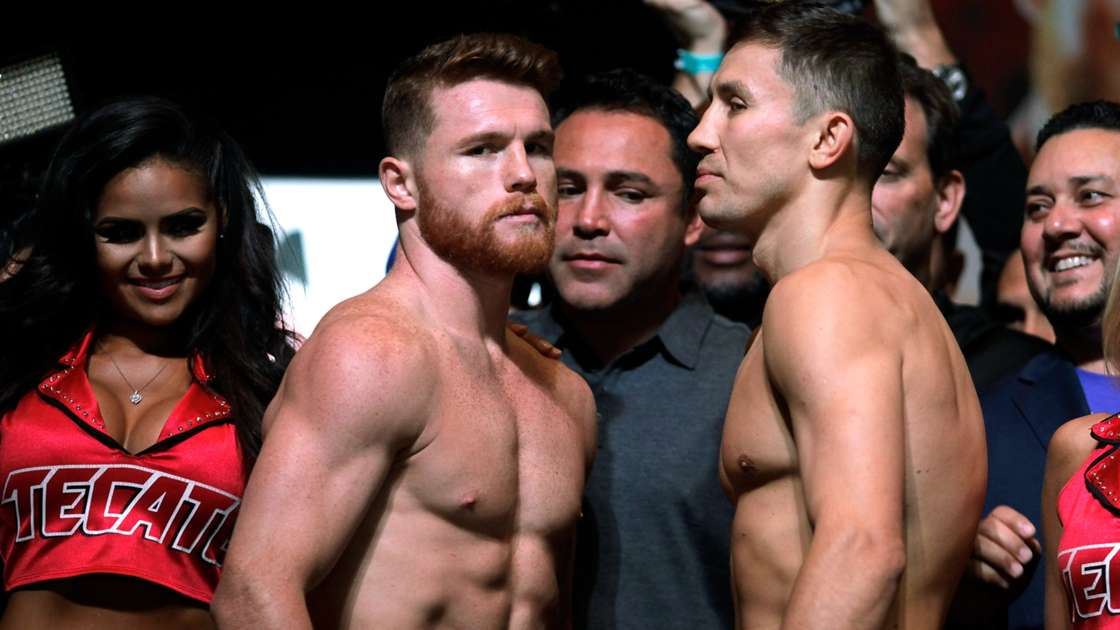
photo: dazn
As always with Canelo, nothing is certain until the ‘Golden Goose’ of boxing decides to announce his intentions. Yet it is expected that if he gets past Dmitry Bivol on May 7th, then he will next meet GGG for their long-awaited 3rd fight, sometime around mid-September.

After the second match between Golovkin and Canelo, it was a common joke among some boxing followers (mostly those not blinded by the Canelo media machine!) that Canelo would probably make Golovkin wait until he was past 40 until he got a third match. Ironically that is what seems to be about to happen. Canelo and his team have bided their time masterfully and now GGG seems ripe for the 3rd fight. Still exciting, still a big draw, but certainly a far less dangerous proposition than he was four years ago.

Should GGG even take the third fight with Canelo? He will know now that the chances of gaining a decision over Canelo are beyond slim, even if he is deserving of it, and beyond that, there is only the stoppage route to victory, something which even five years ago GGG wasn’t able to get close to achieving. For all the hype, dodgy judges, and cherry-picking (not to mention other shady stuff) there's no doubting Canelo’s toughness. Whatever may be behind it.

If Golovkin couldn’t stop Canelo 5 years ago, it's highly unlikely that he will be able to stop Canelo today in his present reduced form.
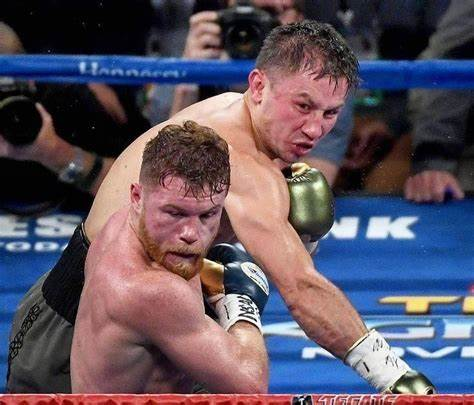
photo: stubhub
What also needs to be taken into account is the likelihood that the 3rd fight will take place at 168 pounds, a weight that will overwhelmingly favour Canelo rather than GGG. Golovkin is currently and has always been a natural 160-pounder(who seldom gains more than ten pounds between fights) rather than someone who comes down from over 190 pounds for his fights as Canelo has always done.

The purpose of a third fight with GGG for Canelo has always been to score a definitive defeat over Golovkin. Hence part of the reason for the long wait between the 2nd and proposed 3rd fights. Canelo has only been interested in fighting GGG again if he was secure in the belief that he could score a non-controversial victory this time. Ideally, he would like to stop or knock out Golovkin.

Canelo still bristles over the controversy surrounding his two matches with Golovkin and would like nothing better than to end the rivalry with a stoppage victory over Golovkin.

Certainly, the Golovkin who struggled with Murata did not look equipped to deal with Canelo at 168 pounds. Sadly the man who was once a feared and much avoided fighting machine now seems very mortal and vulnerable. He is ripe for Canelo to pick for his much-wanted ‘definitive’ victory.

Having followed Golovkin throughout his spectacular career, and after seeing him robbed by the judges twice against Canelo, I would rather not see a reduced GGG fight Canelo a third time at a point in time where it suits no one but Canelo.

After watching Golovkin battle past Murata, even taking into account his ring rust and the ability to improve himself between now and September, it is clear that time has moved on for GGG. Those tools which once made him the best in the world will never be quite as sharp nor so deadly again. A fight between Golovkin and Canelo now would be a poor reflection upon a fair fight between the two in their primes. GGG was already past his prime when Canelo finally fought him for the first time and now he is past the point where he will be a danger to Canelo.

No one knows this more than Canelo and his team which is why the fight is finally being made.

Golovkin is a warrior and the chances are that he will still take the third fight against Canelo despite any advice he may receive to go in a different direction.


Following their fight, GGG visited Murata’s dressing room and gave him back the WBA belt. It was the kind of classy gesture that makes a true champion and gives a fighter the kind of greatness that can't be bought by a crooked judge's scorecard. GGG may never beat Canelo Alvarez officially on paper, but he holds something over Canelo which is perhaps more precious than any victory in the ring. Integrity. It is that, above all else which underlines Golovkin's true greatness.

No cherry-picking can beat that.

Follow us on Twitter: @TheBoxingGlove and  

Facebook: www.facebook.com/theboxingglove

Instagram:  https://www.instagram.com/theboxingglove/


If you are an boxer, amateur or professional, and want us to follow you or tell your story, contact petersilkov@yahoo.com   or theboxingglove@yahoo.com

If you are an author and you would like your book reviewed, contact Peter Silkov at petersilkov@yahoo.com or theboxingglove@yahoo.com


Tuesday, November 24, 2020

THE AWFUL BITTERNESS OF DEONTAY WILDER: HELL HATH NO FURY LIKE A FIGHTER BEATEN AND SCORNED!!!

By Peter Silkov

Writer For The Boxing Glove.


Who can tell exactly when it happened. Was it that brutal right hand that dumped Wilder to the canvas in the 3rd round? Was it the body punch that floored him two rounds later? Or was it one of the other multitude of punches that Tyson Fury landed upon Deontay Wilder on that February 22nd night earlier this year? Somewhere amid this brutal beating (and make no mistake, it was a brutal beating), Deontay Wilder lost his touch with reality. And it seems that he hasn't regained it yet.

Maybe it began during the ring introductions before the beginning of their second fight last February. Despite Wilder being the 'home' fighter, it soon became clear from the imbalance of cheers received by each man that Tyson Fury, not Deontay Wilder, was the Las Vegas crowd's clear favorite. At the moment when Wilder, the defending WBC world heavyweight champion (though he was already considered by many to be a 'cheese' champion after his 'draw' with Fury in their first fight) received more boos than cheers when his name was announced, it was hard not to feel a little sorry for him. 

Indeed after the fight was halted halfway through the 7th round, Wilder was a sorry sight, with his face swollen and misshapen and his blood splattering from his nose, ears, and mouth. Tyson Fury had done what he had spent the previous months saying he would do; he had out-punched and overpowered the puncher. Fourteen months after giving Wilder a boxing lesson, but being robbed of victory by a scandalous draw, Fury had taken matters out of the unreliable (to be polite) hands of the judges by adopting the role of the aggressor rather than the counter puncher. In doing so, Tyson had proved that he could punch with power if he wanted to and that Deontay Wilder was at a loss when compelled to fight going backward. Deontay had been given another lesson in fighting by 'The Gypsy King,' only this time it was a much more painful lesson than in their first encounter. 


Yet Wilder had gone out on his shield. No one watching this fight from the 3rd round onwards would criticize him for being pulled out, despite the old-time tradition of a heavyweight champion being expected to lose his title via either through the judges or being rendered senseless and prostrate upon the canvas. Indeed as he took his beating, Wilder showed the kind of courage and toughness that fighters usually hope they are not called upon to display. It was the courage of a beaten man who refused to stay down. Wilder was essentially beaten in the 3rd round by Fury and probably should have been pulled out of the fight after the 5th round at the latest. At times after the 3rd round, Fury seemed almost unwilling to continue handing out the punishment, as his opponent staggered and failed in front of him, groggy and bleary-eyed, and barely able to raise his arms in a pitiful attempt at defense. 


The fact that Wilder protested when Mark Breland finally threw in the towel in the 7th round was at first yet another display of his stubborn courage. He had been beaten and beaten badly, but at that moment, it had been an admirable defeat. 


If only someone could explain to Wilder that there is no shame in an honorable defeat. It was some time before the battered Wilder was able to leave the ring that night, and ever since he left, his behavior and pronouncements have become less and less admirable. If ever there was a prize for the bitterest loser in boxing, Deontay Wilder would win it hands down. (Indeed, rumor has it that as you read this, the venerable WBC are working on a nice new shiny belt with which to award Deontay for his courageous excess of sour grapes!)


Deontay Wilder will not go down in history as the greatest heavyweight champion of all time, nor will he go down as one of the division's greatest ever punchers (despite what some deluded fans might still say). However, there is a strong possibility that he will go down as the worst loser in the history of the Heavyweight division.


The hail of increasingly smelly sour grapes began to fall almost as soon as Wilder had been helped back to his dressing room, following his pugilistic spanking, by Tyson Fury.

First, we heard that Wilder's trainer, the much-respected former Olympic Gold medalist and world welterweight champion, Mark Breland, had been wrong to pull Wilder out in the 7th round. Not only had he been wrong, but his actions had been a betrayal against Wilder. This is despite the overall majority of those who witnessed the match feeling that, if anything, Wilder should have been pulled out earlier rather than later and that Breland's actions may have saved Wilder's long-term health, not to mention any remaining boxing career. 


The strength of Wilder's ill-feeling against the man who had guided him to world title glory was illustrated by the sight of Breland, in the aftermath of his fighter's defeat, standing weeping outside Wilder's locked dressing room door—literally locked out of the room. Wilder would go on to publicly fire Breland from his team, despite Breland being the only member of his entourage who might be able to turn his career around at this point.


As the weeks following the fight began to pile up, the mountain of sour grapes steadily piled up alongside them. Moving on from his crass treatment of Breland to a more creative line, Wilder was soon saying that his defeat was down to his outlandish ring walk costume, which had been equipped with some rather large batteries whose weight had left him befuddled and drained before he had even taken a punch!

"He didn't hurt me at all, but the simple fact is … that my uniform was way too heavy for me," Wilder said. "I didn't have no legs from the beginning of the fight. In the third round, my legs were just shot all the way through.


The fact that Wilder has made a habit of wearing such costumes to the ring for most of his previous title defenses was conveniently ignored. Also ignored is Wilder's practice of training in a weighted suit, which weighs as much, if not more, than the elaborate disaster in which he entered the ring for the second Fury match. Indeed, in a podcast interview sometime before the Fury fights, Wilder talked openly with Joe Rogan about the benefits of training in a weighted suit.

"We want to activate the fast-twitch muscles," Wilder said. "We do everything with rapid speed; if I'm doing anything that consists of me moving my feet, it's sprinting. Now I wear a 45-pound vest on me as well as doing all my exercises and everything that I do to have that extra weight on me."


But if we thought that the costume excuse was bizarre, we hadn't seen (or heard) nothing yet. After his ring walk costume excuse had been met with a mixture of polite incredulity and outright derision, Wilder's reasons for his defeat took a darker, altogether nastier turn.

While remaining secluded and hidden from the public, Wilder began to issue accusations of Tyson Fury cheating, not just in their second fight but in their first one as well. Wilder accused Fury of having had his gloves tampered with, claiming that his hands had been unbandaged beneath his gloves. To support this claim, Wilder and some of his shadowy supporters released photos of Fury's gloves supposedly looking 'floppy' during the fight. To anyone with even half-decent knowledge of the rigorous procedures that a fighter's gloves go through before they end up on a fighter's hands at fight time, Wilder's accusations were ludicrous.

Gloves are closely guarded before any fight, but especially before title fights. A fighter will then be watched by members of the local boxing commission and also by members of his opponent's team, as he has his hands taped, bandaged, and finally gloved up. All gloves then go through an examination after the fight as well. Despite boxing's reputation as a 'redlight' sport, cases of fighters having their gloves altered before a fight are actually remarkably rare. In years past, fighters used to be gloved up in the ring directly before a fight, with a member of the opponent's team overlooking proceedings. One of the few cases of glove tampering to come to light is the notorious Luis Resto vs. Billy Collins debacle in the mid-80s, when Luis Resto had the padding removed from his gloves prior to his fight with Billy Collins Jr, and went on to inflict career-ending injuries upon Collins, before being exposed in the fight's aftermath after Collins father shook Resto's still gloved hand and found himself squeezing bare knuckles. The measures that have been adopted since this dark incident, which remains a terrible blemish upon boxing's history (especially when taking into account the lack of any compensation which Collins received despite losing his career) has made doubly sure that when fights are overseen as they should be by the relevant authorities, any kind of dirty tricks with fighters gloves should remain impossible.

This was a major reason why Antonio Margarito was caught in 2009 when trying to enter his match against Shane Mosely with doctored gloves. Margarito was caught when officials overseeing him being gloved up spotted that he had wet pads and plaster secreted within his bandages. Although the fight went ahead (after Margarito had been safely re-gloved), Margarito's standing in boxing was never the same again, and he was later, alongside his trainer, suspended for a while from the sport (it should have been for life!)

So the chances of Fury entering the ring with doctored gloves is highly improbable. It would mean that his team and members of Wilder's team, plus the Nevada boxing commission officials, would all have to be in on the conspiracy together. And those photos that Wilder and some of his misguided followers have banded around are also nothing to do with any proof either. They simply reveal a picture of how a boxing glove can look distorted at the point of impact, just as a fighter's face often looked distorted in photos under the weight and physical shock of taking a punch.


As the months have gone on, Wilder's allegations of Fury cheating have grown more and more wild (excuse the pun!) and seem to be increasingly the ravings of someone who has lost touch with reality, rather than the cries of a man who has been wronged.


The fact that Wilder's allegations have jumped about to almost every aspect of the fight tends to underline how tenuous a relationship each allegation has to reality and truth. Even Wilder's determination to enter the ring with Fury for the third time must also be questioned, despite his protestations that it is Fury who is attempting to duck out of a third encounter. 


First, they were due to fight in the summer, but when Wilder showed a disinclination to move ahead with final plans for the match, a date was set for December. Again, however, Wilder and his team were unresponsive and did not communicate with Fury or his team to finalize negotiations. In mid-October, Fury announced that he was tired of waiting around for Wilder and that he would move ahead and fight someone else in December. Cue Wilder suddenly leaping out of the shadows in which he has been hidden since February and issuing a rambling attack on Fury via a video message which was by turns, funny, sad, outrageous, and ultimately rather disturbing.

In his first public appearance since his defeat by Fury, Wilder repeated his allegations about Fury's gloves and expanded his repertoire by issuing a whole raft of new claims. These included a new variation on the glove allegations; Wilder contended that Fury had been holding an egg or rather an egg-shaped object in one of his gloves during the fight!

"I highly believe you put something hard in your glove, something the size and the shape of an egg weight. It's the reason why the side of my face swelled up in an egg-weight form. And it left a dent in my face, as well".


But it gets better. Wilder also included amongst his ramblings that his water had been spiked! by none other than Mark Breland!

"My water was tampered with, bro," Wilder said. "I know what it's like to have some heavy workout and how you feel after. You know what I'm saying? S–t, I can have sex and still go play ball and dunk and do what I got to do. But this feeling right here, it was a different feeling. It's like I had no control of my body. My legs was weak and stuff like that. Although my body was weak, my mind was very strong. "When do you ever see me go down on a body shot? He didn't even hit me; he pushed me. When did you ever see me falling back like that? When did you ever see me not being the aggressor?"

Added to this, lamented Wilder, the referee Kenny Bayless was biased in favor of Fury and under the influence of alcohol. In addition to this, Fury placed a gypsy curse upon him before the fight and caused Wilder's ears to bleed by scratching them with his fingernails!

Wilder's attack upon the honesty of his trainer Mark Breland is especially reprehensible as Breland is respected throughout boxing as one of the game's nice guys with an impeccable character, who has given years of his life to training Wilder. While the 'Bronze Bomber's deficiencies in the ring are all too visible now after being exposed twice by Fury, the success he has enjoyed up till now in his career is mostly down to the training he received from Breland. 


Deontay's accusations that the referee showed favoritism to Fury during the fight is also wide off the mark, especially when you consider that the referee inexplicably took a point away from Fury during the 5th round while also managing to give the already badly beaten Wilder a significant break in the process. This practice of referee's giving Wilder a breather in fights when he is hurt is not an isolated incident; take a peek at Wilder vs. Ortiz 1.


Wilder's most recent allegations (at the time of writing) regarding Fury placing a Gypsy curse upon him and also making his ears bleed with his fingernails are too absurd to even give a serious mention. Rumour has it, though, that Tyson Fury is now being lined up to play Wolverine in the next X-MEN movie.

Wilder's blizzard of bizarre allegations has left Tyson Fury himself shocked and scratching his head:

"I think he has lost his marbles! First of all, it was the suit; then it was the bicep injury, then his trainer was on our team, then the referee was against him, then I had weights in my gloves… 'Now someone has spiked his water… It's one of those things, isn't it."


Wilder has begun to resemble a fly fisher in many ways, flinging out almost random excuses and defamatory allegations weekly while waiting to see who in the media will take a bite.


Sadly there are those who have jumped upon the Wilder bandwagon and tried to support his allegations. It's a disappointing fact about human nature that if you say a lie which is big enough, loud enough, for long enough, some will come to believe it. We have seen this in today's politics. For some, the truth doesn't exist; the truth is what you want it to be and what you can make other people believe. Certain people can be talked into believing almost anything, especially when it reinforces their own prejudices and personal agendas.


Despite his tremendous comeback from depression and substance abuse and his brave comments about his mental health problems, which have inspired so many people with similar issues, there are still those who would like to see Tyson Fury fail and fall. In many ways, his face still doesn't fit, and it never will for certain people.


However, most of the serious media and boxing writers have made their feelings known about Wilder and his allegations. What respect he did have has been irretrievably lost in many quarters. Yet certain people will seek to use his claims for their own ends, with no real care for the well being of Wilder. ESPN now seems to be eager for a 3rd fight between Wilder and Fury and has blocked a planned Dec 5th fight Fury was to have in London against an unknown opponent. 


It seems for some tawdry allegations of cheating add up to dollar signs. A fight which many were not interested in seeing after Fury's one-sided victory in February has now taken a more inviting appearance thanks to Wilder's allegations. It is a shame to see Wilder forcing his way into the 3rd fight against Fury with defamation.

But does Wilder even want a 3rd fight with Fury himself? After backing out of a December rematch with Fury, there is every chance that Wilder will further delay the rematch beyond the now proposed Feb/March 2021 date. Questions must remain about Wilder's true state of mind and whether he should even be allowed back into the ring at this point. In his recent October video, the random and erratic nature of his allegations and his rambling speech seem to point towards a man who has become unhinged. Is he really in the right state mentally to be allowed inside a boxing ring again?


The clues have always been there that Deontay Wilder is not the most stable of men. There was that skillfully hushed-up incident some years back when he was arrested for beating up an escort and locking her in his hotel closet after a cocaine-fueled sex party went wrong. This case (and the aforementioned escort) suddenly when very quiet and disappeared very quickly. Then there were Wilder's declarations that he wanted a 'body' on his record. An extremely distasteful remark which he made on multiple occasions. Indeed the usually very malleable WBC president Mauricio Saliman was moved to issue Wilder a rather 'stern' public warning about these dark 'boasts.' Most recently, Wilder has declared that Tyson Fury needs to make 'funeral arrangements' when they fight again. We can imagine the fuss that would explode had Fury issued such distasteful threats towards Wilder; he would probably have been banned from the sport if he had behaved in the same way.

Let's be honest here Deontay Wilder is not a classy guy. Indeed class and Wilder belong on different planets. Perhaps some of Wilder's bitterness comes from his lack of popularity at home, in the United States, and the humiliation he must feel deep inside knowing that it was only when he defended his WBC title against Tyson Fury that he finally achieved the kind of notoriety he had been craving. Not only that, but the attention which he finally received was bittersweet, as most observers perceived Fury to be the rightful 'winner' of their first fight, with Wilder holding onto his title with an unfair draw. The recognition which Tyson Fury received in the aftermath of their first encounter, for his amazing return from addiction and depression, and his recovery from THAT knockdown in the 12th and last round, left Wilder pretty much playing second fiddle to Fury from their first fight onwards. The truth is that for all his protestations that he had done Fury a favor by 'giving him a shot' at his WBC title, Wilder was having trouble bringing in enough fans to fill up a warehouse prior to his matches with Fury. 

Wilder vs. Fury 1 was the first time that Deontay Wilder had been able to generate a PPV title defense. Fury gave Wilder his biggest audience and his biggest purse's. Add to this that certainly for their first fight, Wilder believed he was taking on a fighter ripe for the taking after Fury's years of drug and alcohol addiction, mental health problems, and inactivity. It's not hard to imagine Wilder's disappointment when his big plans blew up in his face. The fight, which was supposed to make him a star, instead saw his flaws exposed to the world by a man who had recently lost ten stone in 12 months and was taking part in his first competitive fight in over three years. The controversial draw saw Fury hailed as the morale victor and Wilder's stock crashed.

The run-up to the rematch saw Wilder coming out with allegations that Fury had failed to beat the count in that 12th round; he also tried to claim that Fury was concussed from that fight and that he had 'ruined' him. If these were mind games aimed at disturbing Fury, they failed miserably. Then there was the rematch, and the only prediction which came true was Fury's prediction that he would force the fight and take the verdict out of the judges' hands by stopping Wilder this time around.


Tyson Fury has beaten Deontay Wilder twice, not just physically but mentally as well.
The only real truth that has emerged from Wilder's recent ramblings is that he is a broken man who cannot accept that Tyson Fury is the better fighter and has beaten him twice fairly and squarely.

 
Is Wilder playing mind games with Fury with all these accusations?. Perhaps, but if these allegations were borne out of a rational attempt to throw Fury off his own mindset, you would think that they wouldn't be so random and illogical. The more excuses and accusations Wilder has come up with, the more he has simply exposed himself to ridicule and displayed just how damaged he has been, mentally and emotionally, by his fights with Fury. Like a certain world-renowned politician, Wilder's inability to accept defeat and his attempt to hide behind defamatory lies and accusations has reduced what standing he had amongst everyone except his most loyal/desperate of followers.

The truth is that a 3rd fight with Fury is probably the last thing that Wilder needs right now. And deep down, Wilder himself knows this, and for this reason, I expect Wilder to duck out of any February or March fight and seek another postponement. In the real world the only way that Wilder can punish Fury is by keeping him out of the ring and hanging on for the 3rd fight between them, which will probably never happen. I expect Wilder to string this out for as long as he can until he is either paid to step aside or is finally given his marching orders by ESPN after yet another failure to agree upon a date for the third match. By then, we could be into the middle of next year, and Fury will have been inactive for almost 18 months with the AJ fight plans put into a spin.


In the increasingly weird and wacky world of Deontay Wilder, keeping Fury out of the ring waiting for a rematch that will probably never happen is the only way he can gain some payback for the defeats and humiliation he has suffered against Fury.


Although losing his proposed December 5th homecoming fight must be a frustration to Tyson Fury, he shows no sign of letting Wilder's antics or accusations throwing him off track, which says a lot for the kind of condition that Fury is in these days, both physically and mentally.


He has even expressed concern for the mental state of Wilder and offered to give his help if asked:

"At the moment, I think Deontay Wilder has bigger issues to deal with than boxing.I am quite worried for his health and well being.I know he won't have wanted to lose after being an undefeated champion for so long, but there comes a time when you just have to accept it and move on.Wilder does not seem able to do that, he is holding on to malice feelings and making excuses, and I am concerned for his mental well being because some of his statements are ludicrous. But I am only a phone call away; if I can help him, then I will because it seems this fight has really affected his well being."


Ironically, the psychological and physical damage which Tyson Fury has inflicted on Deontay Wilder is nothing compared to what the bitterness inside the former champion has allowed him to do to himself. When a man loses all vestiges of honor, integrity, and self-awareness, he has truly become a beaten man.


Bitterness is the ugliest of all defeats.


Follow us on Twitter: @TheBoxingGlove and  
Facebook: www.facebook.com/theboxingglove

If you are an boxer, amateur or professional, and want us to follow you or tell your story, contact petersilkov@yahoo.com   or theboxingglove@yahoo.com

If you are an author and you would like your book reviewed, contact Peter Silkov at petersilkov@yahoo.com or theboxingglove@yahoo.com


Tuesday, April 2, 2019

The Night Jersey Joe Walcott Made Arnold Raymond Cream Champion Of The World


The Night Jersey Joe Walcott Made Arnold Raymond Cream Champion Of The World

By Peter Silkov.
For The Boxing Glove


In the end, it took just one punch, a dynamite left-hook to the face of Ezzard Charles, and ten seconds later Jersey Joe Walcott was heavyweight champion of the world. One could argue that Walcott was champion as soon as the punch had landed. It was an irrepressible force upon impact, and the devastation produced was visible on the face of the reigning champion as he fell forward senseless onto his face. To those with a keen sense of boxing knowledge, it seemed clear that this was one of those blows that would render the receiver unable to beat the fatal count of ten seconds.

Just after impact, Charles fell onto his right knee, his head bowed, where he froze for a moment. Almost as if he were in prayer. Then he pitched down the rest of the way forwards, coming to rest with his face pressed into the canvas.  He looked like someone taking a long overdue slumber.

Jersey Joe had entered the ring that night in Forbes Field, Pittsburgh, Pennsylvania, a 37-year-old 5-to-1 underdog, against a man who had already beaten him twice.  When he left the ring some thirty minutes or so later he held in his gloved hands the richest prize in sports. Such is the beauty of boxing.

Charles was 'out' even before the skin of his face stuck upon the ring canvas.  In fact, the connection between canvas and face may well have 'awakened' Charles and provoked his improbable attempt to regain his feet in time to continue the fight and the 9th defense of his world title.  Yet his senses were too widely scattered and although he made a courageous attempt to beat the count, he failed.  Even as he lay prone upon his face the courageous Charles tried to regain his feet by wearily pushing at the canvas with his arms.  At this point, it seemed almost as if his arms were working separately from the rest of his body as if they were the only conscious part of the fallen fighter. As the count reached six Charles managed to raise his head, and at the count of eight he had managed to get to his knees. The soon to be ex-heavyweight champion of the world then wobbled back drunkenly onto his feet, just as the count reached the fatal 10.  Yet no sooner had the soles of his boots regained their acquaintance with the canvas, then Charles was falling again, this time backward onto his back, where he lay glassy-eyed and confused as his cornermen rushed to the now ex-champions aid.

In victory, the victor was almost rendered unconscious himself with the shock of what he had just accomplished. The spectators, whom earlier had sat largely unmoved by the action unfolding before them during previous rounds, had themselves been energized into an excited frenzy by the sudden turn of events, with many of them taking to their feet and trying to get into the ring itself.  What ensued in the next minutes was a kind of jubilant frenzy which only sport at its best, and in particular boxing (although this writer is biased) can produce.

Surrounded by an ever-growing mass of spectators, who flooded into the ring and launched themselves at their new hero. Pulled upon by his cornermen, as they sought to protect him from the expanding throng of excited human beings who were filling the ring. Jersey Joe Walcott, the new heavyweight champion of the world, breathing heavily, fell to his knees and murmured in a voice that was all but totally drowned out by the tumult surrounding him, 'Thank God!'.

Later when he had composed himself enough to speak to reporters, Walcott had exclaimed about his victory “I felt 16 years old again!”

Up until the sudden conclusion, the fight seemed to be following the same unspectacular pattern of the previous two encounters between these two men. The night had exploded into life with the sudden match-ending punch that must go down as one of the most spectacular and clinical one punch finishes that have ever been seen in a heavyweight championship bout.

It had been just one left hook that had caused this explosion of excitement and uproar. It brought about one of the biggest upsets the division had seen, up until that time.  One punch had beaten the 5-to-1 odds laid against the challenger. One punch, but that punch had taken over 20 years to land. 20 years of blood, bruises, and heartbreak. Years filled with sweat, frustration, victories, and disappointments. At the age of 37 (although some sources made Walcott closer to 42 or 43 years in age) Jersey Joe had withstood more highs and lows than is probably in a single fighter's career. His resilience to the lows, and his ability to bounce back from each setback, again and again, was the reason why he had just become the oldest man to capture sport's greatest crown at the age of (at least) 37. Walcott also gained the distinction of becoming the first man to win the most prestigious title in boxing at his 5th attempt.

The crowd knew.  They had followed his journey from the first Louis match when he had appeared out of nowhere to give the great Joe Louis the hardest fight of his already legendary world title reign. Many of the spectators, who were on their feet after seeing Walcott land that dynamite punch upon Ezzard Charles, were the same people who booed and protested loudly three and a half years earlier when the judges failed to give the verdict to Walcott at the end of his first fight with Joe Louis. It seemed, to many that night, that Jersey Joe had been robbed by the judges of a famous and improbable, yet well-deserved victory.  Until that night Walcott had been unknown to the average fight fan, despite a career going back 17 years.  He had flummoxed, frustrated, bewildered and out-boxed the champion with his swift-footed, herky-jerky style of boxing. Not only that, but Walcott had hurt Louis several times, and floored him twice.  Jersey Joe was like a wasp in the ring, buzzing around and around, in and out, and he had a sting. 

21 out of 32 ringside boxing writers had Walcott the winner at the conclusion of his first fight with Louis, while Louis himself was so convinced of his defeat that he attempted to leave the ring before the verdict was announced.  Yet Walcott was not crowned champion that night against Louis, instead, in many peoples eyes, he was robbed of a historic against all odds victory, the kind of which only comes to a man once in a lifetime.

Six months later Walcott had another shot at immortality when Louis granted him a second shot at his world title. Once more Walcott gave 'The Brown Bomber' fits with his speed and style, but this time Louis caught up Jersey Joe in the 11th round and knocked him out.  Ironically this time Walcott had been leading on two of the three judges cards.  Walcott's dream, the dream he had held since he first pulled a pair of boxing gloves onto his hands over 17 years earlier seemed to be gone.

How many chances at greatness does one man get in life?

After Joe Louis announced his retirement from the ring following his 11th round knockout of Walcott, Jersey Joe and Ezzard Charles were matched together to fight for the now vacant World heavyweight crown.  On June 22, 1949, Charles out-pointed Walcott over 15 rather uninspired rounds to gain NBA recognition as the worlds heavyweight champion.  It had been Walcott's third shot at destiny and this time he had failed to sparkle.


Ezzard Charles was a brilliant boxer in his own right, who in many ways is only now gaining the accolades that he so deserved during the time he was active in the 40s and 50s.  Yet Charles and Walcott together seemed to nullify each other's abilities. When matched together, except for some sporadic outbursts of action and excitement, their fights were mainly underwhelming to most spectators.  Especially taking into account what people expected from a world heavyweight title fight at the time.

The fans wanted blood and guts, wild exchanges of powerful punches.  Not the kind of cerebral boxing matches that they got when Walcott and Charles were matched up together.

Despite the underwhelming nature of their first fight, Charles and Walcott faced eachother again on  March 7th, 1951, with Walcott entering the match on the back of an upset points defeat to the raw yet tough Rex Layne.  Charles, who was proving himself to be a fighting champion, despite the lack of recognition from the fight fans at large, was making the 7th defence of his world title. 

For the fourth time, Walcott found himself the bridesmaid rather than the bride, as he was once more out-pointed over 15 rounds by Charles. With Walcott the sentimental favourite, the crowd had booed the verdict, yet those boos didn't bring his dream any closer. After four shots at the greatest prize in sport, it seemed that Jersey Joe had missed his chance at immortality and would go down as one of boxing's nearly men. A man who could have been champion save for the scores upon one judge’s scorecard.

Yet fate is a funny thing, and sometimes immortality is a combination of being at the right place at the right time but also making sure you are at the right place at the right time.

With his advanced age and the years he had put into his career, Walcott could easily have accepted his fate as a runner up who had come so close and yet so far, and simply hung up his gloves. After years of struggle, he had earned enough from his losing attempts at the world championship so that he and his family now lived comfortably in the family home in Camden New Jersey. He was no-longer wondering where his next meal was coming from as he had so often earlier in his career. 

Yet Jersey Joe Walcott was still hungry. He still held onto that flickering dream of being heavyweight champion of the world. Perhaps if anything, after coming so close yet failing four times, the dream was even stronger now for Walcott. Even if few outside his immeadiate circle still believed it possible.  Perhaps Jersey Joe Walcott wouldn't let Arnold Raymond Cream quit before his dream had been fulfilled.

So Joe didn't hang up his gloves. He didn't quit after the Louis rematch. He didn't quit after the first bout with Ezzard Charles or even after the second defeat to Charles.  Jersey Joe wasn't a quitter and perhaps, more than anything else, this is the clue as to how in the end he managed to achieve the seemingly impossible.

Then came that stroke of luck which sometimes blesses the talented, but more often than not blesses those who show the kind of stubborn endurance, and belief, in the face of failure that  Jersey Joe displayed throughout his long career. With genuine challengers for his world title scant on the ground, Ezzard Charles found himself facing Walcott for the third time on that fateful night of July 18, 1951.

This time something was different, there was an extra spark in Walcott, the kind that he hadn't had perhaps since his two fights with Joe Louis. Maybe this time he knew that this 5th chance at his dream had to be his last chance.

The bout started out much like their previous two encounters, with both boxing cagily, and seemingly waiting for the other to make a move or a mistake. People had expected Charles to take more of the initiative in this bout in order to beat Walcott by a wider margin than previously and remove him from contention as a challenger. However, Charles was content to play the waiting game and let Walcott be the aggressor. For his part, instead of using his usual style of tricky movement and countering, Jersey Joe was more happy to hold his ground this time and deliver more telling punches than in their previous encounters. Although Charles edged the first two rounds with his more effective jab, Walcott's strategy began to bear fruit in the 3rd round when he seemed to hurt Charles with two left-hooks to the body. He also landed a left hook to the face which opened a cut underneath the champions right eye. From this point, Walcott the eternal challenger began to gain control of the fight, seemingly growing stronger as the match went on, perhaps with the growing belief that this time, this time, he would not finish second.

As the rounds progressed Charles continued to box smartly with his jab, but there was an ineffectiveness now in his work. Walcott had his own jab working, and furthermore, he was landing rights and lefts to the body that seemed to be draining Ezzard. While Charles punches looked to be bouncing harmlessly off Walcott when they landed, Jersey Joe's own blows seemed to be landing with a touch more weight. The two exchanged jabs in the 4th and 5th rounds, but Walcott's punches were becoming more telling. Ezzard was visibly shaken by a right hand in the 4th, while in the 5th round the defending champion seemed to be hurt twice, as his challenger switched from head to body in some of the best exchanges of the fight. Ezzard fought back but his punches lacked sting in comparison to Jersey Joe. In the 6th round, Walcott started looking to land the left hook more as he became visibly more confident, with the concentration and determination etched upon his face.

Then in the fateful 7th Walcott finally landed that left hook. The left hook that had taken 21 years to reach its destination. Back then he hadn't been Jersey Joe Walcott, but Arnold Raymond Cream, born in Pennsylvania, New Jersey, on  January 31, 1914, (although there were always whispers that the year of Arnold Cream's birth could be somewhat earlier than 1914). Officially Arnold Cream began his career on September 9, 1930, with a 1st round knockout of Eddie Wallace. Cream weighed 152 pounds in that early endeavor, with a long long road ahead of him before he would reach anything like the success that he dreamed about every-time he clenched his gloved hands.

It was not until some three years later on July 28, 1933, against a certain Henry Taylor, (whom he knocked out in the 1st round) that Arnold Cream became Jersey Joe Walcott. Arnold took the name of the old 'Barbados Demon' Joe Walcott, who had ruled the welterweights and been one of the most feared fighters pound-for-pound during the 1890s and early 1900s.  Perhaps he had hoped that some of the old Demons magic would rub off upon him.

There was little magic for the first decade of Jersey Joe Walcott's career. He struggled to find fights, and when he did get fights, he was seldom well-prepared for them as he often went into his early fights hungry. Jersey Joe's early career was so sporadic and full of ups and downs that he was forced to take work elsewhere, working in construction, as a porter, a janitor, and many other areas of menial employment in order to feed his growing family. At one point Walcott was forced to go on relief and provide for his family with 9 dollars 5 cents a week. Several times Jersey Joe retired from the ring and almost gave up on the dream that in his lowest moments seemed to have become just a memory.  But Walcott, a humble yet determined man, believed that God would help him achieve his goal if he just kept his faith in himself and continued to work hard to reach it despite all the hard years and the setbacks.


Walcott's career only really began to take off in 1945, when, after having just 2 fights in five years, he returned from another lay off of 7 months, with new management in the shape of Felix Bocchicchio. Under the guidance of Bocchicchio, who promoted fights in Walcott's adopted home town of Camden New Jersey, Jersey Joe finally began to get regular fights, and produced a streak of 18 wins in 21 matches.  These included victories over notable fighters such as Joe Baksi, Lee Q Murray, Curtis Sheppard, Jimmy Bivins, Lee Oma, Joey Maxim and Elmar Ray.  The wins over Maxim and Ray avenged two of the defeats that Walcott suffered during this time and qualified him for his first title shot against Joe Louis.

It would take a little longer for Jersey Joe to realize his dream after his controversial 1st defeat to Louis, but finally, after 21 years he achieved what he had dreamed about all those years earlier.

Eleven months after landing that historic left-hook Jersey Joe successfully defended his World Heavyweight title against the man he took it from, convincingly out-pointing Ezzard Charles over 15 rounds. After successfully defending his world crown Walcott declared “This proves that I'm really champion, this proves it wasn't any lucky punch in Pittsburgh. I had him all the way. This win meant more to me”.

The successful title defence against Charles made Walcott at 38 years of age, the oldest man to successfully defend the World heavyweight crown. That and his record of being the oldest man to win the heavyweight title would stand until 1995 when George Foreman regained a portion of the world heavyweight championship against Michael Moorer.  (Ironically with a spectacular one-punch knockout).

Perhaps some of Joe Walcott's old demon magic had rubbed off upon Arnold Raymond Cream after all.


Follow us on Twitter: @TheBoxingGlove and  
Facebook: www.facebook.com/theboxingglove

If you are an boxer, amateur or professional, and want us to follow you or tell your story, contact petersilkov@yahoo.com   or theboxingglove@yahoo.com

If you are an author and you would like your book reviewed, contact Peter Silkov at petersilkov@yahoo.com or theboxingglove@yahoo.com

Thursday, December 27, 2018

TBG Book Review: From Boxing Ring to Battlefield: The Life Story of War Hero Lew Jenkins


The Boxing Glove Book Review

By Peter Silkov


"From Boxing Ring To Battlefield:The Life Of War Hero Lew Jenkins" 
By Gene Pantalone


The life of a boxer is seldom a dull one, but some fighters lives are more exciting than others. The life of Lew Jenkins reads more like a work of fiction than reality, yet as is often the case, when it comes to Jenkins’ life story, the truth is often stranger than fiction. Lew Jenkins lived a chaotic, rambunctious life, both in and out of the ring, which saw him become Lightweight champion of the world in 1940, only to lose it after just 18 months, as his life and boxing career imploded. He had a meteoric rise to the top, and an even faster fall into boxing oblivion. However, he found a redemption that often eludes ex-fighters and ended his life in a kind of respectable comfort which would have seemed impossible for him, given his lifestyle during most of his boxing career.

Gene Pantalone has done a marvelous job in bringing Lew Jenkins’ life to the written page. It is a biography that reads like a fast-moving movie, with Gene’s vivid writing painting a multitude of colourful scenes inside your head. Indeed the overwhelming feeling that you are left with after reading this biography is the question of why there wasn't a book written about Lew Jenkins earlier.

If ever a fighter had a fan-friendly life story, that man is Lew Jenkins. He was an inveterate smoker and drinker, who got into as many unscheduled fights outside of the ring as he did inside of it. He became a sensation with the journalists of the day, picking up such nicknames as 'The Living Death' 'The Sweetwater Swatter', 'The Texas Tarantula','The Texas Thumper', 'The Medical Freak' and in the latter part of his career, 'Looney Lew'.

Born on December 4, 1916, in Milburn, Texas, Lew grew up in Sweetwater, Texas, where he experienced the poverty of the 1930s depression first hand. As a child, Lew spent more time picking cotton with the rest of his family than he did attending school.


''I wore cardboard in my shoes'', Jenkins is quoted as saying by Gene Pantalone; ''I had one pair of patched overalls. I don't know how we survived''.

Growing up at such a time, it should be no surprise that Jenkins, like so many other young men of his age, would seek to escape the poverty of the cotton fields by using his hands in the boxing ring.


Part of the charm of Jenkins is that he never looked much like a fighter (at least not to the trained eye.) He was lanky and scrawny, even when he was well-fed. Yet inside the ring he was the stereotypical 'hungry fighter', who fought every round as if his life depended on it. He was also one of the most devastating punchers ever seen in the lightweight division. Referee Arthur Donovan is quoted by Gene Pantalone upon the subject of Lew's punching prowess:
''That Jenkins, what a puncher he was. He was skinny, and he looked half-starved all the time, but he'd hit you a hook, and you'd just cave in, crumble to your knees. I think he was the hardest of all the punchers''.

Jenkins’ freakish physique was also possessed of uncanny speed, that allowed him in his short prime to fight like a wildcat.


Although Lew's official boxing record has him beginning his boxing career in 1935, at the age of 18, his introduction to the ring actually took place years earlier when he became a carnival fighter. Like many fighters of his era, Lew had many more fights than appear on his 'official' boxing record.

Jenkins won the World Lightweight championship at New York's Madison Square Garden, on May 10, 1940, with a violent 3rd round stoppage of Lou Ambers. At the age of 23, he had fought his way from poverty to the top of the boxing world and found himself a celebrity in the process. Unfortunately, like many other fighters from similar backgrounds, Jenkins found success overwhelming. The hunger that had previously exerted some control over his wild ways evaporated seemingly overnight, and life for Jenkins became one long unending party, which became ever more chaotic.

Many other fighters have seen their careers derail in the wake of 'the good life', yet few have derailed their careers as spectacularly as Jenkins. More interested in drinking, chasing women and racing motorbikes, Jenkins boxing career fell into free-fall almost from the moment he won the world championship. It was a decline that only accelerated after he lost the title eighteen months after winning it. Jenkins alcoholism became such, that he was barely sober for a fight after his world title victory.


With his life out of control, Jenkins found salvation in perhaps the most unlikely arenas of all, World War 2. With his boxing career and personal life in tatters, Jenkins signed up to join the Coast Guard. Jenkins had actually enlisted in the army years earlier when he was just a fledgling fighter, and he would find that his re-enlistment would be the saving of him.


Jenkins would carry on fighting in the ring, on and off, until 1950. But his fighting spark in the ring was burnt out. It was on the battlefield that Lew would mark himself out now. Lew Jenkins became a teetotal, career soldier, and a full-fledged War Hero.


As he did in his previous book “Madame Bey's Home To Boxing Legends” Gene Pantalone weaves a vivid and entertaining narrative in this biography of Lew Jenkins (who himself was one of the many legendary fighters who used Madame Bey's training camp.)

“Boxing Ring To Battlefield” is meticulously researched, with excellent use of historical interviews and quotes. As well as featuring many quotes of Jenkins himself, there are also quotes from his son and many others who knew him personally during his life. This book also contains very useful ‘notes’ and ‘Bibliography’ sections, which further informs the reader.


While Jenkins is perhaps the ultimate 'colourful character' himself, he is hardly alone in this book, which is just about overflowing with interesting characters. From his fellow fighters to the managers and promoters of the day, perhaps the most intriguing character of this biography, aside from Jenkins himself, is his first wife, Katie, who at one point was Lew's manager, trainer, and promoter, and had much to do with his spectacular climb to the top.


Like his previous work, Gene Pantalone instills the atmosphere of the time in “From Boxing Ring To Battlefield”. You can almost smell the sweat and the smoke of the gyms and the area's, and hear the thump of the leather upon flesh. You can most certainly hear the clink of glasses and bottles as Lew drinks himself into a stupor between fights.


This is a book that shows why boxers are without a doubt the most 'fan-friendly' of all sports stars when it comes to interesting life stories. Yet even a good story can come over poorly if it is not told well, however, the story of Lew Jenkins is in great hands here with Gene Pantalone.


“From Boxing Ring To Battlefield” is essential reading for anyone with an interest in the 'Golden Age' of boxing that existed between 1920 and 1950. It is also a great read even for those who might not class themselves as a boxing 'fan', but still enjoy a good story. The most impressive thing perhaps about Lew Jenkins’ life story is that it really did happen. What a tale it is indeed.

If you would like to purchase this book it is available on Amazon:


Follow us on Twitter: @TheBoxingGlove and  
Facebook: www.facebook.com/theboxingglove

If you are an boxer, amateur or professional, and want us to follow you or tell your story, contact petersilkov@yahoo.com   or theboxingglove@yahoo.com

If you are an author and you would like your book reviewed, contact Peter Silkov at petersilkov@yahoo.com or theboxingglove@yahoo.com