Showing posts with label boxer. Show all posts

Tuesday, April 12, 2022

Gennady Golovkin Defeats Murata and Chases His Stolen Greatness

By Peter Silkov
Writer at The Boxing Glove


Gennady Golovkin overcame 16 months of ring rust and the encroaching shadow of father time, to stop Ryota Murata in 9 rounds on Saturday night. This win adds Murata’s WBA belt to the IBF title belt which he already held. The victory reignited GGG’s career, making him a ‘unified champion’ now that he holds two world middleweight title belts, but this fight was for a lot more than the increasingly random and frustrating world boxing belts. Murata held the ‘super’ WBA world championship belt, but then the WBA has a long record of being able to come up with seemingly never-ending variations of the world championship belt, from, interim, to regular, and silver to super. In reality, the belts were an afterthought, this was GGG making his first appearance in the ring after 16 months of inactivity, against an opponent who figured to be a worthy test. Fighting just one day after his 40th birthday, Golovkin was seeking to prove that he is still a relevant force in the division that he once dominated so thoroughly, that many top contenders spent their whole careers avoiding him. It's difficult to remember another world champion in recent times (aside from Guillermo Rigondeaux) who was reduced to chasing his challengers rather than having his challengers chase him.

Despite having a fan-friendly style, which has made him one of the most popular and exciting fighters of his era, Golovkin struggled to find big names willing to share the ring with him. Perhaps this was because, as well as being exciting, GGG was also destructive. Devastatingly destructive.

Canelo made GGG wait about 5 years before he finally agreed to face him in the ring. Following a prolonged and acrimonious build-up during which Canelo played a good impersonation of a blushing bride as he hedged and dodged fighting GGG until Golovkin was 35 and already showing some signs of slipping from his formidable peak. In his contest, prior to the first Canelo match, GGG had been taken the full 12 rounds for the first time during his title reign after a lackluster performance against Daniel Jacobs. Canelo’s management had bided their time masterfully.

The record books will tell you that on September 16th, 2017, Golovkin and Canelo fought each other to a spirited 12-round draw. Then, almost exactly one year later to the day, the two men met in a rematch with Canelo winning a majority decision, after another highly charged encounter. The truth though, as many well-versed boxing followers will tell you, is something rather different from what is on the record books.

To start with, very few, (including Canelo’s usually fanatical fan-base) believed that the first fight should have been anything other than a clear decision win for GGG. Though the fight was competitive, GGG won many rounds clearly and dominated with his heavier punching and higher activity. Yet not for the first time (nor the last, unfortunately) the fight turned out to be judged by the three blind mice. Even the one card that voted for GGG was far too close. If the judging of the first fight was bad, the rematch wasn’t much better. This time the fight was genuinely closer, with GGG’s superior strength from 12 months earlier having noticeably waned. Was this due to the encroachment of age (GGG was by now already 36 years old) was there some other reason for Canelo’s sudden increase in strength? The whole Mexican meat episode is well known now, yet safely swept under the carpet by most fans and the media, but the difference in Canelo’s performance in the space of one year may still be more telling than some would like to imagine.

The decision itself was again judged unjust by the majority of the crowd and even Canelo’s usually die-hard fans greeted the verdict with boos. Canelo had his ‘victory’ and that’s all that mattered in the history of this gravy machine. Already there were signs that Canelo could never be beaten on points. Certainly not in front of his fans at the T. Mobile Arena, Las Vegas.

Four years on, and memories fade fast in boxing, especially when they are inconvenient. The well-crafted and expertly guided cash cow has been maneuvered into world titles at two more weights since his second match with GGG and is now regularly hailed by many in the press as p4p number one in the world. He is even feted as the greatest fighter ever produced by Mexico. GGG meanwhile has been left chasing shadows, trying to recapture the glory that should have been his but was cruelly taken from him, not once but twice.

Imagine if Golovkin had officially won those fights against Canelo, imagine if he had won even one of them? His career trajectory, his standing in the sport, would be so much different today.

GGG is not bitter, he doesn’t whine about the Canelo fights, yet he has spoken strongly about his treatment by the judges of both those fights and how he believes that he was robbed of victories twice.

Canelo made GGG wait for 5 years before their first fight; he has now made him wait for four years for their 3rd meeting. Turns out GGG fans weren’t wrong when they claimed that Alvarez would never agree to a third fight until Golovkin is past his 40th birthday.

On Saturday night Golovkin entered the ring… one day past his 40th birthday, knowing that a win against Murata may well open the door for that long-awaited 3rd match with career nemesis, Canelo. Soon it became clear that with every fight he has, GGG is now increasingly fighting two opponents whenever he now enters the ring. His physical opponent and that old foe of fighters and athletes throughout history, father time.

Watching GGG now is akin to seeing a classic old rock band performing in their 60s or 70s, (athletes age faster than musicians). The brilliance, which once lit up every performance, has become more of an occasional spark here and there. This might sound harsh, but it is difficult to imagine the GGG of seven or ten years ago being troubled by Murata the way he was on Saturday night.

Murata started the match very strongly and with confidence, which belied his underdog status. To be fair Murata is no spring chicken himself at 36, but the Japanese-born slugger has only had 18 professional contests compared to GGG's 42, and that comparative freshness showed, at least in the early rounds of Saturday night's fight.

From the beginning, it became very clear that this was not the Golovkin of old, but rather an ‘old’ Golovkin. The old ability to take control of the center of the ring was missing as GGG found himself unceremoniously outpunched and outworked by a visibly faster, fresher, and stronger fighter. The action was intense from the beginning, but it was Murata, (who won Olympic Gold at the 2012 Olympic Games) rather than GGG who was forcing the action. When Murata landed the weight of his punches was visible, and on occasion, GGG was visibly moved even shaken, especially by some of his opponent's body shots. Golovkin’s punches on the other hand seemed to be bouncing rather harmlessly off Murata.

The first four rounds of the fight followed the pattern of both men meeting mid-ring and trying to attain domination with a continuous exchange of leather. Though GGG was certainly having his moments, it was Murata who was able to land more often and with more effect and GGG who was finding himself in the uncomfortable position of being put onto the back foot, a position which he has rarely found himself in during his stellar career.

Golovkin was being drawn into that weird twilight zone that older fighters begin visiting more and more often as their careers reach their ends. It is a place where they begin to find themselves slipping out of time with the present, as they face fighters who are suddenly faster and stronger and seem to be moving in a higher gear.

GGG has always been seen as almost the perfect fighting machine, but the GGG machine spent much of the first 4 rounds misfiring. His defense, never his strongest feature, was alarmingly porous at times, as Murata’s punches, especially the right hand, found his time and again. Golovkin's speed, once razor-sharp, has noticeably waned in recent years, but at times against Murata, he seemed a significant half-second or so behind the punching speed of his opponent. Also, of concern was GGG's movement. Though never a fleet-footed mover, GGG used to use economical and swift footwork, which always seemed to have him in the right place at the right time.

On this night though GGG started with legs that seemed almost rooted to the canvas at times. When he did move it was with the heavy hesitancy common to the older fighter.

After four rounds GGG needed to do something to turn the tide in a fight that seemed to be getting harder and harder for him. GGG found that something extra in the 5th round and showed again that extra ingredient that marks out the true champions. The ability to turn a fight around when visibly up against a faster and stronger opponent.

In the fifth round, the GGG machine finally found a higher gear, and his hands started to move with greater speed. The real turning point came midway through the round when a Golovkin punch ripped Murata’s mouthpiece from his mouth, sending it flying across the ring.

From that moment Golovkin had reached out of his personal twilight zone and turned back the clock. From the 5th round on, Golovkin began gaining the upper hand in the action. The battle was still raging toe-to-toe, but now it was GGG who was landing more frequently and beginning to display his wide variety of punches.

With Golovkin in the ascendance, Murata began to slow, as he began to take more and more punishment. Yet Murata’s courage never wavered, and at every point where it looked as if GGG was about to gain overwhelming control, Murata would come back with punches of his own. Yet Murata’s attacks were becoming more tired and desperate as the rounds flew by.

GGG may be faded and past his 40th birthday, but his fitness and determination remain impeccable. This along with his heart and granite chin has much to do with him finally overcoming Murata.

The end finally came in the 9th round, which started as a strong Golovkin round as he opened up seemingly looking for a knockout, Murata withstood a withering attack by GGG, but rather than going down actually launched a brave mid-round counterattack. At one point it looks as if GGG may have shot his bolt and punched himself out trying to finish Murata. However, Golovkin then struck back with a ….. to send Murata spinning down to the deck like a broken doll. It was at this point that Murata’s corner sensibly threw in the towel, just as the referee was waving the fight over. GGG had broken down another challenger.

One could be too critical of Golovkin’s performance, and the truth is that though he is visibly faded in comparison to the GGG of the past, he remains a formidable and brave fighter. Also, there is the aspect of his 16 months of inactivity before this fight and how much of his early frailty was down to ring rust rather than a permanent decline. Murata also deserves credit for his performance and for pushing GGG into such a difficult fight.

This fight underlined that GGG while not the fighting machine of the past remains formidable and with the kind of fitness that would still push the very best at his weight. With this win, GGG has reignited his career, and his visible vulnerability is liable to make him a more attractive prospect to many top fighters.

But what now for Golovkin?

Though there will be several options that GGG could follow right now, one looms large above all the others. As much as he might not want to admit it, and even with two world title belts to his name, GGG is still chasing. He is chasing that elusive 3rd fight with Canelo Alvarez, and a final chance to inflict an official defeat upon the man many feel he has already beaten twice.
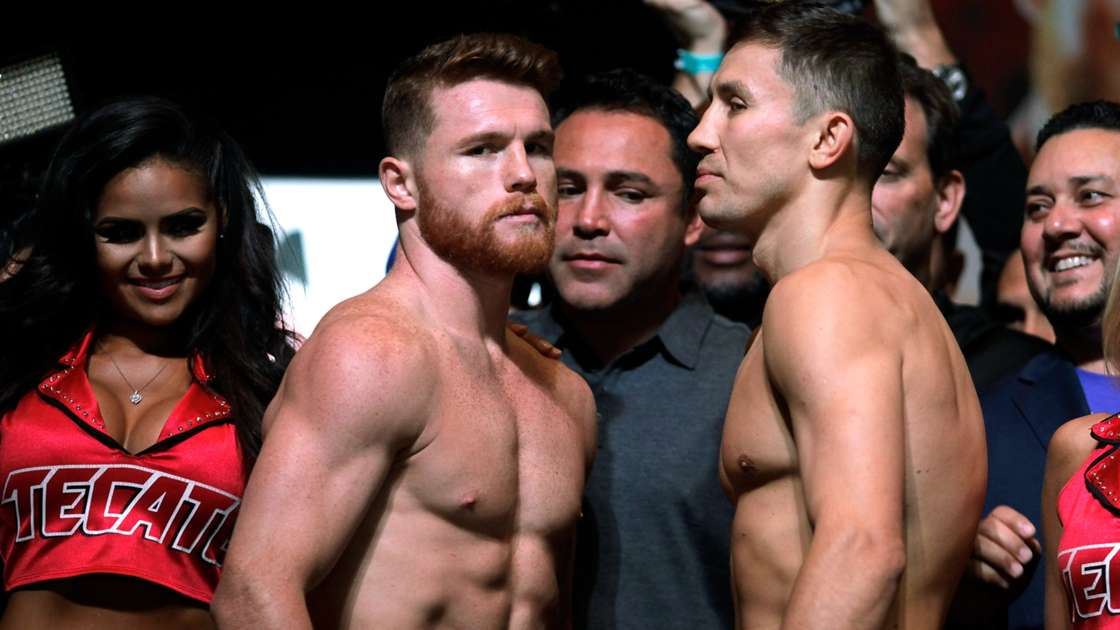
photo: dazn
As always with Canelo, nothing is certain until the ‘Golden Goose’ of boxing decides to announce his intentions. Yet it is expected that if he gets past Dmitry Bivol on May 7th, then he will next meet GGG for their long-awaited 3rd fight, sometime around mid-September.

After the second match between Golovkin and Canelo, it was a common joke among some boxing followers (mostly those not blinded by the Canelo media machine!) that Canelo would probably make Golovkin wait until he was past 40 until he got a third match. Ironically that is what seems to be about to happen. Canelo and his team have bided their time masterfully and now GGG seems ripe for the 3rd fight. Still exciting, still a big draw, but certainly a far less dangerous proposition than he was four years ago.

Should GGG even take the third fight with Canelo? He will know now that the chances of gaining a decision over Canelo are beyond slim, even if he is deserving of it, and beyond that, there is only the stoppage route to victory, something which even five years ago GGG wasn’t able to get close to achieving. For all the hype, dodgy judges, and cherry-picking (not to mention other shady stuff) there's no doubting Canelo’s toughness. Whatever may be behind it.

If Golovkin couldn’t stop Canelo 5 years ago, it's highly unlikely that he will be able to stop Canelo today in his present reduced form.
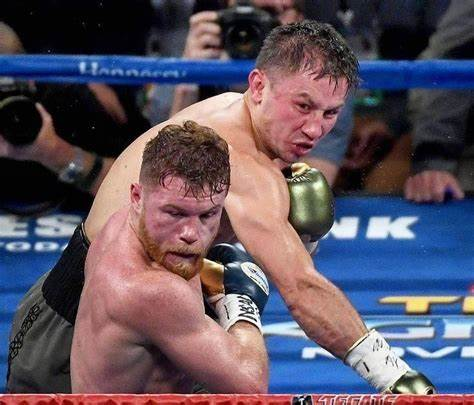
photo: stubhub
What also needs to be taken into account is the likelihood that the 3rd fight will take place at 168 pounds, a weight that will overwhelmingly favour Canelo rather than GGG. Golovkin is currently and has always been a natural 160-pounder(who seldom gains more than ten pounds between fights) rather than someone who comes down from over 190 pounds for his fights as Canelo has always done.

The purpose of a third fight with GGG for Canelo has always been to score a definitive defeat over Golovkin. Hence part of the reason for the long wait between the 2nd and proposed 3rd fights. Canelo has only been interested in fighting GGG again if he was secure in the belief that he could score a non-controversial victory this time. Ideally, he would like to stop or knock out Golovkin.

Canelo still bristles over the controversy surrounding his two matches with Golovkin and would like nothing better than to end the rivalry with a stoppage victory over Golovkin.

Certainly, the Golovkin who struggled with Murata did not look equipped to deal with Canelo at 168 pounds. Sadly the man who was once a feared and much avoided fighting machine now seems very mortal and vulnerable. He is ripe for Canelo to pick for his much-wanted ‘definitive’ victory.

Having followed Golovkin throughout his spectacular career, and after seeing him robbed by the judges twice against Canelo, I would rather not see a reduced GGG fight Canelo a third time at a point in time where it suits no one but Canelo.

After watching Golovkin battle past Murata, even taking into account his ring rust and the ability to improve himself between now and September, it is clear that time has moved on for GGG. Those tools which once made him the best in the world will never be quite as sharp nor so deadly again. A fight between Golovkin and Canelo now would be a poor reflection upon a fair fight between the two in their primes. GGG was already past his prime when Canelo finally fought him for the first time and now he is past the point where he will be a danger to Canelo.

No one knows this more than Canelo and his team which is why the fight is finally being made.

Golovkin is a warrior and the chances are that he will still take the third fight against Canelo despite any advice he may receive to go in a different direction.


Following their fight, GGG visited Murata’s dressing room and gave him back the WBA belt. It was the kind of classy gesture that makes a true champion and gives a fighter the kind of greatness that can't be bought by a crooked judge's scorecard. GGG may never beat Canelo Alvarez officially on paper, but he holds something over Canelo which is perhaps more precious than any victory in the ring. Integrity. It is that, above all else which underlines Golovkin's true greatness.

No cherry-picking can beat that.

Follow us on Twitter: @TheBoxingGlove and  

Facebook: www.facebook.com/theboxingglove

Instagram:  https://www.instagram.com/theboxingglove/


If you are an boxer, amateur or professional, and want us to follow you or tell your story, contact petersilkov@yahoo.com   or theboxingglove@yahoo.com

If you are an author and you would like your book reviewed, contact Peter Silkov at petersilkov@yahoo.com or theboxingglove@yahoo.com


Thursday, February 27, 2020

Tyson Fury Victorious In Vegas: The Gypsy King Breaks The Bronze Bomber


The Boxing Glove Big Fight Review:
By Peter Silkov
Writer For The Boxing Glove
Las Vegas has seen some remarkable fights in its time as the Mecca of boxing, but it's never seen anything quite like Tyson Fury, and Tyson Fury's seven-round demolition of the previously unbeaten Deontay Wilder. As a fight, Wilder vs Fury 2 was by turns tense, exciting, and at times brutal. But it was the human drama surrounding the contest, most specifically the human drama which is Tyson Fury's life, which made this contest into something exceptional.
When the two met for the first time 14 months ago, at Los Angeles, Staples Center, Fury had shocked many of the so-called 'experts' by out-boxing the 'Bronze Bomber' for the vast majority of the match, except for those two rounds in which he was knocked down. It was a stunning performance by a man who had fought just twice in three years, against mediocre opposition, following a mental breakdown that had seen him go from Champion of the world to the depths of despair. If anything, the impact of Fury's performance was heightened by the two knockdowns which he suffered, especially that knockdown in the 12th and final round which will go down in boxing history as one of the most dramatic ever seen. If ever a fighter displayed an almost inhuman ability to bounce back from the dark jaws of defeat, that fighter was Tyson Fury in that 12 round. It is one of those very few knockdowns that whenever you rewatch it you find yourself subconsciously doubting that he will beat the count this time.
In the end, the drawn verdict is almost an afterthought today. Everyone who watched that fight knows that Tyson should have won it.
Heading into the rematch Fury told us that not only would he be 50% better this time, but that instead of going for a points victory, he would knock Wilder out and bypass putting the fights final result in the hands of the Vegas judges. The boxer was going to become the aggressor, against the man whom many were hailing as the most dangerous puncher ever seen in the history of the heavyweight division. For some Fury's new gameplan was a brave gamble, while others declared it akin to boxing suicide. Why go head to head with a puncher of Wilder's venom. Still, others saw it as a ruse and expected Fury to turn up on fight night and box Wilder the same way which he fought him in their first bout.
However, those who have followed Fury throughout his career will know that he is not one to give empty promises when it comes to predicting his performances inside the ring. The most powerful examples of this have come in his most important contests. In 2015 before his often overlooked victory over Wladimir Klitschko, the Gypsy King told everyone in great detail (including Wladimir himself) how he would outbox a man who had never been outboxed before in his whole career. Then before he met Wilder in their first match 14 months ago Fury detailed how he would outbox 'The Bronze Bomber' despite having not faced a serious opponent in the ring for three years.
Yet again Fury did as he had predicted and to quote a cliché 'boxed Wilder's ears off' save for those two knockdowns. But the general consensus was that Fury would be taking the biggest gamble of his career if he chose to go toe to toe with the big-hitting Wilder. After all wouldn't this be just what the 'Bronze Bomber' would want? Fury coming at him rather than fighting in his usual herky-jerky counterpunching style?.
Tyson Fury was going to take the biggest gamble of his boxing career in the gambling capital of America, where victory against the odds can be life-changing. After that disputed draw, 14 months before Tyson wanted to take his destiny out of the hands of the judges. Fury was going to take on the biggest fight of his career with a new style and a new corner team. It was a gamble worthy of a gambling Mecca such as Las Vegas. And that's exactly what he did.
After being carried to the ring on a mock throne, dressed as a King, and to the strains of 'Crazy' by Patsy Kline, the 'Gypsy King' proceeded to do exactly what he had been saying he would do ever since signing for the rematch. He took charge of the fight from the beginning, forcing Wilder back with a tremendous jab that jolted The Bronze Bombers head back. Just as he said he would, Fury was coming forward aggressively rather than looking to counter and move as he usually does, but his pressure was intelligent as he was using feints and little nuances of upper body movement to still make himself an elusive target. Fury's ring generalship is such that he can stand right in front of an opponent yet still evade their punches with a simple step aside or a twitch of the head.


The effect of Fury's extra weight was evident as Wilder seemed to be shaken by the weight of every punch Fury was landing. Fury has always had underrated punching power (just ask Dereck Chisora) but when he is weighing around 270 pounds and is also putting his weight behind his shots, he becomes a very different animal to the boxer who just wants to move about the ring and counterpunch.
While it was a right-hand to the side of the head in the 3rd round that signaled the end of the match as a competitive debate, Deontay was softened up first by Fury's tremendous jabs in the 1st and 2nd rounds, as Wilder found himself under increasing pressure and unable to fire off his own punches. From the start of the fight, the 'Bronze Bomber's inability to fight on the back foot was becoming clear.
Fury increased his pace in the 3rd round. That pole-like jab struck with increasing regularity and was then accompanied by some right hands. Forced back to the ropes, Wilder was then sent down by a thunderous right hand that seemed to slam him into the canvas. He did well to regain his feet, but was soon down again, tumbling forwards after taking some more right hands. Although this fall was ruled a 'slip' by referee Kenny Bayliss, there's little doubt that it was a genuine knockdown and discounted or not the damage was done.
The Bronze Bomber returned groggily to his corner at the end of the 3rd still in the fight but his body had already been broken. Blood was flowing from the mouth and left ear, and Wilder couldn't suppress the look of pain and bewilderment covering his face.
In the rounds that followed Wilder resembled a short-circuiting robot as he staggered about, often grabbing hold of Fury to buy himself some time and occasionally trying to land with that notorious knockout punch. Yet the punches when they were thrown, were only hitting the Las Vegas air.
Fury constantly pressed and kept Wilder on the defensive, nullifying the power of the few punches that Wilder was able to fire off. Fury feinted and shifted cleverly on his feet. He seemed always to be in front of Wilder yet Wilder could not hit him. There was no respite for Wilder in the clinches either as the battered Bronze Bomber sought to hold on in an effort to retrieve his balance and shut down Furys attacks. Fury battered Wilder on the inside as well and leaned his weight onto Wilders.
The fighter who so often during his career has been known to 'bully' opponents with wrestling in clinches and shots behind the head, etc, was now being bullied himself.
Wilder fell down again in the 4th round after taking some glancing blows from Fury. Although it was not deemed a knockdown by referee Bayliss it was clear that keeping his feet was becoming an ordeal for Deontay.
The 5th round should have been the last. Wilder was floored by shots to the head and body. The fact that he regained his feet yet again says all you need to know about the 'Bronze Bomber's heart. For all his flaws Wilder showed on this night that he has the courage of a warrior.
Referee Bayliss perhaps saved Wilder from being stopped in this round when he broke the action to administer a disgraceful point deduction from Fury. The enforced pause gave Wilder some extra time to recover, yet by now it was only prolonging the inevitable. Both men were by now covered in blood and it was all spilling out from Wilder.
Ultimately Bayliss was doing Wilder no favors by prolonging the fight.
Between rounds, Deontay's corner seemed almost mesmerized by what was happening to their fighter, as they tried to staunch the blood running from his left ear yet seemed to have very little idea what to do or say in order to effect a change in the course of the fight.
Both Wilder's cornermen/trainers seemed to be talking to him at the same time, but the wounded and dazed fighter looked like he couldn't take anything in from either of his trainers let alone implement either of their instructions. Only assistant trainer Mark Breland seemed to have some kind of composure and idea as to what to do, but he also seemed hopelessly unable to get his message through to his fighter.
Wilder continued to take punishment in the sixth round, with his movements becoming more and more exaggerated as the beating he was taking took its toll. At times he looked as if he was moving in slow motion. Fury actually seemed to hold back when Wilder staggered in front of him, perhaps hoping that the referee would save him having to continue the now one-sided beating.


But if Fury was holding back a little out of sympathy in the 6th round he stepped up his attack in the 7th, as Wilder staggered stiff-legged into the corner with his arms up his face to try and defend himself, Fury unleashed a heavy attack, slamming his right hand again and again into Wilder's head. It looked to be just a matter of moments before Wilder would be falling to the canvas again, and this time for good.
Then it was all over.


Wilder's trainer Mark Breland finally saved his fighter by mercifully throwing in the towel. He has since been criticized by Wilder for stopping the fight when he did, even though he might have saved Deontay's career, not to mention his future health, by doing what he did.
The 'Bronze Bomber' was as beaten as ever a man could be, but in defeat, he had shown a heart of a warrior and a chin and proclivity to soak up punishment which far exceeded previous expectations of him. Often rumored to be delicate in the chin area, Deontay took far more punches than anyone with the cliché glass chin ever could hope to do.
The Gypsy King is once more the king of the heavyweight division. While Anthony Joshua holds the other belts, there can be no denying that his status is perhaps irreparably damaged after his devastating loss last year to Andy Ruiz. Although Joshua came back and beat Ruiz in their rematch, it was an uninspiring 'revenge' victory against a man who seemed unfit to fight and served only to paper over the damage to his reputation. There is little doubt that Tyson Fury is now viewed by most boxing followers and media as the 'main man'.
The recognition is long overdue.
It's difficult to find a comeback in boxing that compares to that of Tyson Fury. In the space of just two years, he has come back from a breakdown and having to lose over 10 stone to once more being officially the heavyweight champion of the world, a title which he never actually lost in the ring but had taken from him by the men in suits.
Even Las Vegas has never seen an act quite like Tyson Fury. An emotional Fury capped his triumph over the 'Bronze Bomber' by singing 'American Pie' to an audience who seemed to be genuinely overwhelmed by what they had just witnessed. Even Muhammad Ali never burst into song after his ring victories. It is perhaps not an exaggeration to say that no British fighter has ever captured the imagination and hearts of the American boxing fan quite like Tyson Fury.


Tyson was hailed by a full house at the MGM Grand, which included about 5000, fans from Britain, in scenes which haven't been seen for a heavyweight championship in America since the days of Evander Holyfield and Riddick Bowe. The heavyweight division is alive again in the USA and the man who has brought it back to life is British. It is a fact that some will not like, but Tyson Fury has achieved what Anthony Joshua was once expected to do.
The irony will not be lost upon American fight followers that the heavyweight division, so long the bastion of the American boxer, is now undisputedly ruled by British fighters. The days when the British heavyweights could be dismissed by a grinning American fight fan as the 'horizontal heavyweight' (something which was always rather exaggerated) are well and truly over.
Fury had proved the doubters wrong again, something which he has done throughout his career. The 'Bronze Bomber' who was being hailed by some as the hardest punching heavyweight in history was battered into bloody submission by a man he had labeled 'pillow fisted'.


The parallels between Fury and Muhammad Ali are clear in so many ways even though the two are also very different men in some ways. Tyson like Ali is a maverick who has won over the boxing world with a mixture of arrogance and humility and a unique sense of humor. Like Ali, he has also constantly beaten the oddsmakers and shown a penchant for always finding a way to win in the ring. Tyson, like Ali before him, also has unflinching confidence in his ability in the ring and a knack for getting into the heads of his opponents.
There will never be another Muhammad Ali and so to compare both as fighters when they have fought in such different eras is unfair to both men, but it is fair to say that Tyson Fury is the biggest personality to hold the heavyweight crown since the days of Mike Tyson, the man whom he was named after. Tyson Fury's comeback from mental illness, and substance abuse, and his willingness to talk about his ongoing problems has made him a transcendent figure in the sport. It isn't an exaggeration to say that his exploits in the ring have saved lives and inspired people to tackle their own mental health issues.
The fight which everyone will want to see now is Fury vs Joshua. Despite Anthony's reputation being somewhat damaged from his defeat to Ruiz, the prospect of him and Tyson finally squaring up in the ring is irresistible. Two British fighters, each with their own large fan base, clashing to decide the undisputed heavyweight championship of the world. Quite simply it should be the biggest boxing match this country has ever seen.
Fury might well have to face Wilder for a third time though if the American chooses to exercise his option for an immediate rematch.
How Wilder will recover from the first defeat of his professional career remains to be seen. Defeat has a habit of bringing out either the best or the worst from a fighter. Some rise to greater heights than they reached before while others sink. The signs from Wilder so far are not good.
While he was courageous in the ring, in the days since his defeat he has shown a distinct lack of class and moral courage by trying to explain his defeat with simply risible excuses. Wilders 'confession' that he was weakened even before the fight began by the weight of the bizarre uniform that he chose to wear on his ring walk will no doubt give him an unenviable place in boxing history.

Excuses from defeated fighters are nothing new in boxing, but the extremes of Wilder's claims leads one to believe that this is a man who has been broken mentally as well as physically. The fact that Wilder has seemingly fired assistant trainer Mark Breland, the man who saved him from taking career-ending, or even life-changing punishment, is another clue as to how far Wilders judgment has derailed from reality.
Just three days after Tyson's devastating victory over Deontay Wilder, it was the 56th anniversary of the night when one young Cassius Clay tamed 'The Ugly Bear' Sonny Liston to win the heavyweight championship of the world for the first time. Tyson Fury might not be Muhammad Ali, but his performance on Saturday night was worthy of being so close to the anniversary of 'The Greatest' first crowning. Like Ali before him, Tyson Fury told us what he was going to do and then went out and did it. Simple though that may sound it has made 'The Gypsy King' the biggest attraction in the sport today.
The 'Gypsy King' has regained the throne which was so unfairly taken from him, after a torrid tale of intrigue, greed, betrayal, drugs, alcohol, and mental illness. It is a drama Shakespeare himself would have been proud to have written.


Follow us on Twitter: @TheBoxingGlove and  
Facebook: www.facebook.com/theboxingglove

If you are an boxer, amateur or professional, and want us to follow you or tell your story, contact petersilkov@yahoo.com   or theboxingglove@yahoo.com

If you are an author and you would like your book reviewed, contact Peter Silkov at petersilkov@yahoo.com or theboxingglove@yahoo.com


Sunday, February 23, 2020

Remembering When Tyson Fury Beat Wladimir Klitschko


By Peter Silkov
Writer For The Boxing Glove


If you think Tyson Fury was brilliant on Saturday night when he dismantled Deontay Wilder (and he was!) I recommend that you give his 2015 victory over Wladimir Klitschko a look (or a second look). The Gypsy King's triumph over Wlad was one of the best technical performances from a heavyweight that I have ever seen but was criminally ignored and even scorned by the general media/fans at the time due to Fury being an 'outsider' in the big picture back then. Furys face didn't fit basically.  Ironically when Anthony Joshua beat Wlad about 18 months later (after almost being knocked out himself) the media hailed his victory over Klitschko as if the Fury defeat never happened. Perhaps now that the Gypsy King is finally receiving the recognition he deserves, his victory over Klitschko (who when they fought was making the 20th defense of his world title, and had been unbeaten for 11 years) will be fully appreciated as well. It's about time.


Follow us on Twitter: @TheBoxingGlove and  
Facebook: www.facebook.com/theboxingglove

If you are a boxer, amateur or professional, and want us to follow you or tell your story, contact petersilkov@yahoo.com   or theboxingglove@yahoo.com

If you are an author and you would like your book reviewed, contact Peter Silkov at petersilkov@yahoo.com or theboxingglove@yahoo.com

Saturday, February 22, 2020

WILDER VS FURY 2: FINAL PREDICTION


The Boxing Glove Prediction
By Peter Silkov
Writer For The Boxing Glove


With a little over 10 hours to go until fight time what are your predictions for Wilder vs Fury 2?. I must say that I am not happy with either the judges or the referee and quite frankly can't see Fury winning a decision. Not that he won't deserve it, but he just won't get it!. He also is unlikely to receive any favors from the referee if he happens to get cut or floored. Unfortunately, I can see Bayliss jumping on any chance to stop the fight in Wilder's favor. I'd hate to sound cynical and I'd rather be wrong, but I've seen too many big fights in Vegas over the years to be green enough to still believe that Fury will get a fair shake. Having said all that I do think Fury is smart enough to know all this himself and that is one of the reasons why he is going for the knockout. Can Fury knockout Wilder?, I believe he can. If he can hurt Wilder early, take control of the fight, and then wear Wilder down we could see a late stoppage from Fury. Remember how Wilder got gassed when he tried to stop Fury last time. Like many punchers, Wilders stamina is suspect which is why he fights only in spurts. Dangerous spurts yes, but this is a fight that Fury can win through higher work rate and pressure. Fury needs to pile on the pressure while staying clever himself and not taking any silly shots. Then Wilder will break like a rusty drain pipe.

And don't worry about Fury's weight! he's 273 solid pounds, not 273 flabby out of shape pounds. As his new trainer Sugar Hill keeps on having to point out to people, Fury is 6' feet 9", not 6' feet 1" or 2" or 3" or 4", etc. Fury has also weighed around this weight before and has fought very well. He can still move around at this weight, but he will have more strength and power and also more resistance to Wilder's shots.

Barring a cut or something controversial I'm going for a Fury win tonight in about 8 to 10 rounds.


Follow us on Twitter: @TheBoxingGlove and  
Facebook: www.facebook.com/theboxingglove

If you are a boxer, amateur or professional, and want us to follow you or tell your story, contact petersilkov@yahoo.com   or theboxingglove@yahoo.com

If you are an author and you would like your book reviewed, contact Peter Silkov at petersilkov@yahoo.com or theboxingglove@yahoo.com

Friday, February 21, 2020

DEONTAY WILDER VS TYSON FURY 2. TYSONS BIG GAMBLE IN VEGAS


The Big Fight Preview

By Peter Sikov

Writer For The Boxing Glove

On Saturday night Tyson Fury will face Deontay Wilder for the second time, in a fight that has many struggling to pick a winner. At first glance Fury should be a clear favorite to win this time round, after being blatantly robbed in the first match. Yet boxing is seldom that straight forward.
In their first meeting 14 months ago Fury entered the ring with Wilder after three years of turmoil that had seen him wrestle with mental illness and substance abuse which resulted in him ballooning to over 400 pounds. The very fact that Fury was climbing into the ring that night with Wilder, having lost over 10 stone, and after just two warm-up fights behind him in three years, was no small achievement by itself. However few expected Tyson to last more than a few rounds against the 'Bronze Bomber'. Even Fury's own team feared the worst. Fury's improbable comeback was expected by the games wise heads to come to a crashing end, leaving him to take his money and then retreat back into boxing oblivion. Tyson though had his own ideas. 'The Gypsy King' has often stated that if he believes he can do something strong enough in his mind, then there is nothing that can stop him. It is a curious part of Tyson's character that despite his well-publicized struggles with mental illness when it comes to boxing one of his strongest assets is his mental strength. Like so many other fighters Fury struggles far more with the world outside of the boxing ring than the world within it.
In his first meeting with Deontay Wilder, Fury belied the fact that he had not engaged in a real competitive match for over 3 years, and all the problems he had struggled against in those three years seemed a world away as he gave Deontay Wilder a clinical boxing lesson. Indeed the fight would have been a virtual shut-out save for two instances in two separate rounds. The knock-downs. The first knockdown came in the 9th round after he caught a shot to the top of the head, and seemed to be little more than a blip for Tyson. However, the second knock-down was something altogether different. Caught flush by a right hand, and then a looping left, Tyson fell to the canvas like he was out to the world. To use the cliché 'pole-axed' would not be an exaggeration. Very seldom do fighters get up from a knock-down like that, and even fewer rise from such knock-downs in anything like a fit state to carry on fighting.
Fury though has already shown that he is a unique boxer, and upon this night he showed it in a way that will forever be embedded in his boxing legacy long after he finally retires. In many ways that 12th round knock-down became a symbolic microcosm of what Fury had gone through in the previous three years since his criminally unappreciated defeat of long time world champion Wladimir Klitschko. Fury rose with an almost disdainful nonchalance that even seemed to take the referee by surprise. And if the referee was surprised then the reaction of Deontay Wilder, who for about six or seven seconds had been celebrating his stunning come from behind victory with the kind of posing befitting such a triumph, was a classic picture in itself.
Wilders surprise was multiplied as Fury not only survived his follow up assault, but decided to go onto the attack himself, rather than stay on the defensive. Fury even managed to shake Deontay in the last minute of the round. In the dying seconds of the match, it was Wilder not Fury who was holding on and happy to hear the final bell.
When the scorecards were read out, Fury's disgust at the drawn result was as clear to see as Wilders relief that he had managed to hang onto his WBC world title belt. The crowd's disapproval of the decision was also loud and clear, despite Wilder being the 'home' fighter.
In the proceeding 14 months, speculation and interest has mounted about the inevitable rematch between these two men, with the general consensus amongst the unbiased being that the winner of Wilder vs Fury 2 will have the right to declare himself the number 1 heavyweight in the world. Each man fought twice in 2019, with Wilder's performances being more impressive. The 'Bronze Bomber' dispatched Dominic Breazeale in 2 rounds and Luis Ortiz in the 7th, each via an impressive knock-out. While it is frankly ludicrous to hail Wilder as the biggest puncher in heavyweight history, (he isn't for several reasons) there is no doubt that he carries a dangerous punch. The problem for Wilder is that he is fairly average in all other areas of his game, save for that monstrous punch. Yet still, Deontay impressed especially with his stoppage of Ortiz in his last outing, even if the knock-out overshadowed the reality that he had been handed a pretty decisive boxing lesson by the 40+-year-old Cuban, right up to landing the fight-ending knock-out blow.
Tyson Fury's outings in 2019 were a little more patchy. While he impressed in his first outing by quickly dispatching Tom Schwarz in 2 rounds, his September match against Otto Wallin turned into perhaps the toughest fight of his career. 'The Gypsy King' was far from being on top form. He was flat-footed and sluggish from the start and collected two horrendous cuts over the right eye early on which threatened to stop the fight. Tyson ended up having to slug and maul his way to a clear but very bloody points victory, with his performance leaving behind it a lot of questions. Fury showed the same kind of bravery and fighting instinct in overcoming being cut so badly against Wallin as he did when rising from those knock-downs against Wilder. But at the same time, his performance was worryingly below par.
Tyson now goes into Saturdays match with a new training team, having parted ways with Ben Davison and reunited with Sugar Hill Steward, the nephew of the late legendary Kronk trainer Emanuel Steward. Tyson worked with Sugar Hill previously when he spent some time being trained by Emanuel Steward at the Kronk gym in 2010. It was Emanuel who predicted that Tyson Fury would be the next fighter to dominate the heavyweight division. He also gave similar praise to Deontay Wilder. Fury has also taken on the training services of former world middleweight champion Andy Lee (who also happens to be his cousin). It is a change that is meant to work on Fury's weaknesses, some of which were exposed against Wallin, but others which were evident against Wilder.
Was Tyson's performance against Wallin due to him not being switched on mentally for an opponent who he was expected to beat easily. Throughout his career Fury has produced his best performances when he has been up against his most demanding opposition, with his two victories over Dereck Chisora, his world title victory over Wladimir Klitschko, and his first fight with Wilder being the prime examples. Yet there is also the possibility that Fury, after almost two years of non-stop training, is becoming physically burned out. We won't know for sure until Saturday night whether the Wallin performance was just a blip or else an early indication of an athletic decline.
A crucial part of this question is how successful Tyson's switching trainers will turn out to be. Changing such a fundamental facet of your fighting make-up just seven weeks before a big fight may seem foolish to some, but it may also be just the kind of tweak that Tyson needed to refresh and revitalize himself after the disappointing Wallin performance.
Fury has said that he has been working on improving his balance, sharpening his jab, and putting more weight into his punches. He has been stating regularly how this time around he will be going for a knock-out win rather than a points victory (which he unsurprisingly doesn't believe he can get in Las Vegas). At first, this might seem to be a kamikaze approach to the rematch by the 'Gypsy King' but then you remember the handful of times that Fury shook Wilder in their first match, especially in that final round directly after Wilder had floored him. Fury shook Wilder several times throughout the fight but each time failed to follow up, partly due to instructions from his corner and partly due to his own doubts about his stamina in what was his first real fight in three years.
This time round according to Tyson it's going to be different. He will be far fitter than he was for the first match and he has shed the remaining rust from his inactivity with his fights against Schwarz and Wallin. Indeed the Otto Wallin fight could well turn out to be a blessing in disguise as it meant that Fury got to go 12 tough rounds, which could prove to be very good for him this coming Saturday night. Not only will it have helped him shed any remaining rust, but it will also have helped boost his confidence in his stamina.
Looking at both men, the biggest contrast between them is that we know what Wilder will do, he is a puncher and he will try and knock Fury out. Wilder is a one-dimensional fighter, and he will fight one way only, with the only tweak to his style recently being to employ more patience. Against Ortiz, he waited and waited, and threw few punches, until the final shots that put Ortiz down and out.
Tyson, however, is far more unpredictable. Especially now that he and his trainers are saying they will be going for a knockout win. Is it hype or mind games? Or will Tyson really be looking to end things early? You would think that Wilder's greatest wish is for Tyson to come forward in the rematch and take the fight to him. Yet, on the other hand, Wilder has never looked comfortable fighting on the back foot, which is why he seldom does it if he can help it. If Tyson could manage to pressure and force Wilder back then he would negate much of Wilders punching power. Wilder also needs to be at a certain distance to be able to throw and land his long looping and often wild shots. If Tyson succeeds in pushing Wilder back and can pressure and crowd him, then he will be negating much that makes Wilder such a dangerous puncher. Wilder also cannot fight on the inside, while Fury, surprisingly, despite his height and reach, is a very good inside fighter.
Tyson fury's punching power has often been underrated. He punched hard enough to score a brutal stoppage over Dereck Chisora in their second meeting. He also punched hard enough to gain the respect of Wladimir Klitschko. There was a reason why Wlad was so wary of exchanging with Tyson, and it wasn't due to Tyson not having a punch. Tyson's knock-out ratio is very respectable when you take into account his elusive style of fighting, (20 stoppages out of 29 victories) and the fact that he often doesn't set himself to throw his punches with their full weight. Throughout his career Tyson has often seemed happy to simply out-box his opponents rather than going for the knock-out.
While there is always the danger that a more aggressive Tyson might get caught by another one of those Wilder bombs, there is also the chance that Fury can get caught if he tries to out-box Wilder for 12 rounds again. The longer the fight goes the more chance Wilder has to land that one punch which could change everything. Then there is the question about whether Fury can rely on receiving a fair decision in Las Vegas. Recent history tells us that if the fight is even slightly competitive or close, then the judges will favor the 'home' fighter over Fury. After all, this is the world's heavyweight championship, and certain people are desperate for an American fighter to at least keep hold one of the world title belts.
When you are looking at the fight like this then Fury going for a knock-out does not seem like such a crazy strategy.


There is also the question of Fury's legs. Since his comeback, he has never shown quite the same nimbleness which he had earlier in his career and especially against Klitschko. That speed and sharpness in the legs is something which Fury is unlikely ever to totally regain. With that in mind, it makes sense for him to tweak his style and become more aggressive. Fury is said to be planning to weigh in at around 270- 275 pounds, this is a weight at which he has fought previously. Tyson's record shows that when he fought at or around that weight in previous fights he stopped 7 of his nine opponents, including Dereck Chisora whose only other inside the distance defeat came at the hands of Dillian Whyte in 2018.
There remains the possibility that Fury may come out and try to out-box Wilder just as he did in their first bout, but Fury and his new trainers seem adamant about their strategy. They are either taking a very bold gamble or else playing mind games with Wilder.
Fury has certainly looked a little sturdier in recent weeks, and more powerful in the arms and legs.
In the town where you often have to take a gamble to have a chance of winning, Tyson Fury is getting ready to make perhaps the biggest gamble of his career on Saturday night. With the cards regarding a points decision probably stacked against him, does he put all his faith into his own hands and go for a knock-out, so that he can be his own judge and referee.
As we enter the final days before the fight Tyson is the slight underdog with the oddsmakers. It is no doubt a position he will relish. Fury is always at his best when he is the underdog, which was probably part of his problem against Otto Wallin. The chances are that Fury was just not fired up for a fighter he was expected to beat with ease.
The biggest worries for Tyson as we approach fight night must be the match going the distance, (after all who trusts Las Vegas judges, unless you are the home fighter?) his right eye reopening or running into one of Deontay Wilder's right hands.
Tyson's right eye, which was so badly cut against Wallin, looks to have healed up exceptionally well, but there is always the danger of a cut like that being reopened, especially against such an aggressive and often crude fighter as Deontay Wilder. The fact that Fury will have two cutmen in his corner on the night is proof that cuts are a worry.
Will Wilder seek to box more in this fight and use his often neglected jab, especially if Tyson is fighting a more aggressive fight. Wilder has shown more patience in his recent fights but it is unlikely that he will simply be waiting for that one punch to end the night against a fighter of Tyson's ability. Wilder is likely to be as aggressive as usual, perhaps even more so, as he seeks to land that big power punch or perhaps a punch that will reopen Tyson's eye.
This is a rematch that may well surpass the first fight for excitement and action as both men will be even more desperate and determined to take victory this time in a matchup which has taken on far more impact and significance than their first encounter.
The winner of Saturday night will be seen by most of the boxing world as truly the number one heavyweight in the world. He will also be in the driving seat for the long-awaited showdown with Anthony Joshua.
My feeling regarding the result is that Tyson Fury will once again defy logic and shock the so-called experts, but this time around he will be granted his rightful victory, as Wilder is counted out for the first defeat of his professional career. Its a gamble, but this may well be one of those nights where that old cliché 'He who dares, wins!' comes true. Especially in a town like Vegas.


Follow The Boxing Glove for the history of the past and the current day!  Please read, like and share and spread the word!  Boxing! boxing! keep on punchin!


Follow us on Twitter: @TheBoxingGlove and  
Facebook: www.facebook.com/theboxingglove

If you are a boxer, amateur or professional, and want us to follow you or tell your story, contact petersilkov@yahoo.com   or theboxingglove@yahoo.com

If you are an author and you would like your book reviewed, contact Peter Silkov at petersilkov@yahoo.com or theboxingglove@yahoo.com


Sunday, January 13, 2019

TBG Sunday Night Book Review: Johnny Risko: The Cleveland Rubber Man


The Boxing Glove Book Review: By Peter Silkov

"Johnny Risko: The Cleveland Rubber Man" By Jerry Fitch

There is a misconception in some modern boxing fans minds that the value of a fighters ability can be weighed up simply by a quick check of the number of wins and losses upon his record. Many fighters today tread carefully around their most talented and dangerous rivals for fear of what a defeat might do to their record. Of course, there are still exceptions to the rule, for instance recently crowned World lightweight champion, Tevin Farmer, was 7-4-1 in his first 12 professional contests, yet has developed into a genuine world-class champion. Yet the fact that Farmer is such a rarity in today's era, serves to prove the point that for modern day boxing keeping that undefeated '0' is all important to most fighter's managers and promoters.

The examples of fighters learning their trade as much through defeats, as they do victories, have become rarer and rarer in the modern boxing landscape.

It was very different in the past when there were far more fighters, far fewer titles, and the best fighters invariably fought their toughest rivals on a regular basis. Indeed in those days, most fighters wanted to fight the toughest opposition available, as they knew that this was the only route for reaching the top of the sport.

The name of Johnny Risko might not be familiar to many of today's fans, but back in what is often now referred to as boxing's 'golden age', 1920 to 1950, Risko was a great example of a fighter who fought regularly and almost exclusively against top-notch rivals. A look at Johnny Risko's final career tally of 68-46-6 (22koes) might provoke some to dismiss Risko as a mediocre also ran in the annals of boxing history. Like many fighters of his era, the bare numbers of Risko's boxing record fail to tell the story of his career, or his ability as a fighter.

However, for the intrepid boxing fan who likes his boxing history, Johnny Risko has now been brought back to life by boxing writer and historian, Jerry Fitch.

Jerry Fitch does a great job of telling the story of Johnny Risko's life and boxing career in his book "Johnny Risko: The Cleveland Rubber Man."

Born Mesto Bohunico, on December 18, 1902, in what is now part of Slovakia, but was then the Austria-Hungarian empire, Johnny and his family immigrated to America in 1908 when he was just 6 years old.

After settling in Cleveland, Ohio, Johnny's parents opened a bakery, where Johnny himself would work. Johnny was soon finding that he had a talent with his hands beyond using them in the bakery when he started using them in the ring and regularly knocking out his opponents as an amateur. As an amateur boxer, Bohunico, with his new Americanized name, won 39 of 59 contests via a knockout and became something of a sensation in his adopted home town of Ohio.

Risko turned professional in 1922, not long after the overturning of a ban on professional boxing in Cleveland. In a career which lasted until 1940, Risko would fight the cream of the light-heavyweights and heavyweights of the '20s and '30s. Short and stocky, at 5' 11" and between 190 and 210 pounds, Risko was to gain notoriety for his toughness and heart inside the ring.

Originally nicknamed 'The Baker Boy' Risko was soon being called 'The Cleveland Rubber Man' due to the impression he made of having punches simply bounce off him. Risko was an aggressive infighter, who relied very much upon his left-hand after an injury to his right shoulder early in his professional career rendered him almost a one-armed fighter. Indeed, when you learn about Risko's early career injury, that robbed him of the knockout punch in his right hand, the fact that he went on to achieve what he did in his career becomes even more impressive. Shorn of his powerful right-hand punch, Risko became a relentlessly aggressive infighter, who relied upon his work rate and toughness to outwork and outlast his opponents.

The list of Risko's opponents is impressive indeed, including, Young Stribling, Mike Mctigue, Gene Tunney, Jack Renault, Jack Sharkey, Jack Delaney, Tommy Loughran, Jimmy Slattery, Lou Scozza, Paulino Uzcudun, George Godfrey, Tuff Griffiths, Mickey Walker, Max Baer, King Levinsky, Bob Olin, Max Schmeling, and John Henry Lewis. Looking at the names on Risko's record, it becomes hardly surprising that he experienced a number of reverses. Yet, he also scored his fair share of impressive victories and was world rated amongst the top heavyweights for several years.

Jerry Fitch has done a meticulous job in bringing Johnny Risko's life and career alive. This book is nicely equipped with quotes from newspaper articles of the time, as well as a number of round-by-round commentaries upon some of Risko's most important fights. These commentaries, which have been taken from the newspaper archives of "The Cleveland Plain Dealer", give the reader the impression that he is going back in time and witnessing the fight himself. It is a unique way to appreciate Risko as a fighter and indeed appreciate his opponents.

'The Cleveland Rubber Man' never fought for a world title, yet this shortfall says more about the intensity of competition in his era rather than any shortcomings in his ability.

"Johnny Risko: The Cleveland Rubber Man" doesn't just shed light upon the life and career of Risko himself, it also gives the reader a nice insight into the era in which he fought and his many outstanding opponents. There are also a good helping of classic photos throughout the book, and Risko's boxing record is provided in the back of this biography.

Jerry Fitch has devoted himself to highlighting the boxing history of Cleveland Ohio, and after a previous book on Jimmy Bivins, he has highlighted yet another fighter whose life and boxing career deserves to be told and remembered.


If you would like to purchase this book it is available on Amazon:

Follow us on Twitter: @TheBoxingGlove and  
Facebook: www.facebook.com/theboxingglove

If you are an boxer, amateur or professional, and want us to follow you or tell your story, contact petersilkov@yahoo.com   or theboxingglove@yahoo.com

If you are an author and you would like your book reviewed, contact Peter Silkov at petersilkov@yahoo.com or theboxingglove@yahoo.com