Showing posts with label GOAT. Show all posts

Monday, April 25, 2022

TYSON FURY VS. DILLIAN WHYTE REVIEW: THE GYPSY KING SINKS THE BODY SNATCHER IN THE SIXTH


By Peter Silkov

Writer for The Boxing Glove


Wembley Stadium

If Saturday night proves to be the final night of Tyson Fury’s career, then he will have performed yet another rare feat during his tumultuous boxing career, by becoming one of the very few world champions who chose to walk away while they were still ‘king of the hill’. With his sixth-round knockout of Dillian Whyte before a record-breaking audience of 94,000, Tyson showed that he is not just the best heavyweight in the world, but if anything at almost 34 years of age, still getting better. Tyson dismantled Whyte with the air of a man watering his garden on a Saturday afternoon. Any fears that the three wars with Deontay Wilder may have taken something out of Fury were shown to be unfounded as ‘The Gypsy King’ first out-boxed, then out-punched ‘The Body Snatcher’ before finally knocking him out of the fight altogether with a clinical right uppercut. Fury did all this with ease, which left the impression that he had barely got out of 2nd gear. In the end, it was easier than many had expected it to be. Whyte was always seemingly a step behind, as ‘The Gypsy King’ showed himself to be a league above his challenger.

Dillian Whyte Enters Ring

The bout began cagily with both men weighing each other up, and few meaningful punches being landed. By the end of the round Fury was already landing with his jab and showing a nimbleness of footwork, which underlined the flat-footed nature of his challenger.


Anyone who believed that Whyte would start the fight fast and aggressively was probably surprised by Whyte's demeanor. Fury is usually always a slow starter, and many felt that the challenger's best chance of victory, (perhaps his only chance) was to go after the champion from the start. Yet Whyte started slowly, stalking Fury but without the fire that might have been expected. Another surprise was that Whyte opened the bout boxing as a southpaw, rather than in his usual orthodox stance. This might have been part of a plan to try and unsettle the champion, but if anything, it seemed to confuse Dillian more than anyone else. Whatever plan lay behind Whyte's change in stance was hastily abandoned after the opening round, and he fought the remainder of the match in his usual orthodox manner. This was always going to be a long shot tactic for Whyte, as Fury is one of the very few fighters who can switch with ease from orthodox to southpaw, so he was never very likely to be bothered by Whyte's rather random attempt at boxing southpaw.

Fury was finding his rhythm by the second round while Whyte was already beginning to struggle with the champion’s speed and movement. Tyson’s greatest attribute has always been not so much his size but the speed and dexterity which he has for a man of his size. Add that to his ring IQ and fitness, which belies his fleshy exterior, and you have a clue to Fury’s success.


It was becoming clear that this was a much sharper and better conditioned ‘Gypsy King’ than we saw against Wilder last October. Weighing in 13 pounds lighter at 264 pounds, Fury’s reflexes and footwork was clearly improved. Fury was displaying the boxing skills that he largely abandoned last October against Wilder, when under trained and ring rusty, he had to resort to going toe-to-toe to win their 3rd and final war.


Fury was pot-shotting Whyte with jabs and the occasional right hand, landing then stepping out of range. As the fight progressed, he was putting more and more weight into his punches.


By the third round, Fury was already beginning to slowly dominate. He was subtly chipping away at Whyte with his left, at times tantalizing his challenger by switching stances that seemed to wrong-foot and befuddle Whyte even more. Always a rather flat-footed fighter, Fury’s nimbleness was making Dillian seem pedestrian and clumsy.


Whyte was already breathing heavily by the 4th stanza and showed some signs of growing frustration as he attempted to drag Fury into a mauling brawl. There were some ugly clinches and wrestling, as the referee seemed to struggle to retain control of the fighters. One such mauling clinch ended with a head butt from Whyte, which ironically resulted in a cut above his right eye.


Fury stepped the pace up in the 5th and some blows visibly hurt Whyte. As well as regularly spearing his challenger with a damaging straight left, Fury was also hurting Whyte with rights to the body. When he returned to his corner at the end of the round, Fury seemed to say to his cornermen ‘Next round’.


The conclusion came near the end of what had been a fairly quiet round. Fury patiently looked for his opening while he jabbed with his left, and Whyte was seemingly out of ideas and constantly tried to hold and maul the champion. When the opening came Fury took it with deadly precision. The end came via a peach of a right uppercut, which deposited Whyte flat on his back. Fury’s hand speed, accuracy, and underrated ability on the inside all came to play into the dramatic finish of this match.


To his credit, Whyte beat the count and tried to convince the referee that he was ok to continue. However, his wobbly and uncoordinated body betrayed the fact that his brain was no longer in charge of his faculties, and the referee’s decision to stop the fight was probably his best action of the night.

It was a brilliant performance by Tyson, who ended the fight unmarked and had barely taken a serious punch. He had outclassed ‘The Body Snatcher’ and underlined his standing in the heavyweight division. Tyson stands head and shoulders over the rest of the division, not just physically, but in all areas which make up a top pugilist.


If anything, judging by this performance, at 34 years of age, Tyson is still improving. After a career plagued by inactivity, (which was usually down to outside issues out of his control) Tyson was finally able to give us a glimpse of what he can do when he is fully trained, healthy, and not coming off a long layoff. Despite the wars with Wilder, Tyson seems to still have a lot left in the tank and a lot more to show if he faces a challenger capable of pushing him more than Dillian Whyte did Saturday night. Should he walk away now while still at his peak? It is a question, which only Tyson Fury himself should decide. Retirement has always been the biggest challenge for most fighters, especially when they are at or near the top of the tree.


Team Fury Celebrating

If he does walk away now, Tyson Fury would be in rare company. Only one other world heavyweight champion has ever retired undefeated while champion and stayed retired, and that was the legendary Rocky Marciano.

Ironically, Britain’s last outstanding world heavyweight champion Lennox Lewis was also one of the very few to walk away while still world champion, but he was not undefeated, like the ‘Gypsy King’.

On one hand, it would be nice to see Fury face the winner of Usyk vs Joshua, ‘The Gypsy King’ brings an atmosphere and excitement to boxing that no one else can match at the moment, certainly in the heavyweight division. If this was Fury’s final boxing match, then he will most definitely be missed. Yet in a way, it would be fitting for Fury to once more mark himself out from the crowd and walk away from boxing despite the riches he can still make from it. A match with either Usyk or Joshua could earn Fury as much as 100 million pounds. But Fury gives the impression that he is tired of dealing with the constant petty politics that comes with dealing with Anthony Joshua and Eddie Hearn.


While Tyson was brilliant, when looking at Dillian Whyte’s performance, one does have to wonder whether all the preflight shenanigans, such as Whyte refusing to take part in the fight promotional press conferences and the long-running row regarding the cut of his purse, ended up hurting Dillian rather than Fury. ‘The Body Snatcher’ never seemed as fired up, as you would expect for someone finally getting the chance to fight for the world heavyweight championship. Even on his ring entrance, the challenger seemed strangely subdued and almost drained. One also has to question the tactics that Whyte used during the fight. It seemed Dillian's best chance of victory was to try and land one of his big shots. Yet too often he was trying to box with Tyson rather than drag him into a toe-to-toe war. In the end, Whyte seemed to find Tyson too strong as well as too fast and skillful.


Ultimately Whyte did not look like a challenger who believed that he could win. Something which was betrayed by his pre-fight behavior.


As the dust settles on Saturday night it seems that Dillian Whyte is attempting to excuse his defeat with some bizarre claims, the like of which even Deontay Wilder would have been embarrassed to attempt. In the end, it seems that the hapless Whyte (after receiving a career-high purse for a world title fight that he didn’t deserve) is unable to even be a graceful loser.


Fury has done more than enough in and out of the ring to deserve a long and happy retirement. He has battled back from mental health and substance abuse issues which put him in such a state that many found it laughable when he announced his comeback. Incredibly, what a comeback it has been, despite those who still doubted him (including right up to Saturday’s fight!). Tyson has fought back from being a mental and physical wreck to undoubtedly the number one heavyweight in the world and the best heavyweight of his generation. A victory over either Usyk or Joshua would mean little now in the grand scheme of things. Neither man seems to be a true threat to Fury.


Fury has many other opportunities away from boxing, whether it is as an actor, trainer, or even a promoter. It would be sad to see him make the mistake of so many others by staying too long. There will always be more challengers and fights to take. In the end, too many great fighters find themselves ground down by it all until they are beaten and defeated.

Carry on being different Tyson and walk away now.

Follow us on Twitter: @TheBoxingGlove and  
Facebook: www.facebook.com/theboxingglove
Instagram: TheBoxingGlove
If you are an boxer, amateur or professional, and want us to follow you or tell your story, contact petersilkov@yahoo.com   or theboxingglove@yahoo.com

If you are an author and you would like your book reviewed, contact Peter Silkov at petersilkov@yahoo.com or theboxingglove@yahoo.com


Tuesday, April 12, 2022

Gennady Golovkin Defeats Murata and Chases His Stolen Greatness

By Peter Silkov
Writer at The Boxing Glove


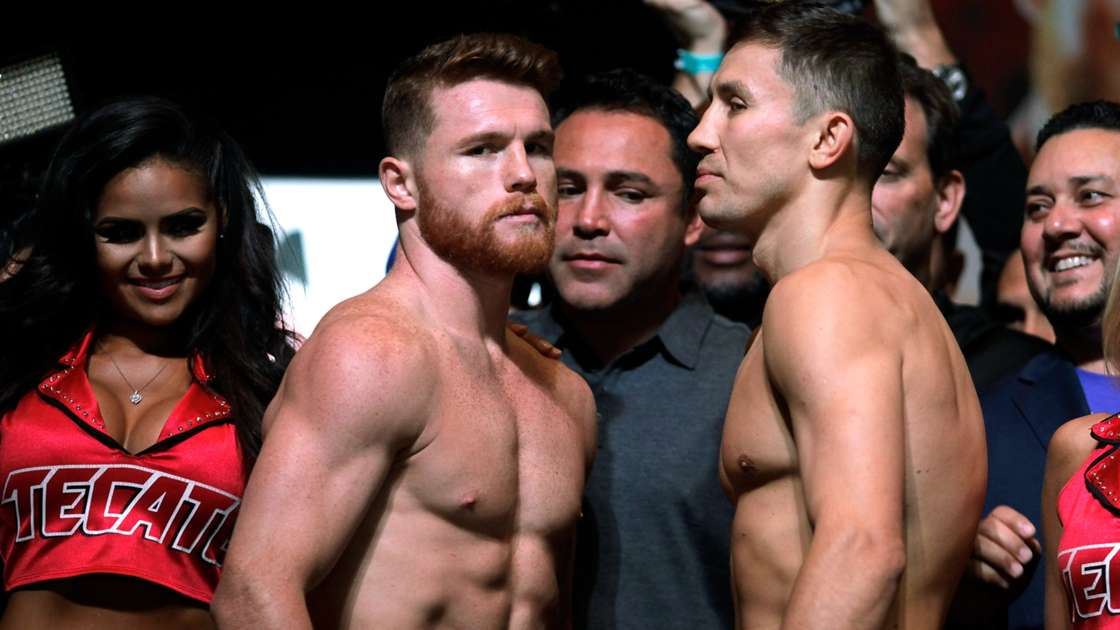
Gennady Golovkin overcame 16 months of ring rust and the encroaching shadow of father time, to stop Ryota Murata in 9 rounds on Saturday night. This win adds Murata’s WBA belt to the IBF title belt which he already held. The victory reignited GGG’s career, making him a ‘unified champion’ now that he holds two world middleweight title belts, but this fight was for a lot more than the increasingly random and frustrating world boxing belts. Murata held the ‘super’ WBA world championship belt, but then the WBA has a long record of being able to come up with seemingly never-ending variations of the world championship belt, from, interim, to regular, and silver to super. In reality, the belts were an afterthought, this was GGG making his first appearance in the ring after 16 months of inactivity, against an opponent who figured to be a worthy test. Fighting just one day after his 40th birthday, Golovkin was seeking to prove that he is still a relevant force in the division that he once dominated so thoroughly, that many top contenders spent their whole careers avoiding him. It's difficult to remember another world champion in recent times (aside from Guillermo Rigondeaux) who was reduced to chasing his challengers rather than having his challengers chase him.

Despite having a fan-friendly style, which has made him one of the most popular and exciting fighters of his era, Golovkin struggled to find big names willing to share the ring with him. Perhaps this was because, as well as being exciting, GGG was also destructive. Devastatingly destructive.

Canelo made GGG wait about 5 years before he finally agreed to face him in the ring. Following a prolonged and acrimonious build-up during which Canelo played a good impersonation of a blushing bride as he hedged and dodged fighting GGG until Golovkin was 35 and already showing some signs of slipping from his formidable peak. In his contest, prior to the first Canelo match, GGG had been taken the full 12 rounds for the first time during his title reign after a lackluster performance against Daniel Jacobs. Canelo’s management had bided their time masterfully.

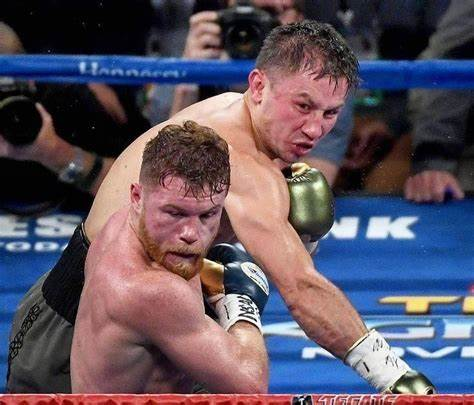
The record books will tell you that on September 16th, 2017, Golovkin and Canelo fought each other to a spirited 12-round draw. Then, almost exactly one year later to the day, the two men met in a rematch with Canelo winning a majority decision, after another highly charged encounter. The truth though, as many well-versed boxing followers will tell you, is something rather different from what is on the record books.

To start with, very few, (including Canelo’s usually fanatical fan-base) believed that the first fight should have been anything other than a clear decision win for GGG. Though the fight was competitive, GGG won many rounds clearly and dominated with his heavier punching and higher activity. Yet not for the first time (nor the last, unfortunately) the fight turned out to be judged by the three blind mice. Even the one card that voted for GGG was far too close. If the judging of the first fight was bad, the rematch wasn’t much better. This time the fight was genuinely closer, with GGG’s superior strength from 12 months earlier having noticeably waned. Was this due to the encroachment of age (GGG was by now already 36 years old) was there some other reason for Canelo’s sudden increase in strength? The whole Mexican meat episode is well known now, yet safely swept under the carpet by most fans and the media, but the difference in Canelo’s performance in the space of one year may still be more telling than some would like to imagine.

The decision itself was again judged unjust by the majority of the crowd and even Canelo’s usually die-hard fans greeted the verdict with boos. Canelo had his ‘victory’ and that’s all that mattered in the history of this gravy machine. Already there were signs that Canelo could never be beaten on points. Certainly not in front of his fans at the T. Mobile Arena, Las Vegas.

Four years on, and memories fade fast in boxing, especially when they are inconvenient. The well-crafted and expertly guided cash cow has been maneuvered into world titles at two more weights since his second match with GGG and is now regularly hailed by many in the press as p4p number one in the world. He is even feted as the greatest fighter ever produced by Mexico. GGG meanwhile has been left chasing shadows, trying to recapture the glory that should have been his but was cruelly taken from him, not once but twice.

Imagine if Golovkin had officially won those fights against Canelo, imagine if he had won even one of them? His career trajectory, his standing in the sport, would be so much different today.

GGG is not bitter, he doesn’t whine about the Canelo fights, yet he has spoken strongly about his treatment by the judges of both those fights and how he believes that he was robbed of victories twice.

Canelo made GGG wait for 5 years before their first fight; he has now made him wait for four years for their 3rd meeting. Turns out GGG fans weren’t wrong when they claimed that Alvarez would never agree to a third fight until Golovkin is past his 40th birthday.

On Saturday night Golovkin entered the ring… one day past his 40th birthday, knowing that a win against Murata may well open the door for that long-awaited 3rd match with career nemesis, Canelo. Soon it became clear that with every fight he has, GGG is now increasingly fighting two opponents whenever he now enters the ring. His physical opponent and that old foe of fighters and athletes throughout history, father time.

Watching GGG now is akin to seeing a classic old rock band performing in their 60s or 70s, (athletes age faster than musicians). The brilliance, which once lit up every performance, has become more of an occasional spark here and there. This might sound harsh, but it is difficult to imagine the GGG of seven or ten years ago being troubled by Murata the way he was on Saturday night.

Murata started the match very strongly and with confidence, which belied his underdog status. To be fair Murata is no spring chicken himself at 36, but the Japanese-born slugger has only had 18 professional contests compared to GGG's 42, and that comparative freshness showed, at least in the early rounds of Saturday night's fight.

From the beginning, it became very clear that this was not the Golovkin of old, but rather an ‘old’ Golovkin. The old ability to take control of the center of the ring was missing as GGG found himself unceremoniously outpunched and outworked by a visibly faster, fresher, and stronger fighter. The action was intense from the beginning, but it was Murata, (who won Olympic Gold at the 2012 Olympic Games) rather than GGG who was forcing the action. When Murata landed the weight of his punches was visible, and on occasion, GGG was visibly moved even shaken, especially by some of his opponent's body shots. Golovkin’s punches on the other hand seemed to be bouncing rather harmlessly off Murata.

The first four rounds of the fight followed the pattern of both men meeting mid-ring and trying to attain domination with a continuous exchange of leather. Though GGG was certainly having his moments, it was Murata who was able to land more often and with more effect and GGG who was finding himself in the uncomfortable position of being put onto the back foot, a position which he has rarely found himself in during his stellar career.

Golovkin was being drawn into that weird twilight zone that older fighters begin visiting more and more often as their careers reach their ends. It is a place where they begin to find themselves slipping out of time with the present, as they face fighters who are suddenly faster and stronger and seem to be moving in a higher gear.

GGG has always been seen as almost the perfect fighting machine, but the GGG machine spent much of the first 4 rounds misfiring. His defense, never his strongest feature, was alarmingly porous at times, as Murata’s punches, especially the right hand, found his time and again. Golovkin's speed, once razor-sharp, has noticeably waned in recent years, but at times against Murata, he seemed a significant half-second or so behind the punching speed of his opponent. Also, of concern was GGG's movement. Though never a fleet-footed mover, GGG used to use economical and swift footwork, which always seemed to have him in the right place at the right time.

On this night though GGG started with legs that seemed almost rooted to the canvas at times. When he did move it was with the heavy hesitancy common to the older fighter.

After four rounds GGG needed to do something to turn the tide in a fight that seemed to be getting harder and harder for him. GGG found that something extra in the 5th round and showed again that extra ingredient that marks out the true champions. The ability to turn a fight around when visibly up against a faster and stronger opponent.

In the fifth round, the GGG machine finally found a higher gear, and his hands started to move with greater speed. The real turning point came midway through the round when a Golovkin punch ripped Murata’s mouthpiece from his mouth, sending it flying across the ring.

From that moment Golovkin had reached out of his personal twilight zone and turned back the clock. From the 5th round on, Golovkin began gaining the upper hand in the action. The battle was still raging toe-to-toe, but now it was GGG who was landing more frequently and beginning to display his wide variety of punches.

With Golovkin in the ascendance, Murata began to slow, as he began to take more and more punishment. Yet Murata’s courage never wavered, and at every point where it looked as if GGG was about to gain overwhelming control, Murata would come back with punches of his own. Yet Murata’s attacks were becoming more tired and desperate as the rounds flew by.

GGG may be faded and past his 40th birthday, but his fitness and determination remain impeccable. This along with his heart and granite chin has much to do with him finally overcoming Murata.

The end finally came in the 9th round, which started as a strong Golovkin round as he opened up seemingly looking for a knockout, Murata withstood a withering attack by GGG, but rather than going down actually launched a brave mid-round counterattack. At one point it looks as if GGG may have shot his bolt and punched himself out trying to finish Murata. However, Golovkin then struck back with a ….. to send Murata spinning down to the deck like a broken doll. It was at this point that Murata’s corner sensibly threw in the towel, just as the referee was waving the fight over. GGG had broken down another challenger.

One could be too critical of Golovkin’s performance, and the truth is that though he is visibly faded in comparison to the GGG of the past, he remains a formidable and brave fighter. Also, there is the aspect of his 16 months of inactivity before this fight and how much of his early frailty was down to ring rust rather than a permanent decline. Murata also deserves credit for his performance and for pushing GGG into such a difficult fight.

This fight underlined that GGG while not the fighting machine of the past remains formidable and with the kind of fitness that would still push the very best at his weight. With this win, GGG has reignited his career, and his visible vulnerability is liable to make him a more attractive prospect to many top fighters.

But what now for Golovkin?

Though there will be several options that GGG could follow right now, one looms large above all the others. As much as he might not want to admit it, and even with two world title belts to his name, GGG is still chasing. He is chasing that elusive 3rd fight with Canelo Alvarez, and a final chance to inflict an official defeat upon the man many feel he has already beaten twice.

photo: dazn
As always with Canelo, nothing is certain until the ‘Golden Goose’ of boxing decides to announce his intentions. Yet it is expected that if he gets past Dmitry Bivol on May 7th, then he will next meet GGG for their long-awaited 3rd fight, sometime around mid-September.

After the second match between Golovkin and Canelo, it was a common joke among some boxing followers (mostly those not blinded by the Canelo media machine!) that Canelo would probably make Golovkin wait until he was past 40 until he got a third match. Ironically that is what seems to be about to happen. Canelo and his team have bided their time masterfully and now GGG seems ripe for the 3rd fight. Still exciting, still a big draw, but certainly a far less dangerous proposition than he was four years ago.

Should GGG even take the third fight with Canelo? He will know now that the chances of gaining a decision over Canelo are beyond slim, even if he is deserving of it, and beyond that, there is only the stoppage route to victory, something which even five years ago GGG wasn’t able to get close to achieving. For all the hype, dodgy judges, and cherry-picking (not to mention other shady stuff) there's no doubting Canelo’s toughness. Whatever may be behind it.

If Golovkin couldn’t stop Canelo 5 years ago, it's highly unlikely that he will be able to stop Canelo today in his present reduced form.

photo: stubhub
What also needs to be taken into account is the likelihood that the 3rd fight will take place at 168 pounds, a weight that will overwhelmingly favour Canelo rather than GGG. Golovkin is currently and has always been a natural 160-pounder(who seldom gains more than ten pounds between fights) rather than someone who comes down from over 190 pounds for his fights as Canelo has always done.

The purpose of a third fight with GGG for Canelo has always been to score a definitive defeat over Golovkin. Hence part of the reason for the long wait between the 2nd and proposed 3rd fights. Canelo has only been interested in fighting GGG again if he was secure in the belief that he could score a non-controversial victory this time. Ideally, he would like to stop or knock out Golovkin.

Canelo still bristles over the controversy surrounding his two matches with Golovkin and would like nothing better than to end the rivalry with a stoppage victory over Golovkin.

Certainly, the Golovkin who struggled with Murata did not look equipped to deal with Canelo at 168 pounds. Sadly the man who was once a feared and much avoided fighting machine now seems very mortal and vulnerable. He is ripe for Canelo to pick for his much-wanted ‘definitive’ victory.

Having followed Golovkin throughout his spectacular career, and after seeing him robbed by the judges twice against Canelo, I would rather not see a reduced GGG fight Canelo a third time at a point in time where it suits no one but Canelo.

After watching Golovkin battle past Murata, even taking into account his ring rust and the ability to improve himself between now and September, it is clear that time has moved on for GGG. Those tools which once made him the best in the world will never be quite as sharp nor so deadly again. A fight between Golovkin and Canelo now would be a poor reflection upon a fair fight between the two in their primes. GGG was already past his prime when Canelo finally fought him for the first time and now he is past the point where he will be a danger to Canelo.

No one knows this more than Canelo and his team which is why the fight is finally being made.

Golovkin is a warrior and the chances are that he will still take the third fight against Canelo despite any advice he may receive to go in a different direction.


Following their fight, GGG visited Murata’s dressing room and gave him back the WBA belt. It was the kind of classy gesture that makes a true champion and gives a fighter the kind of greatness that can't be bought by a crooked judge's scorecard. GGG may never beat Canelo Alvarez officially on paper, but he holds something over Canelo which is perhaps more precious than any victory in the ring. Integrity. It is that, above all else which underlines Golovkin's true greatness.

No cherry-picking can beat that.

Follow us on Twitter: @TheBoxingGlove and  

Facebook: www.facebook.com/theboxingglove

Instagram:  https://www.instagram.com/theboxingglove/


If you are an boxer, amateur or professional, and want us to follow you or tell your story, contact petersilkov@yahoo.com   or theboxingglove@yahoo.com

If you are an author and you would like your book reviewed, contact Peter Silkov at petersilkov@yahoo.com or theboxingglove@yahoo.com


Sunday, June 4, 2017

Muhammad Ali’s 15 Greatest Fights


By Peter Silkov 


Few will argue that Muhammad Ali was the greatest heavyweight world champion of all time. There were a number of things, which made him ‘The Greatest.’ In his fighting youth, he had blinding speed, the kind that has never been seen before or since in a heavyweight. Some other heavyweight champions were fast, Larry Holmes for example, but none had the sheer speed of the young Ali. On top of this, Ali had deceptive strength, and carried a better punch than he is usually credited for having.  Later in his career, when his speed and reflexes had dimmed, Ali had to rely much more on his physical strength, a great chin (again another aspect which is often overlooked with Ali) and a steely willpower. In his declining years as a fighter these attributes were able to get him victories against fighters who were younger, fresher, and physically superior to him. The fact that Ali dominated the heavyweight division during a time when it was at its most talented and competitive, is the underlying testament to his greatness. His greatest moments during the 70s came largely when he had already passed his athletic peak by some way. Looking at Ali’s career its fair to say that he was in more ‘classic’ matches than just about any other heavyweight champion, again, just one more reason why he can claim the mantle of ‘The Greatest.’  Here is my top 15, greatest fights of ‘The Greatest.’  They have been chosen for a number of reasons. Some were simply great fights; others were great performances by Ali rather than great competitive fights.  Part of Ali’s magic was that he could make the most mundane contest compelling, just as a great film star can lift a film from the mediocre to something special. From the beginning to the end of his career, whenever Ali entered the ring you were bound to see something out of the ordinary. 


1. Muhammad Ali Vs George Foreman:  Oct 30, 1974, Stade du 20 Mai, Kinshasa, Democratic Republic Of The Congo.


In his greatest achievement in the ring, Muhammad Ali regained the World heavyweight title by out-lasting and out-psyching George Foreman. Just as he had against Sonny Liston ten years previously, Ali entered the ring a heavy underdog against a champion believed by many to be invincible. While he had been perceived as a fragile youngster against Liston, against Foreman Ali was considered to be too old and past his prime, to beat the destroyer which was Foreman.  Yet again, Ali proved everyone wrong. With his rope-a-dope, tremendous will power, and almost superhuman durability on this night, Ali allowed Foreman to punch himself out, before coming back to knock out an exhausted Foreman in the 8th round.   


2. Muhammad Ali Vs Cleveland Williams:  November 14, 1966, Astrodome, Houston, Texas.


Making the 7th defence of his World heavyweight title during his first title reign, Muhammad Ali produced a display against big-punching Cleveland Williams, which many today perceive, as his masterpiece. Ali was like a cruel artist in this fight, as he mixed his blinding speed with destructive punching power, with spectacular results.  Williams was floored 3 times in the 2nd round, then again in the 3rd, before the slaughter was ended.  This mix of speed and power gave us an indication of the kind of fighter Ali would have developed into if he hadn’t been banned from boxing a few months later in 1967, due to his refusal to fight in Vietnam. 
This was also the fight where Ali used the ‘Ali shuffle’ for the first time.


3. Muhammad Ali Vs Sonny Liston 1:  February 25, 1964, Convention Center, Miami Beach, Florida.


In a fight that was named ‘Fight of The Year’ by The Ring magazine, and later 'Fight of Decade', and 'Upset of The Decade', Muhammad Ali won the World heavyweight title, in one of the rings biggest upsets. In just his 20th professional contest, Muhammad Ali (then named Cassius Clay) stepped into the ring a huge underdog against the feared champion, Sonny Liston. The 22-year old challenger was expected by many to be blown out of the ring by Liston, but instead, Ali stunned the boxing world with a sensational display. Liston was out-boxed and then out-punched, and finally retired after the 6th round. After the fight, Ali declared to the shocked media at ringside “I am the Greatest! I shook up the world!” 

After this fight, the new champion changed his name from Cassius Clay to Muhammad Ali, and announced that he had converted to the Nation of Islam. It was the start of what would be a legendary reign.  


4. Muhammad Ali Vs Joe Frazier 3:  October 1, 1975, Quezon City, Metro Manila, Philippines. 


This was Muhammad Ali’s 4th defence of the world title, in his second reign, and nicknamed ‘The Thriller in Manila’ this fight pitted Ali against his archival Joe Frazier for the 3rd and final time. Hailed by many as the perhaps the greatest heavyweight fight of all time, this was a savage contest, which saw both men standing toe-to-toe and ripping merciless punches at each other. While neither man was the athlete that he was in their first contest, with both men a little heavier, and a little slower than in 1971, for sheer non-stop action, courage and intensity this fight has never been surpassed.  After starting fast and confidently, believing that he was in for an easy night with Frazier, Ali tired, and the fight became a battle of endurance and wills, until the 13th and 14th rounds, when Ali suddenly found a new reservoir of energy and battered Frazier round the ring, forcing trainer Eddie Futch to pull Frazier out before the 15th and final round.  Ali was never the same fighter after this match, and after the match, described it as being ‘the closest thing to dying’ he had ever experienced. 


5. Muhammad Ali Vs Joe Frazier 1:  March 8, 1971,  Madison Square Garden, New York, New York. 


This match was called the ‘Fight of The Century’ and was one of the most eagerly awaited fights in boxing history. Ali was having just his 3rd fight in nearly 4 years after being banned from boxing for 3 years due to his refusal to enter the Viet Nam war. In Ali’s absence, Frazier had won the vacant world title, and Ali was desperate to reclaim it as his own. The fight had been built up even further by the needle between the two men, which had intensified during the matches’ build up.

The fight itself was the epic contest, which had been expected, with both men fighting at a pace and intensity that seemed almost superhuman at times. Ali showed the marks of his 3 years out of the ring, as he struggled to find his previous form, and flagged after the first 6 rounds. Yet despite his tiredness in the face of Frazier’s incessant attacks, Ali displayed a fortitude, and courage that he had never needed to call on before, standing with Frazier and fighting back. In the 15th and final round, Ali was floored by Frazier, yet got up, with his jaw swollen, and managed to fight it out to the end of the round. This was Ali’s first defeat as a professional, yet in an ironic twist, his valiant effort in losing served only to enhance his popularity. For Frazier, this was to be his greatest night and his greatest victory, yet he paid a heavy physical price for his win, and had to spend several weeks in hospital recovering. 


For many, the first and third fights between Ali and Frazier, are the greatest heavyweight fights of all time. 


6.  Muhammad Ali Vs Ernie Terrell:  February 6, 1967,  Astrodome, Houston, Texas.


In what was his second to last contest before his infamous ‘exile’ from boxing, Muhammad Ali made the 8th defence of his title against the hulking Ernie Terrell. Ali gave a beautiful exhibition of his boxing skills against the awkward and rangy Terrell, showing the kind of speed and reflexes never seen before from a heavyweight champion, either previously, or since. This was a grudge fight, as Terrell had tried to out-psyche Ali by continually calling him by his ‘slave name’ Cassius Clay. However, this ploy backfired badly on Terrell, as Ali gave him a slow and punishing boxing lesson. Terrell was the holder of the WBA version of the heavyweight title, but from the first bell it was clear who the real world champion was out of the two of them.  The fight went the full 15 rounds, even though it looked as if Ali could have stopped Terrell inside the distance, had he wanted.


7. Muhammad Ali Vs Ken Norton 1:  March 31, 1973, Sports Arena, San Diego, California.


Now an ex-world champion, after his loss to Joe Frazier in their first fight, Ali entered this match with Norton while in the midst of a campaign to gain another shot at the world title, and overlooked the then unknown Norton. Ali entered the ring wearing a robe that had been given to him by Elvis Presley, which had ‘The People's Champion’ embroidered on the back of it. He also weighed a heavy 221 pounds.

From the beginning, Ali found Norton’s crab-like style tough to break, and his long jabs tough to avoid. Added to this, Ali had his jaw broken, perhaps as early as the second round. Lacking the old energy and bounce in his legs, and in constant pain from his jaw, Ali once more showed great courage, despite going down to his second professional defeat. After a dramatic contest, Norton won a split 12 rounds point's decision.  He also won Ali’s NABF heavyweight title.
After this fight many people wrote Ali off as a top-flight fighter, but of course he would return.


8. Muhammad Ali Vs Ernie Shavers:  September 29th, 1977,  Madison Square Garden, New York, New York. 


Deep into his second reign as world champion, Ali made his 10th defence against the huge-punching Ernie Shavers. By this point in his career Ali had little left in the tank, and Shavers was one the biggest punchers in the heavyweight division.  Yet, Ali won this fight with a mixture of guile and courage, allied with his remaining boxing skills, and still formidable durability. This fight is at times painful to watch, as Ali takes punches that he would have avoided a few years previously. It is also a testament to Ali’s greatness, that he was able to retain his title against such a dangerous challenger, at this point in his career. Ali won on points after 15 often hard fought rounds.  Despite his decline as a fighter, it was Ali who finished the fight the stronger man, and at times looked like he could even stop Shavers in the last round.


9. Muhammad Ali Vs Oscar Bonavena:  December 7th, 1970, Madison Square Garden, New York, New York.


In what was his second comeback fight since his 3 year ‘exile’ from boxing, Muhammad Ali took on the strong, and aggressive, Oscar Bonavena. Ali had boxed barely 3 rounds in his previous comeback contest when he stopped Jerry Quarry on cuts, and the rust of almost 4 years of inactivity showed clearly in this fight. Ali was no longer the fleet-footed boxer he had been in the 60s before his exile. He was flat-footed and his reactions and reflexes were considerably slower. This was the fight, that clearly showed  the price that Ali had paid for his ban from boxing. Rather than being able to out-box Bonavena, Ali was forced to go toe-to-toe with him as he was dragged into a brawl. The fight developed into a hard fought contest with both men exchanging big shots, and Ali showing for the first time that he could still beat top fighters even though he had lost much of his old speed and skills. After being hurt several times in the fight, and taking more punches than he ever took in the past, Ali roared back in the 15th and final round to floor Bonavena 3 times and score a technical knockout victory. This was the first and only time that the rock-chinned Bonavena was stopped in his 68 fight boxing career.

Ali would improve in later fights as he got rid of his ring rust, but he would never again be the boxer that he had been before his exile.


10.  Muhammad Ali Vs Ken Norton 2:  September 10, 1973.  Forum, Inglewood, California.


Six months after their first contest, Ali and Norton met for a second time. This time Ali was in prime condition, weighing 9 pounds less than he did in the first fight, and armed with a grim determination to avenge his previous defeat to Norton. Once again it was a very tough fight, with Ali starting fast, and showing a lot of his old speed in the early rounds, but then fading after the first 6 rounds. After Norton took over in the middle rounds, Ali staged a strong finish in the last two rounds to capture a split, 12 rounds point's decision victory. Ali would fight Norton once more in 1976, and win again via a split decision. All three Ali Vs Norton fights were close and for some, controversial decisions.   


11.  Muhammad Ali vs George Chuvalo 1:  March 29, 1966, Maple Leaf Gardens, Toronto, Ontario, Canada. 


In what was the third defence of his first reign as world champion, Ali was taken the 15 rounds distance for the first time in his career, as he beat Canadian iron man, George Chuvalo, on points. Although for most of the fight, Ali out-boxed Chuvalo with ease, he could not stop or floor Chuvalo. The match was one-sided yet entertaining, as Chuvalo bravely kept the pressure on Ali and landed more punches than previous opponents. Ali showed his speed and reflexes, but he also displayed his strength and durability, as he at times chose to go toe to toe with Chuvalo. This fight answered many critics who had doubted whether Ali could fight at his fast pace for a full 15 rounds.


12. Muhammad Ali Vs Henry Cooper 1:  June 18th, 1963, Wembley Stadium, Wembley, London. 
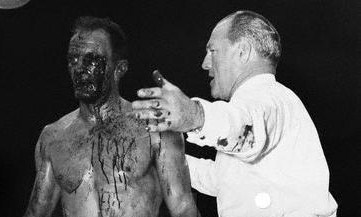


This was Ali’s last fight before he challenged Sonny Liston for the World heavyweight title. Facing the determined British champion, Henry Cooper, Ali  (who was still calling himself Cassius Clay at this point.) Ali toyed with Cooper for much of this fight, cutting him badly in the 3rd round, but then near the end of the 4th, a Cooper left-hook caught Ali and dropped him to the canvas by the ropes. Ali beat the count, but was visibly groggy, only to be saved by the bell. When the bell rang for the 5th the crowd was in uproar, believing that Cooper was on verge of a huge upset win over the young sensation. However Ali showed his tremendous powers of recuperation, and launched a vicious assault upon Cooper, sending several punches into the already badly cut Cooper left eye, until it was pouring blood all over the ring.   With Cooper blinded by his own blood and on the verge of being defenceless, the referee was left with little choice but to stop the fight in Ali’s favour, giving Ali a 5th round TKO win. Prior to the fight Ali had predicted that he would beat Cooper in 5 rounds.  


13. Muhammad Ali Vs Karl Mildenberger:  September 10, 1966, Wladstadion, Frankfurt, Hessen, Germany.


Making the 6th defence of his world title, in his first reign, Ali found the tough and clever Mildenberger to be a tricky opponent. The German was the first southpaw to challenge for the World heavyweight title, and made good use of his awkward stance.  Ali, who was approaching his physical peak at this point, showed an impressive mix of speed and physical strength and slowly broke down his determined challenger.  Mildenberger was floored in the 5th, 8th and 10th rounds, and the referee finally stopped the contest in the 12th round to save the German from further punishment.


14. Muhammad Ali Vs Zora Folley: March 22, 1967, Madison Square Garden, New York, New York. 


In what was to be his final fight before he was stripped of his world title and banned from boxing for over 3 years, Muhammad Ali made the 9th defence of his world title against the clever and experienced Zora Folley. Having been carefully avoided by previous world champions, Folley tried to make the most of his chance against Ali, and started their fight well, landing some good right hands on Ali, while also making Ali miss with his own punches. Yet the champion was taking his time rather than struggling, and when he opened up in the 3rd round, his superiority in strength and speed was visible. In the 4th round, Ali floored Folley heavily and the challenger barely beat the count. After playing a bit more with his challenger in the 5th, Ali finished things in the 6th round with two short rights. This fight showed Ali becoming increasingly stronger as he matured, and this rare mix of speed and power already had people comparing him to the all time heavyweight greats of the past.


15. Muhammad Ali Vs Doug Jones:  March 13, 1963, Madison Square Garden, New York, New York.


Having just his 18th professional contest, Ali faced the toughest opponent of his career so far in the tough and experienced Doug Jones. In a fight, which was one of the toughest of his career, Ali found Jones to be a very tough nut to crack. Ali was caught and rocked by Jones several times in the fight, but replied with hard jabs and lightning combinations. At times, Ali showed his inexperience in this fight and his speed based fighting style was still not fully realised. Jones seemed the stronger fighter at times and on occasions bullied Ali, but Ali showed that he had grit and durability by standing up to the more mature Jones and fighting back. With the fight poised Ali as (he would so often in his career) staged a brilliant finish, out-punching Jones over the last couple of rounds to come out a clear winner after 10 exciting rounds.  This fight would prove to be valuable experience for the still developing Ali.


Follow us on Twitter: @TheBoxingGlove and  


If you are an athlete and want us to follow you or tell your story, contact petersilkov@yahoo.com   or theboxingglove@yahoo.com
If you are an author and you would like your book reviewed, contact Peter Silkov at petersilkov@yahoo.com or theboxingglove@yahoo.com