Showing posts with label pugilist. Show all posts

Tuesday, November 3, 2015

Boxer Greg Page...Talented and Tragic


By Peter Silkov

Greg Page was one of the most talented heavyweights of the 1980s, but like most of the heavyweights of that era, mismanagement and a slew of legal problems hindered his career. Don King, who had a knack for leaving his fighters disillusioned and broke, controlled the heavyweight division in the 1980s. King’s treatment of his heavyweights (and his fighters from other weights) during at this time is notorious.  He used his heavyweights in particular, like pawns, and the result was that many of these talented fighters became disillusioned with boxing, and self-destructed. One of those heavyweights was Greg Page, who went from being a brilliant amateur, to one of the most promising heavyweights of his generation. Although he would win the World heavyweight title, his talent would be largely unrealized, and his career eventually ended in tragedy.

Greg Page was born on October 25, 1958, in Louisville, Kentucky, the birthplace of Muhammad Ali. The fact that he was born in the hometown of ‘The Greatest’ meant that Page was constantly compared to Ali.  Unsurprisingly, Ali would prove to be a hard act to follow for Page. 

Page turned professional in 1979, after compiling an amateur record of 94-11. 
Almost from the moment that he turned professional, Page was hailed by some as the ‘New Ali’ and he fought in a similar fashion, being very mobile, with fast hands, and a penchant for throwing eye-catching combinations. Soon, Page drew criticism from the media when his performances did not live up to expectations. Although a talented and entertaining fighter when he was on form, Page was prone to giving erratic and lazy performances at times, and his weight would fluctuate, drawing more criticism from the media. Much of the criticism Page received was unfair for a fighter who was just beginning his career. Page was sensitive to criticism and soon became suspicious of the media.

After winning his first 19 contests, Page was out-pointed by Trevor Berbick on June 11, 1982.  Ironically, he had come into this fight at his lightest weight ever, but found himself out-muscled by the bull-like Berbick. Page came back with 4 wins, including victories over James Tillis and Renaldo Snipes.  Then on March 9, 1984, Page fought Tim Witherspoon for the vacant WBC world heavyweight title, but was beaten on points. Five months later, in a challenge for the USBA Heavyweight title, David Bey beat Page on points. Yet, just when his career seemed to be on the slide, Page produced the performance of his life on December 1, 1984, when he traveled to South Africa and won the WBA world heavyweight championship from big-punching Gerrie Coetzee, knocking him out in the 8th round of a thrilling fight.

Unfortunately, Page’s world title reign lasted only 4 months. In his first defence on April 29 1985, Page was out-pointed by Tony Tubbs, after producing a listless display.

Although Page was only 27 years old, this would prove to be the final time that he would fight for the World heavyweight title.  Over the next 7 years he went 14-8 in 22 fights, remaining at world level, but no longer a genuine contender for the world title.

He seemed to have retired in 1993, and turned his hand at training, where he found success in guiding Oliver McCall to victory over Lennox Lewis in 1994, to win the WBC world heavyweight title. But, when McCall’s career spiraled off the rails, due to his drug addiction, and he lost the world title, Page returned to the ring himself in 1996. Page put together a string of victories over a number of mediocre opponents, but he was no longer was the sparkling boxer he had been in his prime. With his speed and reflexes dulled by age and inactivity, Page had to take a lot more punches than he did in his youth. Once he moved up a level and started taking on younger prospects, Page started losing. He lost 5 of his last 9 contests, but it was his final contest on Match 9, 2001, that proved to be the tragic finale of Greg Page’s boxing career.  
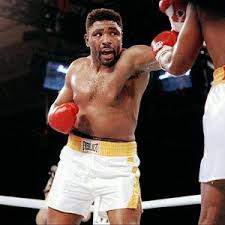
Fighting in a night club called Peels Palace in Erlanger, Kentucky, against Dale Crowe, who was 24 years of age and 18 years younger than Page, tragedy struck in the 10th round when Page was knocked down, and suffered severe brain damage. There was no ambulance or oxygen at the venue, and the so-called doctor was completely inadequate. Incredibly, there was no stretcher at ringside, and it was 45 minutes before the stricken Page was removed from the ring. Page eventually was taken to a hospital where he underwent brain surgery, and suffered a stroke while on the operating table. Although he would survive his terrible injuries, Page was left paralyzed on his left side, and confined to a wheelchair. He later won damages of 1.2 million dollars from the state of Kentucky for the negligent medical facilities provided for his contest against Crowe. Ironically, Page and Crowe became good friends, and Crowe helped at fundraisers for his ex-opponent.

New safety regulations called ‘The Greg Page Initiative’ were put into place in Kentucky after his injury. Yet, it is debatable whether they have been taken on board totally. Greg Page’s legacy was to show just what could happen when shortcuts are taken regarding boxer’s safety.  It is also a prime example of why boxers should have some form of pension plan and medical insurance provided for them. Had Greg Page had some kind of pension plan he would probably not have been boxing Dale Crowe that night for a purse of just $1500.00.

Greg Page died on April 27, 2009, when he slipped out of his bed and died of positional asphyxia. Greg Page’s story is not one of boxing’s happy stories. It is a story of a great talent that was only realized in brief flashes.

Greg Pages final record was 58(48koes)-17-1.

We have not confirmed if the Greg Page Foundation is still operating, but we found this article written by his wife, Patricia Page, for the Concussion Legacy Foundation.

 Patricia Page's Letter About Her Experience and Change

Copyright © 2015 The Boxing Glove, Inc. Peter Silkov Art. All Rights Reserved. Peter Silkov contributes to www.theboxingglove.com
twitterfacebookgoogle pluslinkedinrss feedemail

Boxing Heavyweight Sinan Samil Sam Passes at age 41


By Peter Silkov

The Boxing Glove is sad to report that the former European Heavyweight Champion, Sinan Samil Sam, is reported to have passed away Tuesday, October 20, 2015, in Istanbul of liver failure. Sam was being treated at the Marmara University Pendik Training Research Hospital in Istanbul, and was on the waiting list for a liver transplant.

During his boxing career, Sam was a strong and durable fighter who was always in entertaining fights because of his aggressive, pressing, style. Nicknamed the ‘Bull from Bospoous,’ he was born in Frankfurt, Germany, on June 23, 1974, to Turkish parents. After an amateur career, which saw him win the Junior World championship at light-heavyweight in 1992, and the World championship at Super-Heavyweight in 1999, Sam turned professional in 2000, and in the course of his professional career would fight some of the best heavyweights in the world.


Sam was technically solid and very rugged, with a good punch and an excellent chin. In the course of his 8 year professional career, Sam would win the European heavyweight title twice, and also hold the WBC International and WBC Mediterranean titles.


In what was probably his most impressive performance, Sam stopped the usually very durable Danny Williams in 6 rounds on February 8, 2003, in defence of his European title, which he had won 4 months earlier.

Sam’s main problem during his professional career seemed to be that he wasn’t always in top condition physically, with his weight fluctuating from 230 to over 250 pounds. There's little doubt with his pressure fighting style, that he was a better fighter when he was lighter. Yet, whatever his conditioning going into a fight Sam always gave his all once he got into the ring. Sam showed his heart in his 2005 defeat to Oleg Maskaev, when he managed to last the distance, despite suffering a broken jaw in the 2nd round.


Sam fought heavyweights such as Premyslaw Saleta, Danny Williams, Juan Carlos Gomez, Luan Krasniqi, Denis Bakhtov, Lawrence Clay Bey, Oleg Maskaev, Oliver McCall and Paolo Vidoz.
Ironically Sam never got to fight for a world title, though many less qualified heavyweights have received title shots. Sam’s last chance at a world title shot was lost on June 16, 2007, when he was out-pointed by a 42 year old Oliver McCall, losing his WBC International Heavyweight title.

Sam would win his final 4 contests, with his last fight taking place on July 4, 2008, when he regained the European Heavyweight title by outpointing Paolo Vidoz. Sam never fought again. His final record was 31(16koes)-4.

Copyright © 2015 The Boxing Glove, Inc. Peter Silkov Art. All Rights Reserved. Peter Silkov contributes to www.theboxingglove.com
twitterfacebookgoogle pluslinkedinrss feedemail

Wednesday, September 30, 2015

A Thrilla In Manila: A Fight of a Lifetime...40 Years Later


 A Thrilla In Manila: A Fight of a Lifetime...40 Years Later
By Peter Silkov


The history of boxing is colorfully littered with a multitude of rivalries between fighters who have fought each other numerous times. This is the lifeblood of boxing, the point where the hardest game reaches its boiling point. No other sport can match boxing for the intensity that is produced between two boxers who are about to fight.  Only boxing creates that unique mixture of soap opera and brutal theatre. It is the most brutal and real drama in sport. 40 years ago today saw the third and final installment of perhaps the most acidic and explosive rivalry that has ever graced the heavyweight division. The final clash between Muhammad Ali and Joe Frazier displayed boxing at both its most beautiful, and its most brutal.

Often called the sweet science, there was nothing sweet about the fights between Ali and Frazier, especially fights 1 and 3. The violence of the blows, which both men exchanged throughout their trilogy, echoed the depths to which their personal rivalry had reached. In the course of 5 years, Ali and Frazier had gone from having a respectful friendship, to one of the bitterest feuds ever seen in boxing. Ali was a master of taunting his opponents, but with Frazier it was different. Perhaps it was because Frazier had taken his world title while he had been banned for his refusal to go to Vietnam.  Perhaps it was because Frazier became the first man to beat Ali in their classic 1st fight on March 8, 1971. Whatever the reason, there’s little denying that Ali saved some of his sharpest and most hurtful insults for Joe Frazier. 

For his part, Frazier, after playing the game at first, began to simmer, stew, and build a genuine anger and hatred towards Ali for the things he had said about him. It was an anger that did not subside, even after he beat Ali in their 1st contest.  With that victory, after a fight that could rightly be declared as the greatest heavyweight contest of all time, Frazier had proved himself to be the rightful world champion. He had beaten the returning king. Yet it was not enough, for either Frazier or the fans. After his greatest career performance, and his greatest victory, Frazier could only watch, as Ali became even more popular with the public in defeat. The bitterness deepened when Ali won their rematch on January 28, 1974, in a fight that while very good, was almost mediocre compared to the two wars within which it was sandwiched on both sides. By their 2nd fight, Frazier was an ex-world champion himself, having lost his crown the previous year to George Foreman.  After he had lost to Ali in their second fight, many people wrote off Frazier as a fighting force.

Ali meanwhile regained the world title in late 1974, with his magical destruction of George Foreman in Zaire. Ali’s and Frazier’s careers seemed to be going in opposite directions now, with Ali enjoying a new lease of life, while Frazier was viewed as a mere shadow of the man who had beaten Ali in 1971.  But, the feud was still burning, and a third fight between the pair was a natural, if only to tie up the loose ends. A boxing rivalry, which ends with one victory for each man is always somehow unsatisfactory, with something unfinished, like a soap opera that had the plug pulled on it before the final episode.

With Ali and Frazier, the final episode of their joint drama would be the most hard-bitten, which is what boxing fans had hoped for, and even more.  It would reach heights of physical violence that would make fans feel both enraptured and disturbed, in equal measure.

The fight was set for October 1, 1975, in Manila, Philippines, before a crowd of 25,000, which would include the Philippine president Ferdinand Marcos. The build up to the fight found Ali firing up more jokes at Frazier’s expense.

“It’ll be a killa, a chilla, a thrilla, when I get the gorilla in Manila” cried Ali numerous times during the build up. 

Frazier on the other hand, was quietly seething with his bitterness against Ali, saying in one interview prior to the fight:

“No question about it, it’s real hatred, I want to hurt him. If I knock him down, I’ll stand back, give him breathing room.  I don’t want to knock him out in Manila; I want to take his heart out."

Behind all the ballyhoo and bluster, Ali and his team really believed that this time around Frazier would be an easy touch. Ali was enjoying the fruits of being world champion once again, and being the most recognized man in the world, and his focus on his training had unsurprisingly suffered. Some of the fruits that become available with success can be bittersweet.  Ali’s focus on the fight was further shaken when his estranged wife Belinda flew over from America to confront him about his mistress Veronica Porsche, whom he was staying with in Manila, and who would soon become his third wife. But, if Ali went into his third fight with Joe Frazier distracted, ‘Smokin’ Joe soon got his attention.

From the start of the 1st round, it was clear that both men meant business. Ali came out flat-footed, throwing bombs, and looking for an early stoppage victory. Both men were a little heavier and slower than in their first fight. As the fight progressed, all pretense of science and skill would be discarded. This was a fight, with each man throwing and landing as much and as often as they could, and each man unable and to a certain extent, unwilling to get out of the way of the other man’s punches.

Standing flat-footed, Ali won the early rounds by landing his bombs on Frazier at will. Frazier was being out-punched and was visibly shaken in the 1st and 2nd rounds.  As the fight wore on Joe kept on coming in, boring his way onto the inside of Ali, where he would realize punches of his own onto Ali’s body, and then switch quickly to his head. With a maniacal grin on his face, Frazier seemed to welcome the punches that Ali was landing upon him, almost as if they were giving him energy to build up his own assault.

By the middle rounds, Frazier was indeed ‘Smokin’, as Ali visibly tired, found himself pressed back against the ropes, and forced to exchange bombs toe-to-toe with a Frazier who was showing that on this night, he was by no means a washed up fighter.     

In the 7th round, Ali tried to get on his toes and fire his jab, but the heat of Manila, along with his 33 year old legs, made it difficult for ‘the Greatest’ to keep away from Frazier’s relentless assaults.

“Old Joe Frazier, why I thought you were washed up” declared Ali during the round.  To which Frazier replied, grimly between punches, “Somebody told you all wrong pretty boy.”

The middle rounds belonged to Frazier, now it was ‘Smoking’ Joe who was out- punching Ali, who was now spending too much of his time pinned onto the ropes, and trying to cover up against punches he couldn’t block or dodge. Frazier was still eating clean shots as he bored into Ali, firing his punches almost frantically at Ali’s body and head. In the 10th and 11th rounds, it looked as if Ali might be through, as he struggled to trade leather with Frazier, and seemed so leg-weary that he was just about to topple over to the canvas under the savagery of Frazier’s attacks. Then in the 12th round, Ali showed why he is very possibly the one and only ‘Greatest’ of all time, certainly at heavyweight. The ability to turn the tide of a fight through sheer guts and strength of spirit, the same kind of spirit that took him to his improbable victory over Foreman. 

In the 12th round, Ali opened up on Frazier with both hands. It was a brutal assault in which Frazier took punch after punch. By the end of the round, his mouth poured out blood and his left eye was closing. In rounds 13 and 14, it was Frazier who looked ready to topple over onto the canvas. Ali was out-punching Frazier once more, somehow finding the strength to fire blistering combinations upon ‘Smokin’ Joe, who despite his continued efforts to fight back, began to look more helpless and more gruesome a figure, with every passing minute.

The 14th round was especially brutal, as Ali landed, at will, upon an opponent who could no longer see the punches coming at him. When the bell rang ending the 14th round, the referee Carlos Padilla had to guide Joe to his corner. Then it was all over.  With just three minutes to go, Frazier’s trainer, Eddie Futch did what he knew Frazier would never do himself. Convinced that his fighter was on the point of being seriously hurt, or perhaps something worse, he threw in the towel, despite Frazier’s protests. Ali, who had at times been at the point of quitting himself during the brutal fight, was the winner, victorious in what must go down as probably the most grueling and savage contest ever waged for the World heavyweight championship. While their first fight featured more skill and speed, mixed with a thrilling violence of its own, their third fight took the gloved violence to a whole new height.

Later, at the post-fight press conference, a battered Ali said of his opponent,

“I have nothing bad to say about Joe Frazier. Without him I couldn’t be who I am and without me he couldn’t be who he is. We’ve been a pretty good team for four, five years.”


Frazier for his part said of his conqueror,

“I’ve seen walls tumble under shots like I gave him.  He’s a great champ.”


It was to be the last great night of both men’s careers, an explosion of superhuman effort from both boxers that afterwards left them both depleted. Frazier would fight just twice more, losing again to Foreman, in an almost surreal fight 8 months later. He then struggled to a draw with Jumbo Cummings in a one off comeback fight 5 years later. Ali would reign as World heavyweight champion for almost another 3 years, but his skills eroded with every fight. But, like his millions of fans around the world, Ali didn’t want the ride to end, and so he stuck around too long and came back too much.

Sadly, the feud with Frazier simmered on, long after both men had finally said goodbye to the ring. After all the punches that Ali landed upon Frazier in their three fights against each other, it was the words that he landed upon Joe that hurt the most. They had the deepest and most lasting effect. Despite efforts by Ali to apologize for some of the things that he said about Frazier and called Frazier, during the height of their rivalry, ‘Smoking’ Joe remained bitter towards Ali until his death in 2011.

It is an unfortunate postscript to a great fight. Sometimes life is not as forgiving as we would like it to be, and wounds collected in the ring can remain with a fighter for the rest of his lifetime. Ali and Frazier created something special with their trilogy, something that will endure perhaps even beyond the survival of the sport from which it emerged. They created something that will endure, but they also lost some parts of themselves along the way.  Perhaps that is the price of greatness.


Copyright © 2015 The Boxing Glove, Inc. Peter Silkov Art. All Rights Reserved. Peter Silkov contributes to www.theboxingglove.com and www.theboxingtribune.com
twitterfacebookgoogle pluslinkedinrss feedemail

Sunday, August 23, 2015

TBG Book Review: Slats: The Legend & Life Of Jimmy Slattery


 The Boxing Glove Sunday Book Review by Peter Silkov
 "Slats: The Legend & Life Of Jimmy Slattery" Written by Rich Blake


Alongside the era of the 1970s and 80s, boxing’s other great golden era is widely agreed to have been the 1920s and 30s. This was a time of million dollar gates, a multitude of talented fighters in every division, and numerous boxing clubs holding sold out fight cards every day of the week. At that time, the light-heavyweight division in particular held some of the most talented fighters of any weight in boxing.  Men like Tommy Loughran, Jack Delaney, Mike Mctigue, Paul Berlenbach, and Maxie Rosenbloom, but the man whom was thought by many to be the most talented of all the fighters in the 175 division was Jimmy Slattery.  

Born in Buffalo, New York, on August 25, 1904, and of Irish descent, Slattery was a unique and mercurial talent, with exceptional speed, mobility, and defensive wizardry.  Slattery would fight with his hands down by his sides, as he bounced about the ring in a manner akin to how a young Muhammad Ali would box some 40 years later. The Irishman also had a good punch in both hands, and the ability to lash out with blinding combinations.  Add to this a toughness, which defied his handsome, yet fragile looking physique and it seems that Slattery had it all. At one point during the 1920s he was heralded as the next World heavyweight champion, and praised and admired by figures such as Jim Corbett and Gene Tunney.  Former World heavyweight champion, Corbett, had described Slattery as “the most perfect fighting machine I ever saw."

Despite all of his ability, Jimmy Slattery was fatally flawed with a love of the nightlife and an idiosyncratic attitude to the serious side of boxing. After turning professional as a lanky 17 year-old, he began to find success as a boy wonder. The adulation and success that quickly came his way soon found him being drawn towards the bright lights, fast cars and glamorous women, rather than the humdrum repetitiveness of training.  Although Slattery would go on to win the World light-Heavyweight championship twice and finish his career with an impressive 111(49koes)-13 record.  His was still a talent perhaps only half realised.  Finished as a top fighter by the age of 28, Slattery’s life soon descended into the chaotic twilight world of alcoholism.

Since his death in 1960, at the age of 56, Slattery has been all but forgotten by the wider boxing world. All of that is about to change now, with Rich Blake’s meticulous and engrossing biography of the wayward, yet, immensely talented boxer, who was being called a ‘Will o’ the Wisp’ of the ring by boxing writers 20 years before the great Willie Pep made that nick name his own.      

Rich has produced a biography that is not only fascinating for the detailed facts, which he uncovers about Slattery’s life, but it is crafted in such a way that it is really hard to put down once you begin reading it. While Rich’s admiration for ‘Slats’ is clear, within these pages, he does not let it colour his work, and is not blind to the fighter’s darker side.
Slattery’s life reads like a film script. An unknown, fragile looking teenager discovers that he can fight when standing up to the street bully, and within five years, he is facing the great Harry Greb, and despite losing to Greb, is being hailed as one of the greatest talents in his or any division.  In the end, however, Slattery’s success would prove to be the trigger of his own ruination and demise.

Slattery rose to fame like a character from Scott Fitzgerald’s “The Great Gatsby.”  With his fall from the heights being just as fast and spectacular, as his rise.  Slattery in many ways embodied the ‘roaring 20s’, and looked for a while as if he really might be able to burn the candle at both ends, and continue to be a success inside the ring. His boxing career eventually fell apart, just as the roaring 20s came to a devastating end with the wall street crash, and the beginning of the Great Depression.
Rich does a great job of bringing Slattery back to life within the pages of “Slats: The Legend & Life of Jimmy Slattery. Slattery is revealed to be a complicated, flawed, yet, courageous, and a good-hearted man. He succumbed to the pressures and temptations of a success and fame, which came too fast and too soon for someone who was still a teenager when he first started, to taste the forbidden fruits of the fast life.  Indeed, as you read through this biography, and read about the fame and fortune that Slattery’s fistic ability brought to him, it becomes clear how difficult it must have been for any young man to keep a clear head when faced with the intoxicating acclaim, and the increasing demands of the ever growing throngs of fans and ‘hangers on’ that increasingly surrounded him.

Slattery’s boxing career is very well described here, with many of his most important contests analyzed in great detail.  One thing that emerges from these pages is that, despite his flaws and self destructive nature, Slattery still achieved an outstanding career, with his victories over the very best light-heavyweights of his day, plus two reigns as world champion.  If he was a wasted talent, he was a wasted talent who still managed to achieve an awful lot in the short time that he made the boxing ring the stage for his talent.  Slattery’s greatest fights with the likes of Jack Delaney, Paul Berlenbach, and Tommy Loughran are all relived here in great style.  Rich also provides insightful portraits of Slattery’s greatest rivals and the overall effect is to bring back alive these great characters and fighters of the 1920s era.

Undeniably, this is a bittersweet biography.  After experiencing Slattery’s greatest triumphs inside the ring, and being entertained by his daring playboy lifestyle outside of it, we then witness his fall from grace, as both his boxing career and private life collapse, and his steady alcoholic decline to his early death in a tiny hotel room.

This book is a great read for anyone who is interested in boxing’s golden era of the 1920s, and one of that era’s most gifted and flawed characters.  In the end, Slattery was as golden and flawed as the era in which he tasted his greatest success.  Slattery’s life might be seen by some as a tragedy, but can someone who has achieved so much in his life ever be truly tragic?  One thing that Jimmy Slattery was not, is ordinary, he was an extraordinary man in an extraordinary time, and it is good to see him brought back to life here in such a stylish manner.


Copyright © 2015 The Boxing Glove, Inc. Peter Silkov Art. All Rights Reserved. Peter Silkov contributes to www.theboxingglove.com and www.theboxingtribune.com
twitterfacebookgoogle pluslinkedinrss feedemail

Sunday, August 9, 2015

TBG Book Review: Ted 'Kid" Lewis: His Life and Times

The Boxing Glove Sunday Book Review by Peter Silkov

“Ted Kid Lewis: His Life And Times”  by Morton Lewis


This week we are reviewing a book that was first published in 1990. “Ted Lewis: His Life And Times” by Morton Lewis.  Ted Kid Lewis has good cause to lay claim to being Britain’s greatest ever boxer. His career, which spanned from 1909 to 1929, is one of the most impressive of his time.  Beginning his career as a bantamweight, Lewis would climb the weight divisions all the way to the light-heavyweight class, even though he would never weigh much more than a middleweight himself.

Born Gershon Mendeloff, on October 28, 1893, in London, as Ted Kid Lewis, he would become one of Britain’s most exciting and respected fighters, taking America by storm, with a style that would gain him the nickname ‘The Crashing Dashing Bashing’ Ted Kid Lewis. 

Morton Lewis has written a fascinating biography about his father, a man who is a genuine ring legend, who won titles at multiple weights, and during the years 1914 to 1920, became Britain’s most popular and successful export to America.

“Ted ‘Kid’ Lewis: His Life And Times” is a captivating account of Lewis’s life and boxing career, from his earliest days growing up, to the ups and downs of his great boxing career, and finally his post boxing life.  It is a tale of rags to riches and then back again. Because of  Lewis’s strength of character and popularity, he and his wife Elsie lived in relative comfort into their later years.

Lewis career is a stark reminder of just how drastically boxing has changed in the last 100 years and how much harder the ‘hardest game’ used to be in Lewis’s time.  In 1912, at the age of just 18 years old, Lewis had no less than 39 contests, of which he lost only 4.  In his prime, Lewis thought nothing of fighting every two weeks, at least.  Indeed, he was of the old school of fighters who kept in fighting shape by fighting regularly, rather than spending months between fights toiling in the gym.

Lewis was a fearless man, always ready to fight anywhere and at any time, with no worry about the reputation or the size of his opponent; the bigger, both in size and reputation, was always the better for ‘The Kid.'

Even in today’s era, where weight jumping is common place and there are more titles than contenders, Lewis’s achievements are still unmatched, certainly by any other British fighter.  He won British and European titles at Featherweight, Welterweight, Middleweight, and also won a British title at light heavyweight.

It is his feats at welterweight, which are most remarkable.  In all, Lewis fought 28 times for the World welterweight title, 15 of them against his archrival, Jack Britton.  The rivalry between Britton and Lewis has gone down as one of the greatest in boxing history, with the pair fighting no less than 20 times between 1915 and 1921, with 15 of these fights being for the World welterweight championship.  The two men dominated the World welterweight title for over half a decade, as they duelled against one another, again and again, for the title.

Lewis first won the world title in his 2nd fight with Britton, then lost it in his 6th fight with Britton, regained it in his 13th fight with Britton, only to finally lose it once more to Britton in their 18th meeting.  Lewis was the first British fighter to regain a world title, a feat that stood unequaled until the 1980s, when Dennis Andries won regained the World light-heavyweight championship.  Although by this time, there were already multiple ‘world champions.’

This book offers a fascinating insight into the boxing world during the 1910s – 1920s. The reader has to marvel at the toughness, determination, and courage of the fighter of this time. These boxers entered the rings week after week, months after month, often carrying injuries of fights, which they had received in previous fights just recently.  In such a world, it took very special breed to come out on top and dominate, and Lewis was indeed a very special fighter.  He is also shown to have been a man of great integrity throughout his life and career.  Taking the ups and downs of his career without bitterness, or self pity, even though he often had to deal with the darker side of the hardest game.

Like many of the greats of the ring, Lewis went through his money as quickly as he made it. He fought on long past his prime, but he never fell into bitterness or regret and instead, lived an active and contented life until his death in 1970, at the age of 76.

Although Morton Lewis is writing about his father, this biography is a well balanced account of one of Britain’s greatest fighters.  This is recommended reading for anyone who wants to read about a time when boxing was bursting at the seams with activity, and when champions were few, but contenders were many.

“Ted Kid Lewis: His Life And Times” has a good collection of photos, many of them rare, and never seen before in print.  There is also a full list of Ted ‘Kid’ Lewis’s boxing career in the back section of the book.

Despite his greatness, Ted ‘Kid’ Lewis is a name not readily recognized by many of today’s boxing fans. By writing this biography about his father, Morton Lewis has produced a wonderful work, which will keep his father's memory and accomplishments alive to boxing followers, both old and young.


Copyright © 2015 The Boxing Glove, Inc. Peter Silkov Art. All Rights Reserved. Peter Silkov contributes to www.theboxingglove.com and www.theboxingtribune.com
twitterfacebookgoogle pluslinkedinrss feedemail