Sunday, April 19, 2015

Ace Hudkins: Remembering The Nebraska Wild Cat

By Peter Silkov


Ace Hudkins was one of the most colourful and feared fighters of the 1920s, an aggressive, all-action, snarling, two-fisted, beast of a fighter, who asked for, nor gave any mercy in the ring. He wasn’t given the nick name “The Nebraska Wild Cat” for being dull. If he was a wild cat inside the ring, Hudkins was no less formidable out side the roped square. Hudkins was a full-blown hell raiser who seemed to create a storm wherever he went. He was a throwback to the days of the Wild West when lawless gunslingers challenged each other on the streets to decide who was the quickest on the draw. Perhaps it will come as no surprise that Ace often got into trouble with the authorities for roaming the streets armed with a gun. 

Ace Hudkins was born Asa Hudkins on August 30, 1905, in Valparaiso, Nebraska. He soon showed he was good with his hands almost from the moment he learned how to make fists with them.  By the age of 12, he was working as a ‘newsboy’ and proved to be very adept at defending his patch.

It is likely that by the time he hit his teens, Hudkins was fighting for pay in the unofficial ’bootleg’ fights that used to take place in various back rooms of small bars and clubs in those days.

“The Nebraska Wild Cat” started his official boxing career in 1922, at the age of 17, and from the start he fought just as he had when defending his pitch on the street. He would bore into his opponents with both arms swinging and he didn’t care much where his punches landed. Ace was rough and tough with seemingly unlimited endurance and impervious to pain, in fact if anything, getting hit seemed only to strengthen the Wild Cat. He would fight with a snarl on his face and a maniacal glint in his eyes, which would become ever more fierce as his fights wore on. With his two brothers Art and Clyde working his corner, Ace set about making himself the terror of the lightweight division and by 1925, he was rated by The Ring magazine amongst the top lightweights in the world.

But, Ace hadn’t really arrived yet, with most of his fights having taken place in his own backyard of Nebraska, or in California. He was still relatively unknown in New York, and this is perhaps the reason why he was picked as an opponent for the unbeaten 19-year old prodigy Ruby Goldstein. 20 years before he would gain fame, as boxing’s premier referee; “The Rube” was an unbeaten lightweight who was being hailed as the new Benny Leonard. Goldstein was 23-0 and on verge of a world title shot when Ace was brought in as a final ‘warm up’ before Goldstein’s expected world title challenge. Goldstein’s management had been warned to keep Ruby away from Hudkins, by a former Hudkins’ opponent Sid Terris. Although Terris had out-pointed Hudkins, he knew only too well what an opponent had to go through against The Wild Cat. Hudkins never bothered to learn the ‘sweet science’ of boxing, and could be out-boxed, but it took a special kind of person to stand up to Hudkins’ savage fury, and outbox him. Also, at this point of his career Hudkins, at the age of 21-years old, was still improving, growing stronger, and gaining more experience. Goldstein was the heavy favourite in New York, he had boxing skill and a dynamite punch, and his Jewish fans believed that he was set for greatness. All those dreams were shattered on the night of June 26 1926, when Ruby entered the ring against The Nebraska Wildcat.  Goldstein dropped Hudkins in the first minute of the 1st round with one of his best punches, but the Wild Cat rose from the canvas with a snarl before the count of ten, and from then on “The Jewel of The Ghetto” was fighting for his life. Goldstein had never experienced anything like Hudkins before and was forced to go toe-to-toe with him in a desperate effort of survival. It all ended in the 4th round, when a savage left hook laid Goldstein out upon the bottom rope, unconscious to the world, but with his eyes wide open. Ace Hudkins had arrived and his decimation of Goldstein made him a sensation.  Meanwhile, Goldstein never recovered from the savage beating The Wild Cat had given him, and although he fought for another decade, he was just going through the motions.

Following his victory over Goldstein, Ace clamoured for a shot at the World lightweight championship, but to no avail. He then added some pounds to his muscular frame and went after the welterweight title, only to find he was avoided once more by the division’s titleholder. By 1928, Hudkins had moved up to the middleweight division, and it was here that he finally received a world title shot, on June 21, 1928, challenging “The Toy Bull Dog” Mickey Walker for Walker’s World middleweight title. Walker and Hudkins were in many ways mirror images of each other, both in the ring and out of it; two men who were known to raise as much hell outside of the ring as they did inside of it. Their fight was brutal and bloody, with Walker retaining his world title on a split decision after ten blood splattered rounds. The referee had voted for Hudkins, while both judges went for The Toy Bulldog.

16 months later on October 29, 1929, Hudkins was granted a rematch against Walker for the World middleweight title, but came up short again, losing on points once more, after another barnstormer. The two world title fights with Walker would represent a peak; it was all down hill from then on for Ace Hudkins. He would fight 8 more times over the next 3 years, with his weight rising to light-heavyweight proportions, he began fighting light heavyweights and heavyweights, but not with the success of old. The wild ways and wild life, both in and outside the ring, had finally taken a toll, and Ace’s thirst for fighting was now being overwhelmed by his thirst for liquor.

Hudkins was 4-4 in his last eight fights. His last good win was a 10-round point’s victory over heavyweight contender King Levinsky in 1931. The Wild Cat hung up his gloves in 1932 after losing on points to Lee Ramage and then Wesley Ketchell, with displays that showed he was becoming little more than a punching bag.

Retiring with a record of 64(25koes)-16-12, for a while it seemed that Hudkins was determined to die with his boots on. On an alcohol fuelled rampage, life for him became one bar room brawl after another. Ace’s rap sheet grew, and he was lucky not to end up being killed or killing someone else, although he certainly came close to getting killed. 

In August 1933, Hudkins had two bullets fired into him, and only survived due to two blood transfusions, and his own stubborn spirit. From this point on, Hudkins changed, he married, brought some land, and started to train and breed horses with great success. Many of Ace’s horses were used in Hollywood westerns. Roy Rogers brought his famous horse “Trigger” from Ace, while the Lone Ranger and Annie Oakley both rode horses provided by Ace. In addition, Hudkins became a Hollywood stuntman, a career that would last until the late 1960s.
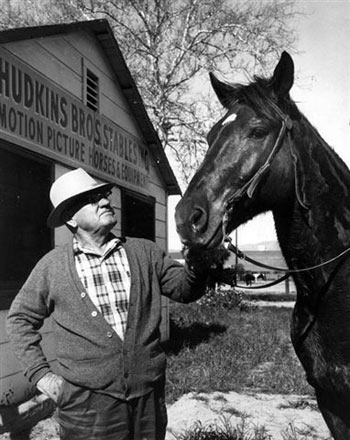
Hudkins was finally counted out on April 17, (some sources claim April 9 or April 18) 1973.  It was the only time in his life that he had heard the ten count.

Hudkins might not have been a world champion during his career, but its not hard to imagine him winning a world title in most other era. Were he fighting today, Hudkins would no doubt be a sensation, a lightweight who would finish his career as a heavyweight, it’s hard to imagine Ace Hudkins ever ducking anyone.


Copyright © 2015 The Boxing Glove, Inc. Peter Silkov Art. All Rights Reserved. Peter Silkov contributes to www.theboxingglove.com and www.theboxingtribune.com


twitterfacebookgoogle pluslinkedinrss feedemail

John Henry Lewis: The First Black American to win the World Light Heavyweight Championship


twitterfacebookgoogle pluslinkedinrss feedemail
By Peter Silkov


John Henry Lewis was an extremely talented boxer who could have been one of the all-time greats if fate had been kinder to him. Indeed, there are those who consider John Henry to have been one of the outstanding champions at his weight, despite his severely curtailed boxing career. 

Born on May 1, 1914, in Los Angeles, California, Lewis turned professional in 1930, at the age of 16 years old. Despite his youth he could fight, and just two years after turning professional, he was fighting main events. Lewis was a boxer-puncher, more in the stand up English mould, rather than the more stereotypical aggressive American brawling style. John Henry had it all, he could box and he could punch, had good speed and durability, along with an excellent boxing brain, and ring ‘smarts.‘  In many ways Lewis was a prodigy, fighting at a world class level almost from the start of his professional career. 

Standing 5’ feet 11” inches, Lewis started his career as a middleweight, but soon blossomed into a light heavyweight. As he progressed, Lewis would often fight full-fledged heavyweights as well as light heavyweights, regularly giving away 30 or more pounds. Lewis’s record reads like a who’s who of the top names of the 1930s, with him fighting men such as, Jim Braddock, Maxie Rosenbloom, Fred Lenhart, Tony Shucco, Bob Olin, Tiger Jack Fox, Jock McAvoy, Izzy Singer, Bob Goodwin, Al Gainer, Len Harvey, Al Ettore, Johnny Risko, and Elmer “Violent” Ray.

Lewis’s career was touched by tragedy early when opponent Sam Terrain died after being knocked out by Lewis in the 4th round on March 11, 1931. John Henry was a very religious man and Terrain’s death troubled him deeply, and for a time, made him question if he should carry on boxing, but boxing was what he was good at, and was his chance of a better life. So he fought on. By 1932, John Henry was a ranked contender for the world light heavyweight title. In July 1933, he underlined his status by twice out-pointing the reigning world light-heavyweight champion Maxie Rosenbloom in non-title fights. The clever and slick “Slapsie Maxie” had out-pointed Lewis in 1932 in another non-title affair, but the much young, and much less experienced, Lewis was learning fast.

Despite these wins over the reigning world champion, John Henry would have to wait over two years before finally getting a shot at the World light-heavyweight title.  Although taking into account the attitudes of the time to coloured fighters, Lewis could be classed as being lucky to receive a title shot at all. On October 31, 1935, he became the first black American to win the World light-heavyweight champion, after easily out-pointing Bob Olin (who had taken the world crown from Maxie Rosenbloom) over 15 rounds.

Lewis would be a busy champion. During a reign, which would last until his retirement in 1939, he would defend the world title five times, winning all five, but he also engaged in many non-title bouts, the vast majority of them against some of the top heavyweights in the world.  In 1936 and 1937, Lewis fought a total of 20 times each year, winning 36 against two defeats and two draws. The defeats were both avenged within a couple of months. In 1938, John Henry had 12 fights and won them all. Included in these fights were two successful defences of his World light-heavyweight title. At the comparatively young age of 24, John Henry Lewis seemed to have a bright future ahead of him, and seemed destined to be World light heavyweight champion for some time to come. However, Lewis was harbouring a dark secret. For some time he had been losing the sight in his left eye, and by 1938, despite his ring form still being impressive, Lewis was practically half-blind.

On January 25, 1939, Lewis was given a shot at Joe Louis World heavyweight title. It is said that Louis, who was good friends with John Henry, was aware of his affliction, and arranged for Lewis to have a shot at his title in order that he could collect a career high payday of 15,000 dollars. Louis also made sure that his friend didn’t suffer unnecessarily in their fight, ending the contest clinically in the first round. It was to be the only defeat inside the distance of Lewis’s career.
After the Louis defeat, arrangements were made for Lewis to travel again to London and defend his light heavyweight title again, in a rematch with Len Harvey. The match fell through when doctors from the British Boxing Board of Control became aware of John Henry’s failing sight, and the fight was vetoed. Having reached the point where he could no longer get by the medical examiners John Henry Lewis announced his retirement in June 1939, retiring as undefeated light-heavyweight champion of the world, aged just 25.

Lewis retired with a final record 103(64koes)-8-5.

If not for his eyesight problems it is likely that John Henry Lewis would have remained World light heavyweight champion for a considerable time. He would have made a much bigger mark upon boxing history. As it is, Lewis’s career and record as world champion shows that he was an outstanding fighter and champion, who had his chance of reaching his full potential cruelly taken away by blindness.

 Copyright © 2015 The Boxing Glove, Inc. Peter Silkov Art. All Rights Reserved. Peter Silkov contributes to www.theboxingglove.com and www.theboxingtribune.com

twitterfacebookgoogle pluslinkedinrss feedemail

Thursday, April 16, 2015

Kid Norfolk: The Black Thunderbolt


By Peter Silkov


William Ward is a name that generally won’t generate much response from most boxing fans today, yet, during a boxing career in which he fought under the name of “Kid Norfolk.” Kid Norfolk was one of the best fighters of his era and another coloured fighter who was denied the opportunity to fulfill his true potential, due to the colour of his skin. William Ward was born on July 10, 1893 (although some sources claim September 20, 1895, as his birth date) in Norfolk, Virginia. As Kid Norfolk, “The Black Thunderbolt” he would become one of the most formidable and feared fighters of his era. 

Ward was born to fight, and by the time he was in his teens, he had relocated to Baltimore and was fighting in the notorious ‘Battle Royals.’ At these events, a number of black fighters would be placed in a ring together and left to fight it out, with the last one standing being the winner. Ward launched his professional boxing career in 1914, in Panama, which was then a hot bed of boxing activity, and called himself Kid Norfolk, in honour of the town where he had been born. 

Kid Norfolk was a short and muscular fighter, with great physical strength and endurance. Although standing just 5’ feet 8”inches, and weighing between 165 to 185 during his career, Norfolk would fight fully fledged heavyweights, often giving away as much as 30 pounds in weight to his opponents. Norfolk had no fear of fighting anyone no matter what their size, and at the same time, he was soon being avoided by many of the top middleweights and light-heavyweights in the world. When it came to fighters such as Norfolk the colour bar would come in handy for those who wished to avoid fighting him mainly because he was so formidable an opponent. 

During his career, Norfolk would battle it out with such fighters as “Rough House” Ware, Jeff Clark, Ed “Gunboat” Smith, “Big” Bill Tate, Arthur Pelkey, Billy Miske, Sam Langford, Dan “Porky” Flynn, Joe Jeannette, “Jamaica Kid”, “Black Fitzsimmons”, Harry Greb, Harry Wills, John Lester Johnson, “Tiger” Flowers, Battling Siki, Tommy Gibbons, and Ed “Bearcat” Wright.

While in Panama, Kid Norfolk soon began running out of opponents; few middleweights and light-heavyweights could resist his powerful punches, and aggressive style. Most of Norfolk’s defeats were to heavyweights when he was usually giving away significant amounts of weight and height away. But, even at heavyweight defeats were very far and few between for Norfolk.

Sam Langford was the first (and one of the very few) fighters to knock out Norfolk, stopping him in the 2nd round of their December 17, 1917, meeting. By this time, The Black Thunderbolt had moved from Panama back to America in search of bigger challenges and larger purses, and increasingly he would fight only heavyweights.

The Langford defeat was a severe blow, but Norfolk was soon back to winning ways and working on a new string of victories. A defeat at the hands of Sam Langford was certainly no disgrace. 

One of Norfolk’s most famous victories was his contest with the legendary Harry Greb on August 29, 1921. Although the fight was a ‘no decision’ affair, meaning that there would be no official point’s decision given if the bout went the distance, Norfolk was judged the ‘winner’ in the next days newspaper verdicts. Like many of Norfolk’s contests, this was a ferocious fight, and has gone down in boxing history as being the fight in which Greb was so badly damaged in his right eye, that he soon lost the sight from it.

Kid Norfolk’s dream was to fight Jack Dempsey for the World heavyweight championship. The Kid had almost got Dempsey into the same ring in 1918, before Dempsey had won the heavyweight title, but after protracted negotiations the fight fell through, with Dempsey’s side saying that the money wasn’t right. 

After Dempsey won the World heavyweight crown, Norfolk’s pursuit of him became more acute. Many of those in the know felt that Norfolk had the strength and the style to overpower Dempsey. On December 14, 1920, Norfolk came the closest he ever would to sharing a ring with Jack Dempsey, when he fought on the undercard of Dempsey’s World heavyweight title defence against Bill Brennan. While Dempsey and Brennan fought for the richest prize in sport, Norfolk fought Dempsey’s longtime sparring partner Bill Tate for the Coloured World heavyweight title.

Ironically, Brennan was a stablemate of Norfolk’s who The Black Thunderbolt handled with ease in sparring.  Brennan was a tough fighter, but seen by most, as a clearly inferior fighter to Norfolk, but it was Brennan who gained the fight, which Norfolk craved so much. 

Norfolk had to be content with battering Dempsey’s sparring partner all over the ring for 10 rounds, before being awarded the rather cryptic Coloured Heavyweight championship on points. In the main event, Brennan gave Dempsey one of his hardest fights, until he was eventually knocked out in the 12th round, Norfolk’s own ‘Title’ victory had an even more bitter taste to it.

Things started to go wrong for Norfolk in late 1921. In a fight with Lee Anderson, (a grizzled veteran whom Norfolk had possibly underestimated) Norfolk was severely cut over and upon the left eye in the 7th round of a brutal slugfest. So bad was the cut that Norfolk was pulled out of the fight by his corner before the start of the 8th round. 

The defeat cost Norfolk his Coloured heavyweight championship, but more seriously, his left eye would never heal properly. He would steadily lose the sight from it, so that in a little while, he was rendered completely blind in that eye.

In his efforts to gain a match with Dempsey for the Heavyweight championship, Norfolk faced Harry Wills on March 2, 1922. Wills, who had himself been clamoring for a title shot against Dempsey, was knocked out in the second round by Wills, who had outweighed Norfolk by over 30 pounds.

The defeat to Wills dealt a crushing blow to Norfolk’s ambitions of fighting Jack Dempsey for the Heavyweight championship. Neither he, nor Willis, would ever corner the elusive Dempsey within a boxing ring. Norfolk’s defeat to Wills also signaled a down turn in the flow of Norfolk’s career. With his left eye deteriorating steadily, until it was soon completely sightless, Norfolk’s overall form drained significantly, and he was soon picking up defeats against fighters whom he would previously have beaten. From 1923 till the end of his career in 1926, Norfolk continued to fight regularly, but with dwindling ability. Norfolk was still dangerous and game as ever, and was still able to pull out some good results, but the defeats were increasing and by 1925, Norfolk was banned from fighting in California due to his blindness.

Norfolk finally hung up his gloves in 1926, after being stopped in 4 rounds by Ted Moore. His final record was 83(47koes)-23-6 (28-4 newspaper decisions.)

Norfolk spent his later years hanging round the gyms and advising young fighters on the fundamentals of boxing, while earning a living from an apartment building he had brought in Harlem, New York, which he rented out.

The Black Thunderbolt died on April 14, 1968. Although widely overlooked and underrated today, Norfolk is one of the ‘golden generation’ of black fighters whom had he been given the chance, would almost certainly have won a world title during his career. Unfortunately, Kid Norfolk lived and fought at a time when being good could only take you so far, if you didn’t have the right coloured skin.   


Copyright © 2015 The Boxing Glove, Inc. Peter Silkov Art. All Rights Reserved. Peter Silkov contributes to www.theboxingglove.com and www.theboxingtribune.com


twitterfacebookgoogle pluslinkedinrss feedemail

Wednesday, April 15, 2015

Eladio Valdes: The Story of "Black Bill"


By Peter Silkov

Eladio Valdes was a highly talented fighter, who combined tremendous hand and foot speed with a furious and seemingly inexhaustible whirlwind attack. “Black Bill” (as Valdes became known) was not a big puncher, but he threw punches with both fists, from all angles, and was constantly moving on his feet, keeping his opponents off balance. Wherever he fought, Valdes’s aggressive style delighted the crowds. Eladio also picked up the name “The Man of Rubber” due to his quirky trick of throwing himself into the ropes during contests and bouncing of from them towards his often perplexed and alarmed opponents. 

Valdes was born in May 1905, in Havana, Cuba.  Born into great poverty in Havana, Valdes was soon fighting in the many clubs dotted around Havana, turning professional while still a mere 15-year-old. Standing around 5’ feet 3” inches, Valdes weighed only about 100 pounds when he began his professional fighting career in 1920. He would become one of the top flyweights in the world at a time when the division was overflowing with talented boxers of all descriptions. During his career, Black Bill would face such top men as Genaro Pino, Angel Kid White, Izzy Schwartz, Ernie Jarvis, Willie Davis, Happy Atherton, Pinky Silverberg, Eugene Huat, Marty Gold, and Midget Wolgast.

For the first four years of his career Valdes fought exclusively in his native Cuba, with Havana being a hot bed of boxing activity during the 1920s. On May 7, 1923, Valdes out-pointed Genaro Pino over 12 rounds to win the Cuban light-flyweight championship, and by 1924 Black Bill was running out of opposition in Havana, and he and his manager Luis “Pincho” Gutierrez began looking towards conquering America. 

In 1925, Black Bill invaded New York and proved to be a sensation with the American fight fans. Valdes fought some of the top contenders in the Flyweight division, losing just 3 out of 18 contests, and proving himself a genuine contender for the world flyweight title. Amongst Valdes’ best scalps were his two victories over Izzy Schwartz, whom he beat twice in three fights during 1925.

Over the next five years, Valdes alternated his time between America and return trips to his homeland Cuba. On his trips back to Havana Valdes was feted wherever he went, like the star he had become, he was living like a star, and enjoying his money with the reckless abandon like so many fighters both before and after him also displayed. Black Bill grew to like the nightlife, the fine clothes, and the glamorous women who always seemed to be around him. He also liked to gamble and this was a habit in which he was almost always the loser. 

Fast living usually catches up with even the best fighters and in 1927, Valdes had a dip in form and defeats, which delayed any hopes he had held about fighting for the world flyweight title. However, over the next 2 years, Valdes put together a string of 25 victories in 26 contests, including victories over some of the most talented fighters in the division, such as Marty Gold, Happy Atherton, and Willie Davis. These victories took Valdes back into top contention for a world title shot himself.  Remarkably, by this time Valdes was already experiencing problems with his eyesight. It was a condition that worsened with every fight he had.

When he finally gained his shot at the world flyweight championship, on March 21, 1930, against Midget Wolgast, it was already too late for Black Bill; he was now totally blind in his right eye, and his left eye was damaged too.

The two men fought for the vacant New York State version of the world flyweight championship, and Wolgast, a whiz kid of just 20, had an easy time out-boxing the struggling Black Bill, who spent most of the fight chasing shadows.

Following this heartbreaking defeat, Valdes only fought eight more times, going 3-5, until at the end of 1930 he was finally forced to retire from boxing, having now been rendered almost completely blind in both eyes.

At the age of just 25 Valdes saw his world crumble and all his dreams of continued fame and fortune quite literally disappear.  He stayed in America, living in Harlem, New York, with his wife, but his money had gone and was isolated in a world of darkness. Valdes fell into a deep depression, and on April 8, 1933, the fighter who had thrilled so many crowds, and enjoyed fame throughout Cuba and America, shot himself in the stomach. Five days later, Eladio Valdes was dead, at the age of just 27.

Eladio Valdes’s final boxing record was 125(22koes)-24-13. He was never stopped or knocked out during his career. 

Valdes was also a stablemate and mentor to the great Kid Chocolate, whom he took with him to America in the late 1920s. Both men were managed by Felipe Gutierrez and trained by Moe Fleischer. Kid Chocolate would himself go on to enjoy the kind of success, which Valdes may have achieved had his career not been so cruelly cut short, when he should really have been in his prime.  
Copyright © 2015 The Boxing Glove, Inc. Peter Silkov Art. All Rights Reserved. Peter Silkov contributes to www.theboxingglove.com and www.theboxingtribune.com


twitterfacebookgoogle pluslinkedinrss feedemail

Sunday, April 12, 2015

Book Review: The Sundowners: the History of the Black Prizefighter 1870 - 1930

The Sunday Book Review by Peter Silkov
“The Sundowners: the History of the Black Prizefighter 1870 - 1930 (Volume 2, Part 1)”  
Written by Kevin R. Smith


One of the prime examples of this is the history of the black fighter in boxing. There is no other, so-called, sport in existence, which so clearly illustrates the struggle for racial equality, as does the history of boxing.  Ever since coloured fighters first began to throw punches in the ring, back in the bare-knuckle days of Bill Richmond and Tom Molineaux, boxing has offered a way out. Yet, at the same time, a reinforcement of the racial confinements under which these men were forced to live during their daily lives. Black fighters proved their worth with their pugilistic endeavors, and in many cases became favourites with white audiences. They also struck fear, often into the same people who so enjoyed watching them fight. 

George Godfrey
 As a sport, boxing is unique in the endless amounts of fascinating stories that the lives of its protagonists provide to the interested reader. Perhaps one of the reasons for this is that boxing is more than just a sport, it is a way of life, a calling for those who take it up. It has often been said that you can’t play at boxing. Over the many years of it’s history, there have been innumerable boxers, many known and many relatively unknown, but all with often fascinatingly individual stories to tell.  Many boxers’ life stories often break beyond the boundaries of simply boxing itself. Boxer’s lives have often been microcosms of the lives of those watching them fight.

 The lot of the black boxer during the 19th and early 20th century was not an easy one. Many top white fighters stated the colour bar as reason enough not to fight the top coloured fighters. Often these men were forced to fight each other countless times in order to maintain a living. The black race enjoyed a breakthrough in the late 1890s and early 1900s, when George Dixon, the first coloured world champion, won world titles at Bantamweight and Featherweight. Joe Walcott soon followed by winning the welterweight crown and Joe Gans the lightweight title in the early 1900s. These breakthroughs for the black race culminated in Jack Johnson taking boxing’s greatest prize, the World heavyweight championship in 1908.  However, Johnson’s victory would turn out to be bittersweet for his people, and other black fighters for years to come, as the white race was so disturbed by the loss of their most prestigious boxing title. As a result of Johnson’s world title reign, the Black fighter was excluded and discriminated against even more, and this would not begin to change until the days of Joe Louis.

“The Sundowners: The History of the Black Prizefighter 1870 - 1930 (Volume 2, Part 1)” written and published by Kevin R. Smith, provides an encyclopedic guide to the many black fighters who fought during the late 19th and early 20th century.  Many of these fighters’ names have almost been completely lost to history, while others will be familiar to the boxing history student.  In both cases, Smith provides enlightening biographical details about the fighter’s lives, both in and outside, of the boxing ring. Every fighter featured inside this book has at least a page devoted to his life and boxing career; many have biographies several pages long. Each man’s ring record and photograph accompany these biographical notes.

The photographs themselves make this a very fascinating and beautiful book; there are literally 100s of rare photos, many never before seen. The men portrayed in this book are in many ways very different and unique from each other. One major factor these boxers have in common is the fact that they are black fighters who tried to make their mark in the world. Because of their colour, they faced many hurdles throughout their boxing careers, not just in the ring, but outside of it too.

George Byers
 The life stories of these men are often bittersweet and disheartening, yet, uplifting at the same time. Many of them arose from poverty to find fame and riches, despite their colour, racism, and bigotry of the time. Yet, some of these men inevitably fell back into the very poverty and hardship from which they had originally began, and could escape from only fleetingly. 
 
 
Some of these boxers were terribly treated by white managers who saw them as little more than pieces of meat to make money, though it can also be said that this was a fate not reserved solely for the black fighter, but experienced by the white fighters as well. One telling aspect of this book is that, despite the undoubted class and in some cases, greatness of these black fighters, very few of them ever gained a genuine world title shot during their fistic careers. This is perhaps the most damning evidence of how these fighters were forever, during their careers and lives, restricted due to their race. They could have popularity, fame and fortune even, up to a point, but in most cases, they were not allowed to fight for the world titles.

Some of the better known of the dozens of fighters portrayed in this book are Frank Craig, Kid Norfolk, George Godfrey, Bobby Dobbs, Eladio Valdez, George Byers, Jeff Clarke, Frank Childs, Esteban Gallard, Jack Blackburn and Ramon Castillo. They are just a clutch of the many boxers whose names and fighting careers are brought back to life within these pages. Kevin Smith does an admirable job in this book of fleshing out fighters whom to many have only been faded names in boxing history. Many of the fighters portrayed in here have been almost totally forgotten and ignored as time has gone by; their achievements and toil within the boxing ring long since discarded…until now.

Kid Norfolk
In addition to the writing of Smith, a number of the biographies in this book are written by Ralph H. Cathcart, who is the son of one of the outstanding fighters within these pages, Ramon Castillo (real name Ramon Grenot Cathcart.)

Together, both Smith and Cathcart have provided an informative, entertaining, and often enlightening history of the black fighter in the late 19th and early 20th centuries.  We find out more than just about these men’s boxing careers, but also about their lives outside of boxing, and the hurdles in which they had to overcome in order to try and make a better life for themselves. These are stories of triumph and defeat, success and failure. For most of the fighters in these pages the good times lasted only as long as their boxing peaks and then the inevitable slide downhill were often devastating.

This book is a tremendous asset for anyone interested in some of the most important aspects of boxing history. Perhaps it also represents a final victory for all of the men within its pages too. After many years with their records and lives condemned to obscurity, they have finally been remembered again.  

twitterfacebookgoogle pluslinkedinrss feedemail