Tuesday, November 3, 2015

Boxer Greg Page...Talented and Tragic


By Peter Silkov

Greg Page was one of the most talented heavyweights of the 1980s, but like most of the heavyweights of that era, mismanagement and a slew of legal problems hindered his career. Don King, who had a knack for leaving his fighters disillusioned and broke, controlled the heavyweight division in the 1980s. King’s treatment of his heavyweights (and his fighters from other weights) during at this time is notorious.  He used his heavyweights in particular, like pawns, and the result was that many of these talented fighters became disillusioned with boxing, and self-destructed. One of those heavyweights was Greg Page, who went from being a brilliant amateur, to one of the most promising heavyweights of his generation. Although he would win the World heavyweight title, his talent would be largely unrealized, and his career eventually ended in tragedy.

Greg Page was born on October 25, 1958, in Louisville, Kentucky, the birthplace of Muhammad Ali. The fact that he was born in the hometown of ‘The Greatest’ meant that Page was constantly compared to Ali.  Unsurprisingly, Ali would prove to be a hard act to follow for Page. 

Page turned professional in 1979, after compiling an amateur record of 94-11. 
Almost from the moment that he turned professional, Page was hailed by some as the ‘New Ali’ and he fought in a similar fashion, being very mobile, with fast hands, and a penchant for throwing eye-catching combinations. Soon, Page drew criticism from the media when his performances did not live up to expectations. Although a talented and entertaining fighter when he was on form, Page was prone to giving erratic and lazy performances at times, and his weight would fluctuate, drawing more criticism from the media. Much of the criticism Page received was unfair for a fighter who was just beginning his career. Page was sensitive to criticism and soon became suspicious of the media.

After winning his first 19 contests, Page was out-pointed by Trevor Berbick on June 11, 1982.  Ironically, he had come into this fight at his lightest weight ever, but found himself out-muscled by the bull-like Berbick. Page came back with 4 wins, including victories over James Tillis and Renaldo Snipes.  Then on March 9, 1984, Page fought Tim Witherspoon for the vacant WBC world heavyweight title, but was beaten on points. Five months later, in a challenge for the USBA Heavyweight title, David Bey beat Page on points. Yet, just when his career seemed to be on the slide, Page produced the performance of his life on December 1, 1984, when he traveled to South Africa and won the WBA world heavyweight championship from big-punching Gerrie Coetzee, knocking him out in the 8th round of a thrilling fight.

Unfortunately, Page’s world title reign lasted only 4 months. In his first defence on April 29 1985, Page was out-pointed by Tony Tubbs, after producing a listless display.

Although Page was only 27 years old, this would prove to be the final time that he would fight for the World heavyweight title.  Over the next 7 years he went 14-8 in 22 fights, remaining at world level, but no longer a genuine contender for the world title.

He seemed to have retired in 1993, and turned his hand at training, where he found success in guiding Oliver McCall to victory over Lennox Lewis in 1994, to win the WBC world heavyweight title. But, when McCall’s career spiraled off the rails, due to his drug addiction, and he lost the world title, Page returned to the ring himself in 1996. Page put together a string of victories over a number of mediocre opponents, but he was no longer was the sparkling boxer he had been in his prime. With his speed and reflexes dulled by age and inactivity, Page had to take a lot more punches than he did in his youth. Once he moved up a level and started taking on younger prospects, Page started losing. He lost 5 of his last 9 contests, but it was his final contest on Match 9, 2001, that proved to be the tragic finale of Greg Page’s boxing career.  
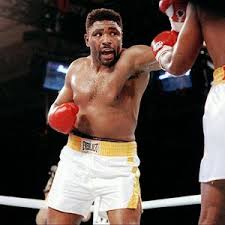
Fighting in a night club called Peels Palace in Erlanger, Kentucky, against Dale Crowe, who was 24 years of age and 18 years younger than Page, tragedy struck in the 10th round when Page was knocked down, and suffered severe brain damage. There was no ambulance or oxygen at the venue, and the so-called doctor was completely inadequate. Incredibly, there was no stretcher at ringside, and it was 45 minutes before the stricken Page was removed from the ring. Page eventually was taken to a hospital where he underwent brain surgery, and suffered a stroke while on the operating table. Although he would survive his terrible injuries, Page was left paralyzed on his left side, and confined to a wheelchair. He later won damages of 1.2 million dollars from the state of Kentucky for the negligent medical facilities provided for his contest against Crowe. Ironically, Page and Crowe became good friends, and Crowe helped at fundraisers for his ex-opponent.

New safety regulations called ‘The Greg Page Initiative’ were put into place in Kentucky after his injury. Yet, it is debatable whether they have been taken on board totally. Greg Page’s legacy was to show just what could happen when shortcuts are taken regarding boxer’s safety.  It is also a prime example of why boxers should have some form of pension plan and medical insurance provided for them. Had Greg Page had some kind of pension plan he would probably not have been boxing Dale Crowe that night for a purse of just $1500.00.

Greg Page died on April 27, 2009, when he slipped out of his bed and died of positional asphyxia. Greg Page’s story is not one of boxing’s happy stories. It is a story of a great talent that was only realized in brief flashes.

Greg Pages final record was 58(48koes)-17-1.

We have not confirmed if the Greg Page Foundation is still operating, but we found this article written by his wife, Patricia Page, for the Concussion Legacy Foundation.

 Patricia Page's Letter About Her Experience and Change

Copyright © 2015 The Boxing Glove, Inc. Peter Silkov Art. All Rights Reserved. Peter Silkov contributes to www.theboxingglove.com
twitterfacebookgoogle pluslinkedinrss feedemail

Boxing Heavyweight Sinan Samil Sam Passes at age 41


By Peter Silkov

The Boxing Glove is sad to report that the former European Heavyweight Champion, Sinan Samil Sam, is reported to have passed away Tuesday, October 20, 2015, in Istanbul of liver failure. Sam was being treated at the Marmara University Pendik Training Research Hospital in Istanbul, and was on the waiting list for a liver transplant.

During his boxing career, Sam was a strong and durable fighter who was always in entertaining fights because of his aggressive, pressing, style. Nicknamed the ‘Bull from Bospoous,’ he was born in Frankfurt, Germany, on June 23, 1974, to Turkish parents. After an amateur career, which saw him win the Junior World championship at light-heavyweight in 1992, and the World championship at Super-Heavyweight in 1999, Sam turned professional in 2000, and in the course of his professional career would fight some of the best heavyweights in the world.


Sam was technically solid and very rugged, with a good punch and an excellent chin. In the course of his 8 year professional career, Sam would win the European heavyweight title twice, and also hold the WBC International and WBC Mediterranean titles.


In what was probably his most impressive performance, Sam stopped the usually very durable Danny Williams in 6 rounds on February 8, 2003, in defence of his European title, which he had won 4 months earlier.

Sam’s main problem during his professional career seemed to be that he wasn’t always in top condition physically, with his weight fluctuating from 230 to over 250 pounds. There's little doubt with his pressure fighting style, that he was a better fighter when he was lighter. Yet, whatever his conditioning going into a fight Sam always gave his all once he got into the ring. Sam showed his heart in his 2005 defeat to Oleg Maskaev, when he managed to last the distance, despite suffering a broken jaw in the 2nd round.


Sam fought heavyweights such as Premyslaw Saleta, Danny Williams, Juan Carlos Gomez, Luan Krasniqi, Denis Bakhtov, Lawrence Clay Bey, Oleg Maskaev, Oliver McCall and Paolo Vidoz.
Ironically Sam never got to fight for a world title, though many less qualified heavyweights have received title shots. Sam’s last chance at a world title shot was lost on June 16, 2007, when he was out-pointed by a 42 year old Oliver McCall, losing his WBC International Heavyweight title.

Sam would win his final 4 contests, with his last fight taking place on July 4, 2008, when he regained the European Heavyweight title by outpointing Paolo Vidoz. Sam never fought again. His final record was 31(16koes)-4.

Copyright © 2015 The Boxing Glove, Inc. Peter Silkov Art. All Rights Reserved. Peter Silkov contributes to www.theboxingglove.com
twitterfacebookgoogle pluslinkedinrss feedemail

Saturday, October 24, 2015

Mark Prince Punches to Promote Peace On Our Streets


By Peter Silkov
From London


York Hall, in Bethnal Green, hosted a lively night of boxing Friday, October 23, which was headlined by Mark Prince (23-1, 18koes), who has become British boxing’s Peter Pan, by making a successful comeback to the ring in his mid-40s. This was Prince’s 4th comeback fight since he first returned to the ring on October 4, 2013, at the age of 44, following a lay off from the ring of almost 14 years. The reasons behind Marks comeback are different from those of most fighters who return to the ring after a long absence. Mark is not fighting again to chase glory or a big payday, the motivation behind his return is to bring attention to The Kiyan Prince Foundation, which he set up in memory of his son, Kiyan Prince.

Kiyan was a promising young footballer who had been signed by Queens Park Rangers, but his life, and all the promise that it held, was cruelly snuffed out in 2006, when he was stabbed to death outside of his North London School. In response to his son’s death, Mark set up The Kiyan Prince Foundation to bring awareness and education to the community about the increased level of knife crime upon our streets. Each month brings fresh stories of youths being fatally stabbed, often in broad daylight in front of numerous witnesses. There are many incidences of severe injuries that never get reported. The source of this self-destructive violence amongst our youth can be found in the exploding gang culture, especially in London, and the general feelings of isolation, and alienation, amongst those within this gang culture. When there is a generation growing up with the belief that they have nothing to lose, then you have a recipe for social conflict and violence.

With the backing of the Kiyan Prince Foundation, Mark tours schools, prisons, and community centers giving talks that are designed to steer troubled youth away from crime, and educate about the devastating repercussions of knife crime for all involved.  The foundation is especially geared to try and motivate young people away from the gang culture and show them that there are other avenues and possibilities open for them in life. Mark himself came from a troubled background, until he found boxing in his early 20s and turned his life around. His ‘first’ boxing career saw him beaten just once in 20 contests, and that defeat was in a brave challenge for the WBO world light-heavyweight championship held by the very formidable Dariusz Michalczewski. In the fight, Prince was competitive right up until when he was stopped in the 8th round. Mark would have just one more fight, a 1st round victory over a year later against Kevin Mitchell in November 1999, before a severe knee injury put him into a premature retirement. 

It would be 14 years before he would fight again, motivated by the desire to bring about change with the Kiyan Prince Foundation.

Last night, Mark, who at 14 stone is a cruiserweight, gave away over a stone to a genuine heavyweight, Mathew Ellis(20-12-2, 9koes), who stepped in as a late replacement after Prince’s original opponent failed to catch his flight.

The fight itself was brief, but explosive. At 46 years of age, Prince looks as fit as he was 20 years ago, fitter than many fighters much younger than him were. The only telltale sign of his age, or perhaps his past knee injury, is his flat-footed movement around the ring. Even though he is not fleet-footed, Mark is an expert in cutting off the ring against his opponents. He has also seemingly lost none of his punching power, and with his flat-footed stance, puts an impressive amount of power behind almost every punch. With his punching power and a sound technique, it is not hard to see how Prince rose to a world title challenge in his first boxing incarnation.

Last night his power was just too much for Wayne Ellis. After a minute of both men sizing each other up with some preliminary jabs, Prince started to put the pressure onto Ellis, driving him into the ropes with a series of shots, then putting him down with a right to the body, followed by a right to the head. Ellis beat the count, but the writing was on the wall for him. Prince was on him again quickly, and two lefts to the head had him falling again to his knees, where he stayed as the referee counted him out. It was an impressive performance by Prince, despite the fact that Ellis, a one-time heavyweight prospect, has long slipped into the status of a journeyman, and came in as a last minute substitute. Yet, you can only beat who is put in front of you, and since his comeback, Mark has stopped 3 of his 4 opponents, to take his record up to 23-1 with 17 wins by knockout. Mark’s victory came in front of a packed house at Bethnal Green York Hall, and the crowd was very vocally appreciative of his performance.  After his win, Prince took the microphone and spoke to the crowd, and it was easy to see why he is such a respected, successful campaigner, and speaker against the culture of violence that is taking over our streets.

However, Mark’s comeback has not been welcomed in every quarter. The British Boxing Board of Control, the country’s governing body, which has controlled British boxing for over 100 years, has declined to license Prince, stating that it is ‘in his best interests not to box again.’ This has led to him making his comeback under the banner of the fledgling Malta Boxing Commission, which was sanctioning yesterday’s show and all the fighters on it. The MBC is currently embroiled in a bitter legal dispute with the BBBC over the right to stage boxing promotions in England, in a case that could eventually see an end to the BBBC’s monopoly over British boxing.

It is undeniable that the BBBC is one of the most respected boxing boards in the world and that their safety record is largely impressive. However, given his performances in his comeback, and his impressive level of fitness, it does seem to be something of a puzzle as to why the BBBC continues to refuse to allow Prince a license under their banner. At 46 years old, the obvious obstacle for Mark is his age. Yet, age itself should not be a deciding matter, especially considering that Mark is in visibly better condition than many other fighters who are licensed by the BBBC are.  There is little doubt that if he was to be licensed by the BBBC, Prince would have a much bigger platform from which to gain further support for the Kiyran Prince Foundation. The skeptical amongst us may wonder whether this might not be one of the reasons behind the BBBC ‘s lack of support for Prince, perhaps he is seen in some quarters as being a bit too political. Certainly it is a strange situation, with the sports main governing body in this country keeping their backs firmly turned against a man who given support, could be such a hugely positive role model and ambassador for main stream British boxing. 

Certainly Saturday night’s crowd at the York Hall had no such doubts about Mark Prince and the message he is trying to spread.  Unless there is a reason, other than his age, why Mark Prince should not be licensed, then Mark has more than proved himself deserving of a chance to compete on British boxing’s main stage, rather than being limited to fighting for the MBC. Despite its best intentions, the MBC still has a limited pool of fighters and a much lower profile in British boxing. Mark Prince deserves to be embraced at the highest level of British boxing. It’s frustrating that a sport that often seems to have no problem with promoting negative and divisive role models seems to be hesitant to promote such a positive role model.

Whatever happens with the BBBC, Mark Prince has vowed to continue fighting in the ring, and promoting the foundation made in his son’s name. The more he continues win, the harder it will be for the BBBC to legitimately continue to ignore him.

The main event was supported by 6 undercard contests. Most notable of these was the return of Michael Alldis (25-8, 15koes).  Alldis is a former British and Commonwealth super-bantamweight champion, and was having his first competitive contest in over 13 years, and at the age of 47.  Such statistics may sound daunting, but fighting at lightweight, Alldis entered the ring looking as if, like Mark Prince, he has turned back the clock, and regained the fitness of his boxing youth. Michael’s opponent, Dinars Skripkins (2-6) was willing, yet from the start, Alldis looked remarkably sharp, considering his age and absence from the ring, took control with a sharp jab and strong body shots.  Skripkins was floored in the 2nd round with a body shot, then took the full count in the 3rd round after taking another sharp shot to the body. While his opponent was limited, it was still an impressive display by Alldis.

The other fights of the night were:

At super middleweight, Manzo Smith (6-2) out-pointed Andrejs Loginov (16-41-1, 9koes) over 4 rounds. Smith stalked Loginov throughout, and was too busy and strong for his opponent, yet, Loginov showed heart by continually fighting back every time it looked as if he might be overwhelmed, and in the end lasting the distance.

Cruiserweight Daniel Mendes (2-0, 1ko) also had to be content with a 4 rounds point’s decision win in his fight with Jody Meikle (10-56-3, 2koes.)  Meikle was out-gunned from the start by the powerful looking Mendes, who is a heavy-punching southpaw.  However, Meikle showed lots of grit and put his extra experience to use as Mendes looked to load up with the big punches. It looked as if Mendes would get his knockout victory in the 4th and final round, when he dropped Meikle by the ropes with a heavy uppercut.  Yet Meikle bravely beat the count and held, moved and fiddled his way through to the end of the fight.

Lightweights Jak Johnson, who was making his debut, and Danny Costello (5-2-1, 1ko) boxed a lively 4 rounds, with both showing solid boxing ability, but Costello being the busier, came away with the points win.

Middleweight Adam Taylor made his debut against Arturs lljins (1-1) and it quickly turned into a nightmare. Taylor looking, it must be said, in less than top condition, against an opponent who looked considerably younger and fitter than him, was in trouble almost from the start of the 1st round, as lljins jumped on him with a wild combination to the body and head. Taylor fell to the canvas under this assault, but beat the count, only to be hurt again as soon as the action resumed. Taylor was soon down again by shot to the head, and while he beat the count, this time he indicated to the referee that he could not continue and the fight was ended.
   
In all, it was a lively and entertaining night of boxing, and the packed crowd showed why the York Hall is one of the most popular and atmospheric boxing halls in the world. For all their quarreling, the MBC and BBBC would do well to stop lining the pockets of lawyers, and recognize that the best way forward for boxing in this country will be if they could learn to operate side by side, rather than in opposite corners.  Whether this can ever really happen in a sport, such as boxing, so riven by inner politics, is another question altogether.  


If you would like to volunteer, donate, or learn more about the Kiyan Prince Foundation, click here:
http://www.kiyan.org/

Or follow Mark on Facebook: https://www.facebook.com/TheKPF

Copyright © 2015 The Boxing Glove, Inc. Peter Silkov Art. All Rights Reserved. Peter Silkov contributes to www.theboxingglove.com
twitterfacebookgoogle pluslinkedinrss feedemail

Wednesday, September 30, 2015

A Thrilla In Manila: A Fight of a Lifetime...40 Years Later


 A Thrilla In Manila: A Fight of a Lifetime...40 Years Later
By Peter Silkov


The history of boxing is colorfully littered with a multitude of rivalries between fighters who have fought each other numerous times. This is the lifeblood of boxing, the point where the hardest game reaches its boiling point. No other sport can match boxing for the intensity that is produced between two boxers who are about to fight.  Only boxing creates that unique mixture of soap opera and brutal theatre. It is the most brutal and real drama in sport. 40 years ago today saw the third and final installment of perhaps the most acidic and explosive rivalry that has ever graced the heavyweight division. The final clash between Muhammad Ali and Joe Frazier displayed boxing at both its most beautiful, and its most brutal.

Often called the sweet science, there was nothing sweet about the fights between Ali and Frazier, especially fights 1 and 3. The violence of the blows, which both men exchanged throughout their trilogy, echoed the depths to which their personal rivalry had reached. In the course of 5 years, Ali and Frazier had gone from having a respectful friendship, to one of the bitterest feuds ever seen in boxing. Ali was a master of taunting his opponents, but with Frazier it was different. Perhaps it was because Frazier had taken his world title while he had been banned for his refusal to go to Vietnam.  Perhaps it was because Frazier became the first man to beat Ali in their classic 1st fight on March 8, 1971. Whatever the reason, there’s little denying that Ali saved some of his sharpest and most hurtful insults for Joe Frazier. 

For his part, Frazier, after playing the game at first, began to simmer, stew, and build a genuine anger and hatred towards Ali for the things he had said about him. It was an anger that did not subside, even after he beat Ali in their 1st contest.  With that victory, after a fight that could rightly be declared as the greatest heavyweight contest of all time, Frazier had proved himself to be the rightful world champion. He had beaten the returning king. Yet it was not enough, for either Frazier or the fans. After his greatest career performance, and his greatest victory, Frazier could only watch, as Ali became even more popular with the public in defeat. The bitterness deepened when Ali won their rematch on January 28, 1974, in a fight that while very good, was almost mediocre compared to the two wars within which it was sandwiched on both sides. By their 2nd fight, Frazier was an ex-world champion himself, having lost his crown the previous year to George Foreman.  After he had lost to Ali in their second fight, many people wrote off Frazier as a fighting force.

Ali meanwhile regained the world title in late 1974, with his magical destruction of George Foreman in Zaire. Ali’s and Frazier’s careers seemed to be going in opposite directions now, with Ali enjoying a new lease of life, while Frazier was viewed as a mere shadow of the man who had beaten Ali in 1971.  But, the feud was still burning, and a third fight between the pair was a natural, if only to tie up the loose ends. A boxing rivalry, which ends with one victory for each man is always somehow unsatisfactory, with something unfinished, like a soap opera that had the plug pulled on it before the final episode.

With Ali and Frazier, the final episode of their joint drama would be the most hard-bitten, which is what boxing fans had hoped for, and even more.  It would reach heights of physical violence that would make fans feel both enraptured and disturbed, in equal measure.

The fight was set for October 1, 1975, in Manila, Philippines, before a crowd of 25,000, which would include the Philippine president Ferdinand Marcos. The build up to the fight found Ali firing up more jokes at Frazier’s expense.

“It’ll be a killa, a chilla, a thrilla, when I get the gorilla in Manila” cried Ali numerous times during the build up. 

Frazier on the other hand, was quietly seething with his bitterness against Ali, saying in one interview prior to the fight:

“No question about it, it’s real hatred, I want to hurt him. If I knock him down, I’ll stand back, give him breathing room.  I don’t want to knock him out in Manila; I want to take his heart out."

Behind all the ballyhoo and bluster, Ali and his team really believed that this time around Frazier would be an easy touch. Ali was enjoying the fruits of being world champion once again, and being the most recognized man in the world, and his focus on his training had unsurprisingly suffered. Some of the fruits that become available with success can be bittersweet.  Ali’s focus on the fight was further shaken when his estranged wife Belinda flew over from America to confront him about his mistress Veronica Porsche, whom he was staying with in Manila, and who would soon become his third wife. But, if Ali went into his third fight with Joe Frazier distracted, ‘Smokin’ Joe soon got his attention.

From the start of the 1st round, it was clear that both men meant business. Ali came out flat-footed, throwing bombs, and looking for an early stoppage victory. Both men were a little heavier and slower than in their first fight. As the fight progressed, all pretense of science and skill would be discarded. This was a fight, with each man throwing and landing as much and as often as they could, and each man unable and to a certain extent, unwilling to get out of the way of the other man’s punches.

Standing flat-footed, Ali won the early rounds by landing his bombs on Frazier at will. Frazier was being out-punched and was visibly shaken in the 1st and 2nd rounds.  As the fight wore on Joe kept on coming in, boring his way onto the inside of Ali, where he would realize punches of his own onto Ali’s body, and then switch quickly to his head. With a maniacal grin on his face, Frazier seemed to welcome the punches that Ali was landing upon him, almost as if they were giving him energy to build up his own assault.

By the middle rounds, Frazier was indeed ‘Smokin’, as Ali visibly tired, found himself pressed back against the ropes, and forced to exchange bombs toe-to-toe with a Frazier who was showing that on this night, he was by no means a washed up fighter.     

In the 7th round, Ali tried to get on his toes and fire his jab, but the heat of Manila, along with his 33 year old legs, made it difficult for ‘the Greatest’ to keep away from Frazier’s relentless assaults.

“Old Joe Frazier, why I thought you were washed up” declared Ali during the round.  To which Frazier replied, grimly between punches, “Somebody told you all wrong pretty boy.”

The middle rounds belonged to Frazier, now it was ‘Smoking’ Joe who was out- punching Ali, who was now spending too much of his time pinned onto the ropes, and trying to cover up against punches he couldn’t block or dodge. Frazier was still eating clean shots as he bored into Ali, firing his punches almost frantically at Ali’s body and head. In the 10th and 11th rounds, it looked as if Ali might be through, as he struggled to trade leather with Frazier, and seemed so leg-weary that he was just about to topple over to the canvas under the savagery of Frazier’s attacks. Then in the 12th round, Ali showed why he is very possibly the one and only ‘Greatest’ of all time, certainly at heavyweight. The ability to turn the tide of a fight through sheer guts and strength of spirit, the same kind of spirit that took him to his improbable victory over Foreman. 

In the 12th round, Ali opened up on Frazier with both hands. It was a brutal assault in which Frazier took punch after punch. By the end of the round, his mouth poured out blood and his left eye was closing. In rounds 13 and 14, it was Frazier who looked ready to topple over onto the canvas. Ali was out-punching Frazier once more, somehow finding the strength to fire blistering combinations upon ‘Smokin’ Joe, who despite his continued efforts to fight back, began to look more helpless and more gruesome a figure, with every passing minute.

The 14th round was especially brutal, as Ali landed, at will, upon an opponent who could no longer see the punches coming at him. When the bell rang ending the 14th round, the referee Carlos Padilla had to guide Joe to his corner. Then it was all over.  With just three minutes to go, Frazier’s trainer, Eddie Futch did what he knew Frazier would never do himself. Convinced that his fighter was on the point of being seriously hurt, or perhaps something worse, he threw in the towel, despite Frazier’s protests. Ali, who had at times been at the point of quitting himself during the brutal fight, was the winner, victorious in what must go down as probably the most grueling and savage contest ever waged for the World heavyweight championship. While their first fight featured more skill and speed, mixed with a thrilling violence of its own, their third fight took the gloved violence to a whole new height.

Later, at the post-fight press conference, a battered Ali said of his opponent,

“I have nothing bad to say about Joe Frazier. Without him I couldn’t be who I am and without me he couldn’t be who he is. We’ve been a pretty good team for four, five years.”


Frazier for his part said of his conqueror,

“I’ve seen walls tumble under shots like I gave him.  He’s a great champ.”


It was to be the last great night of both men’s careers, an explosion of superhuman effort from both boxers that afterwards left them both depleted. Frazier would fight just twice more, losing again to Foreman, in an almost surreal fight 8 months later. He then struggled to a draw with Jumbo Cummings in a one off comeback fight 5 years later. Ali would reign as World heavyweight champion for almost another 3 years, but his skills eroded with every fight. But, like his millions of fans around the world, Ali didn’t want the ride to end, and so he stuck around too long and came back too much.

Sadly, the feud with Frazier simmered on, long after both men had finally said goodbye to the ring. After all the punches that Ali landed upon Frazier in their three fights against each other, it was the words that he landed upon Joe that hurt the most. They had the deepest and most lasting effect. Despite efforts by Ali to apologize for some of the things that he said about Frazier and called Frazier, during the height of their rivalry, ‘Smoking’ Joe remained bitter towards Ali until his death in 2011.

It is an unfortunate postscript to a great fight. Sometimes life is not as forgiving as we would like it to be, and wounds collected in the ring can remain with a fighter for the rest of his lifetime. Ali and Frazier created something special with their trilogy, something that will endure perhaps even beyond the survival of the sport from which it emerged. They created something that will endure, but they also lost some parts of themselves along the way.  Perhaps that is the price of greatness.


Copyright © 2015 The Boxing Glove, Inc. Peter Silkov Art. All Rights Reserved. Peter Silkov contributes to www.theboxingglove.com and www.theboxingtribune.com
twitterfacebookgoogle pluslinkedinrss feedemail

Saturday, September 5, 2015

TBG Book Review: Facing Ali: 15 Fighters, 15 Stories


The Boxing Glove Sunday Night Book Review by Peter Silkov
Facing Ali by Stephen Brunt


There can be little argument that Muhammad Ali, in addition to being the greatest heavyweight champion of all time, is also the most famous sportsman of all time. 34 years since his last fight, Muhammad Ali is still the most easily recognized sportsman around the world, even by people who were born long after he had finally retired.

Despite all of his personality and talent, Ali was also blessed to appear at just around the right time to become a star in boxing and the sporting world in general. When he first emerged during the early 1960s boxing, especially the heavyweight division was crying out for a new star; a dash of lightning to light up both the heavyweight division, and the sport itself.  Ali became that star, as he amused, amazed, fascinated, and outraged both the fans and the media in equal measure. Then, after he had been banned from fighting for almost 4 years, due to his refusal to go to Vietnam, Ali came back to the ring in the early 70s to discover a heavyweight division that was enjoying an explosion of talent that was unprecedented in the history of the division.  With the return of Ali, the heavyweight division enjoyed what is fondly referred to as a ‘golden age’ for the rest of the 1970s.

From the start of his professional career, Muhammad Ali’s fights became real life drama’s, that became larger, and more important as his career progressed.  But, while Ali was always the hero of his fights, his opponents would also find themselves thrust into the limelight when facing ‘The Greatest.’  For Most of Ali’s opponents, fighting the most famous man in boxing would become the high-point of their boxing careers. Usually it would be the most financially profitable too, with the aura of Ali guaranteeing most of those he faced during his career the best paydays of their own careers.

There have been innumerable books written about Ali, many of them outstanding. Muhammad Ali has always been an inspirational figure and has inspired some fascinating books dedicated to him.  After all of these years, it might be thought that the material on Ali might have started to run dry. Considering that the present day Ali has been debilitated by his lengthy battle with Parkinson’s disease, and is a much quieter, and less visible figure than he was in his fighting prime.

And yet, the Ali of the past, in his prime, is in many ways as loud and as visible as ever.  Ali and his career is still talked about, analyzed, and reminisced over every day amongst the boxing community.  At a time when most boxing fans cannot name most many of today’s so called ‘world champions’ Muhammad Ali is still a name that sparks recognition and wonder.

In “Facing Ali: 15 fighters, 15 stories” Stephen Brunt takes a new angle in analyzing the career of Muhammad Ali.  Instead of the traditional analysis of Ali, instead, Brunt looks at Ali through the eyes of 15 of Ali’s opponents.  Interviewing each man about his experience both as an Ali opponent, but also as a fighter in general.  The opponents chosen in this book vary from those who achieved a greatness of there own during their careers, to those whose main claim to fame was their fights with Ali.

The opponents of Ali included in this book are Tunney Hunsaker, Henry Cooper, George Chuvalo, Brian London, Karl Mildenberger, Joe Frazier, Jugen Blin, Joe Bugner, Ken Norton, George Foreman, Chuck Wepner, Ron Lyle, Jean-Pierre Coopman, Earnie Shavers, and Larry Homes.

Brunt examines each fighter’s own career, both before, and after their confrontation with Ali, and how their fights with one of the most famous sportsmen in the world affected their own lives and careers.  It is interesting to see the often fascinating stories of these men’s own lives, and how Muhammad Ali has made an indelible mark upon each of them, both as fighters and as men.  A few of these men have fought Ali more than once in the ring, such as Cooper (2 times) Chuvalo (2 times) Joe Frazier (3 times) Joe Bugner (2 times) and Ken Norton (3 times.)

Each man in here has a story to tell, and they are all interesting stories in their own right, some, like Chuvalo’s, are tragic.  Brunt gives his subjects plenty of space to show the true depth of their personalities, and experiences, rather than simply making them into one dimensional cutouts of people, whose only point of interest is the night (or nights) that they crossed swords with Muhammad Ali.

Every fighter here has his own set of memories and views upon Ali. It is a curious aspect of Muhammad Ali’s character that, while he was renowned throughout his career for his often merciless taunting and clowning of his opponents, he did keep in contact, and in many cases, become friends with these men.  Save for the case of Joe Frazier, where a genuine case of animosity seemed to have developed from their meetings as opponents in the ring.

This book is recommended for those who are interested in seeing the boxing career of ‘The Greatest’ from a different and often thought provoking angle.
The most admirable aspect of this book is that Brunt allows these men to express their life stories in various ways that are not simply beholden to their fights with Ali.

First published in 2002, “Facing Ali” is another illustration of the inexhaustible material that exists about the life and fighting career of Muhammad Ali.  This is a new and fascinating angle, which shows us Ali from the perspective of his opposition, and gives us some enlightening anecdotes upon ‘The Greatest.’


Since the publication of this book, Lyle, Cooper, Norton, and Frazier have all passed away, making their contributions all the more poignant.  Once again Ali has upstaged his opponents, by surviving them.

Copyright © 2015 The Boxing Glove, Inc. Peter Silkov Art. All Rights Reserved. Peter Silkov contributes to www.theboxingglove.com and www.theboxingtribune.com
twitterfacebookgoogle pluslinkedinrss feedemail