Sunday, June 4, 2017

Muhammad Ali’s 15 Greatest Fights


By Peter Silkov 


Few will argue that Muhammad Ali was the greatest heavyweight world champion of all time. There were a number of things, which made him ‘The Greatest.’ In his fighting youth, he had blinding speed, the kind that has never been seen before or since in a heavyweight. Some other heavyweight champions were fast, Larry Holmes for example, but none had the sheer speed of the young Ali. On top of this, Ali had deceptive strength, and carried a better punch than he is usually credited for having.  Later in his career, when his speed and reflexes had dimmed, Ali had to rely much more on his physical strength, a great chin (again another aspect which is often overlooked with Ali) and a steely willpower. In his declining years as a fighter these attributes were able to get him victories against fighters who were younger, fresher, and physically superior to him. The fact that Ali dominated the heavyweight division during a time when it was at its most talented and competitive, is the underlying testament to his greatness. His greatest moments during the 70s came largely when he had already passed his athletic peak by some way. Looking at Ali’s career its fair to say that he was in more ‘classic’ matches than just about any other heavyweight champion, again, just one more reason why he can claim the mantle of ‘The Greatest.’  Here is my top 15, greatest fights of ‘The Greatest.’  They have been chosen for a number of reasons. Some were simply great fights; others were great performances by Ali rather than great competitive fights.  Part of Ali’s magic was that he could make the most mundane contest compelling, just as a great film star can lift a film from the mediocre to something special. From the beginning to the end of his career, whenever Ali entered the ring you were bound to see something out of the ordinary. 


1. Muhammad Ali Vs George Foreman:  Oct 30, 1974, Stade du 20 Mai, Kinshasa, Democratic Republic Of The Congo.


In his greatest achievement in the ring, Muhammad Ali regained the World heavyweight title by out-lasting and out-psyching George Foreman. Just as he had against Sonny Liston ten years previously, Ali entered the ring a heavy underdog against a champion believed by many to be invincible. While he had been perceived as a fragile youngster against Liston, against Foreman Ali was considered to be too old and past his prime, to beat the destroyer which was Foreman.  Yet again, Ali proved everyone wrong. With his rope-a-dope, tremendous will power, and almost superhuman durability on this night, Ali allowed Foreman to punch himself out, before coming back to knock out an exhausted Foreman in the 8th round.   


2. Muhammad Ali Vs Cleveland Williams:  November 14, 1966, Astrodome, Houston, Texas.


Making the 7th defence of his World heavyweight title during his first title reign, Muhammad Ali produced a display against big-punching Cleveland Williams, which many today perceive, as his masterpiece. Ali was like a cruel artist in this fight, as he mixed his blinding speed with destructive punching power, with spectacular results.  Williams was floored 3 times in the 2nd round, then again in the 3rd, before the slaughter was ended.  This mix of speed and power gave us an indication of the kind of fighter Ali would have developed into if he hadn’t been banned from boxing a few months later in 1967, due to his refusal to fight in Vietnam. 
This was also the fight where Ali used the ‘Ali shuffle’ for the first time.


3. Muhammad Ali Vs Sonny Liston 1:  February 25, 1964, Convention Center, Miami Beach, Florida.


In a fight that was named ‘Fight of The Year’ by The Ring magazine, and later 'Fight of Decade', and 'Upset of The Decade', Muhammad Ali won the World heavyweight title, in one of the rings biggest upsets. In just his 20th professional contest, Muhammad Ali (then named Cassius Clay) stepped into the ring a huge underdog against the feared champion, Sonny Liston. The 22-year old challenger was expected by many to be blown out of the ring by Liston, but instead, Ali stunned the boxing world with a sensational display. Liston was out-boxed and then out-punched, and finally retired after the 6th round. After the fight, Ali declared to the shocked media at ringside “I am the Greatest! I shook up the world!” 

After this fight, the new champion changed his name from Cassius Clay to Muhammad Ali, and announced that he had converted to the Nation of Islam. It was the start of what would be a legendary reign.  


4. Muhammad Ali Vs Joe Frazier 3:  October 1, 1975, Quezon City, Metro Manila, Philippines. 


This was Muhammad Ali’s 4th defence of the world title, in his second reign, and nicknamed ‘The Thriller in Manila’ this fight pitted Ali against his archival Joe Frazier for the 3rd and final time. Hailed by many as the perhaps the greatest heavyweight fight of all time, this was a savage contest, which saw both men standing toe-to-toe and ripping merciless punches at each other. While neither man was the athlete that he was in their first contest, with both men a little heavier, and a little slower than in 1971, for sheer non-stop action, courage and intensity this fight has never been surpassed.  After starting fast and confidently, believing that he was in for an easy night with Frazier, Ali tired, and the fight became a battle of endurance and wills, until the 13th and 14th rounds, when Ali suddenly found a new reservoir of energy and battered Frazier round the ring, forcing trainer Eddie Futch to pull Frazier out before the 15th and final round.  Ali was never the same fighter after this match, and after the match, described it as being ‘the closest thing to dying’ he had ever experienced. 


5. Muhammad Ali Vs Joe Frazier 1:  March 8, 1971,  Madison Square Garden, New York, New York. 


This match was called the ‘Fight of The Century’ and was one of the most eagerly awaited fights in boxing history. Ali was having just his 3rd fight in nearly 4 years after being banned from boxing for 3 years due to his refusal to enter the Viet Nam war. In Ali’s absence, Frazier had won the vacant world title, and Ali was desperate to reclaim it as his own. The fight had been built up even further by the needle between the two men, which had intensified during the matches’ build up.

The fight itself was the epic contest, which had been expected, with both men fighting at a pace and intensity that seemed almost superhuman at times. Ali showed the marks of his 3 years out of the ring, as he struggled to find his previous form, and flagged after the first 6 rounds. Yet despite his tiredness in the face of Frazier’s incessant attacks, Ali displayed a fortitude, and courage that he had never needed to call on before, standing with Frazier and fighting back. In the 15th and final round, Ali was floored by Frazier, yet got up, with his jaw swollen, and managed to fight it out to the end of the round. This was Ali’s first defeat as a professional, yet in an ironic twist, his valiant effort in losing served only to enhance his popularity. For Frazier, this was to be his greatest night and his greatest victory, yet he paid a heavy physical price for his win, and had to spend several weeks in hospital recovering. 


For many, the first and third fights between Ali and Frazier, are the greatest heavyweight fights of all time. 


6.  Muhammad Ali Vs Ernie Terrell:  February 6, 1967,  Astrodome, Houston, Texas.


In what was his second to last contest before his infamous ‘exile’ from boxing, Muhammad Ali made the 8th defence of his title against the hulking Ernie Terrell. Ali gave a beautiful exhibition of his boxing skills against the awkward and rangy Terrell, showing the kind of speed and reflexes never seen before from a heavyweight champion, either previously, or since. This was a grudge fight, as Terrell had tried to out-psyche Ali by continually calling him by his ‘slave name’ Cassius Clay. However, this ploy backfired badly on Terrell, as Ali gave him a slow and punishing boxing lesson. Terrell was the holder of the WBA version of the heavyweight title, but from the first bell it was clear who the real world champion was out of the two of them.  The fight went the full 15 rounds, even though it looked as if Ali could have stopped Terrell inside the distance, had he wanted.


7. Muhammad Ali Vs Ken Norton 1:  March 31, 1973, Sports Arena, San Diego, California.


Now an ex-world champion, after his loss to Joe Frazier in their first fight, Ali entered this match with Norton while in the midst of a campaign to gain another shot at the world title, and overlooked the then unknown Norton. Ali entered the ring wearing a robe that had been given to him by Elvis Presley, which had ‘The People's Champion’ embroidered on the back of it. He also weighed a heavy 221 pounds.

From the beginning, Ali found Norton’s crab-like style tough to break, and his long jabs tough to avoid. Added to this, Ali had his jaw broken, perhaps as early as the second round. Lacking the old energy and bounce in his legs, and in constant pain from his jaw, Ali once more showed great courage, despite going down to his second professional defeat. After a dramatic contest, Norton won a split 12 rounds point's decision.  He also won Ali’s NABF heavyweight title.
After this fight many people wrote Ali off as a top-flight fighter, but of course he would return.


8. Muhammad Ali Vs Ernie Shavers:  September 29th, 1977,  Madison Square Garden, New York, New York. 


Deep into his second reign as world champion, Ali made his 10th defence against the huge-punching Ernie Shavers. By this point in his career Ali had little left in the tank, and Shavers was one the biggest punchers in the heavyweight division.  Yet, Ali won this fight with a mixture of guile and courage, allied with his remaining boxing skills, and still formidable durability. This fight is at times painful to watch, as Ali takes punches that he would have avoided a few years previously. It is also a testament to Ali’s greatness, that he was able to retain his title against such a dangerous challenger, at this point in his career. Ali won on points after 15 often hard fought rounds.  Despite his decline as a fighter, it was Ali who finished the fight the stronger man, and at times looked like he could even stop Shavers in the last round.


9. Muhammad Ali Vs Oscar Bonavena:  December 7th, 1970, Madison Square Garden, New York, New York.


In what was his second comeback fight since his 3 year ‘exile’ from boxing, Muhammad Ali took on the strong, and aggressive, Oscar Bonavena. Ali had boxed barely 3 rounds in his previous comeback contest when he stopped Jerry Quarry on cuts, and the rust of almost 4 years of inactivity showed clearly in this fight. Ali was no longer the fleet-footed boxer he had been in the 60s before his exile. He was flat-footed and his reactions and reflexes were considerably slower. This was the fight, that clearly showed  the price that Ali had paid for his ban from boxing. Rather than being able to out-box Bonavena, Ali was forced to go toe-to-toe with him as he was dragged into a brawl. The fight developed into a hard fought contest with both men exchanging big shots, and Ali showing for the first time that he could still beat top fighters even though he had lost much of his old speed and skills. After being hurt several times in the fight, and taking more punches than he ever took in the past, Ali roared back in the 15th and final round to floor Bonavena 3 times and score a technical knockout victory. This was the first and only time that the rock-chinned Bonavena was stopped in his 68 fight boxing career.

Ali would improve in later fights as he got rid of his ring rust, but he would never again be the boxer that he had been before his exile.


10.  Muhammad Ali Vs Ken Norton 2:  September 10, 1973.  Forum, Inglewood, California.


Six months after their first contest, Ali and Norton met for a second time. This time Ali was in prime condition, weighing 9 pounds less than he did in the first fight, and armed with a grim determination to avenge his previous defeat to Norton. Once again it was a very tough fight, with Ali starting fast, and showing a lot of his old speed in the early rounds, but then fading after the first 6 rounds. After Norton took over in the middle rounds, Ali staged a strong finish in the last two rounds to capture a split, 12 rounds point's decision victory. Ali would fight Norton once more in 1976, and win again via a split decision. All three Ali Vs Norton fights were close and for some, controversial decisions.   


11.  Muhammad Ali vs George Chuvalo 1:  March 29, 1966, Maple Leaf Gardens, Toronto, Ontario, Canada. 


In what was the third defence of his first reign as world champion, Ali was taken the 15 rounds distance for the first time in his career, as he beat Canadian iron man, George Chuvalo, on points. Although for most of the fight, Ali out-boxed Chuvalo with ease, he could not stop or floor Chuvalo. The match was one-sided yet entertaining, as Chuvalo bravely kept the pressure on Ali and landed more punches than previous opponents. Ali showed his speed and reflexes, but he also displayed his strength and durability, as he at times chose to go toe to toe with Chuvalo. This fight answered many critics who had doubted whether Ali could fight at his fast pace for a full 15 rounds.


12. Muhammad Ali Vs Henry Cooper 1:  June 18th, 1963, Wembley Stadium, Wembley, London. 


This was Ali’s last fight before he challenged Sonny Liston for the World heavyweight title. Facing the determined British champion, Henry Cooper, Ali  (who was still calling himself Cassius Clay at this point.) Ali toyed with Cooper for much of this fight, cutting him badly in the 3rd round, but then near the end of the 4th, a Cooper left-hook caught Ali and dropped him to the canvas by the ropes. Ali beat the count, but was visibly groggy, only to be saved by the bell. When the bell rang for the 5th the crowd was in uproar, believing that Cooper was on verge of a huge upset win over the young sensation. However Ali showed his tremendous powers of recuperation, and launched a vicious assault upon Cooper, sending several punches into the already badly cut Cooper left eye, until it was pouring blood all over the ring.   With Cooper blinded by his own blood and on the verge of being defenceless, the referee was left with little choice but to stop the fight in Ali’s favour, giving Ali a 5th round TKO win. Prior to the fight Ali had predicted that he would beat Cooper in 5 rounds.  


13. Muhammad Ali Vs Karl Mildenberger:  September 10, 1966, Wladstadion, Frankfurt, Hessen, Germany.


Making the 6th defence of his world title, in his first reign, Ali found the tough and clever Mildenberger to be a tricky opponent. The German was the first southpaw to challenge for the World heavyweight title, and made good use of his awkward stance.  Ali, who was approaching his physical peak at this point, showed an impressive mix of speed and physical strength and slowly broke down his determined challenger.  Mildenberger was floored in the 5th, 8th and 10th rounds, and the referee finally stopped the contest in the 12th round to save the German from further punishment.


14. Muhammad Ali Vs Zora Folley: March 22, 1967, Madison Square Garden, New York, New York. 


In what was to be his final fight before he was stripped of his world title and banned from boxing for over 3 years, Muhammad Ali made the 9th defence of his world title against the clever and experienced Zora Folley. Having been carefully avoided by previous world champions, Folley tried to make the most of his chance against Ali, and started their fight well, landing some good right hands on Ali, while also making Ali miss with his own punches. Yet the champion was taking his time rather than struggling, and when he opened up in the 3rd round, his superiority in strength and speed was visible. In the 4th round, Ali floored Folley heavily and the challenger barely beat the count. After playing a bit more with his challenger in the 5th, Ali finished things in the 6th round with two short rights. This fight showed Ali becoming increasingly stronger as he matured, and this rare mix of speed and power already had people comparing him to the all time heavyweight greats of the past.


15. Muhammad Ali Vs Doug Jones:  March 13, 1963, Madison Square Garden, New York, New York.


Having just his 18th professional contest, Ali faced the toughest opponent of his career so far in the tough and experienced Doug Jones. In a fight, which was one of the toughest of his career, Ali found Jones to be a very tough nut to crack. Ali was caught and rocked by Jones several times in the fight, but replied with hard jabs and lightning combinations. At times, Ali showed his inexperience in this fight and his speed based fighting style was still not fully realised. Jones seemed the stronger fighter at times and on occasions bullied Ali, but Ali showed that he had grit and durability by standing up to the more mature Jones and fighting back. With the fight poised Ali as (he would so often in his career) staged a brilliant finish, out-punching Jones over the last couple of rounds to come out a clear winner after 10 exciting rounds.  This fight would prove to be valuable experience for the still developing Ali.


Follow us on Twitter: @TheBoxingGlove and  


If you are an athlete and want us to follow you or tell your story, contact petersilkov@yahoo.com   or theboxingglove@yahoo.com
If you are an author and you would like your book reviewed, contact Peter Silkov at petersilkov@yahoo.com or theboxingglove@yahoo.com


Tuesday, May 30, 2017

On This Day: Jack Dempsey 'The Manassa Mauler' Remembered


By Peter Silkov


Remembering....Jack Dempsey June 24, 1895 - May 31, 1983


Jack Dempsey ’The Manassa Mauler’ was one of the most colourful and popular heavyweight champions of all time and his reign oversaw a huge boost to the profile of the sport, as a whole, during the 1920’s. Born William Harrison Dempsey on June 24, 1895, Dempsey took the name ‘Jack’ from the great middleweight champion of the 1880s, Jack ’Nonpareil’ Dempsey. Turning pro in 1914 at the age of 19, Dempsey endured many hardships on his way up, and often took employment in mines, and other hard labouring work in order to get by. Dempsey was a tough fighter, with a knockout punch in both hands and an all-action aggressive style.

After a few years, Dempsey was taken on by manager Jack Kearns, and together the two men began to make waves and Dempsey was guided to a world contest in 1919. Dempsey won the World heavyweight title when he destroyed Jess Willard in 3 rounds. As champion, Dempsey became the most popular World heavyweight champion since John L. Sullivan. In 1921, Dempsey defended his world title against the Frenchman Georges Carpentier, in what turned out to be the first Million dollar gate. Dempsey also had million dollar gates in his defences against Luis Angel Firpo and Gene Tunney, to whom he lost the world title on points on September 23, 1926.


On September 22, 1927, Dempsey came close to regaining his World heavyweight title from Gene Tunney, when he floored Tunney in their rematch. However, the chance was lost when Dempsey failed to go to a neutral cover for some seconds and gave Tunney some crucial extra seconds to rest.

Dempsey retired after the second Tunney fight, and remained extremely popular for the rest of his life, and is still considered by many today to be one of the greatest ever heavyweight champions. Dempsey’s final ring record was 62(49koes)-6-10.


Watch Gene Tunney Vs. Jack Dempsey World Heavyweight Fight:


Follow us on Twitter: @TheBoxingGlove and  


If you are an athlete and want us to follow you or tell your story, contact petersilkov@yahoo.com   or theboxingglove@yahoo.com
If you are an author and you would like your book reviewed, contact Peter Silkov at petersilkov@yahoo.com or theboxingglove@yahoo.com

Sunday, May 28, 2017

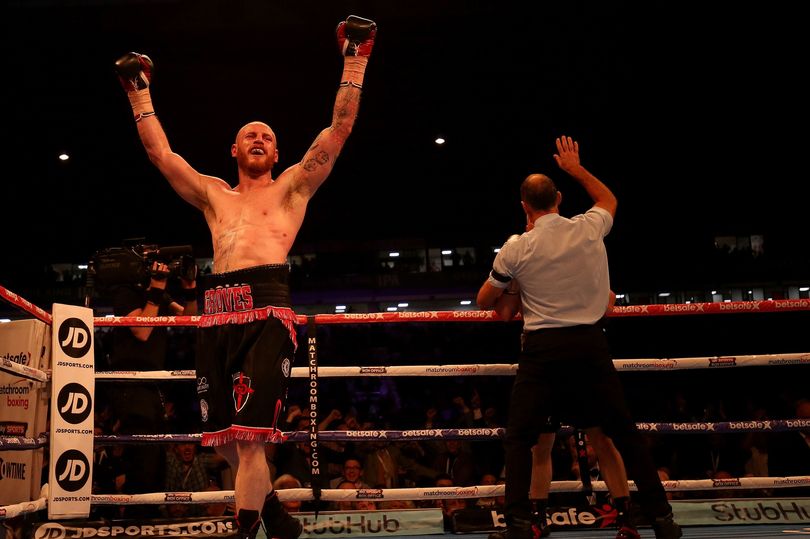
The Boxing Glove Big Fight Report: George Groves Fulfils His Dream As Kell Brook’s Homecoming Turns Into A Nightmare


Photo: Sky Sports

By Peter Silkov


It was a night of conflicting fortunes for two of Britain’s leading boxers at Sheffield’s Bramall Lane Outdoor Football Ground last night, June 27, 2017. While on his 4th attempt, George Groves (26-3, 19koes) finally fulfilled his dream of becoming a world champion. Unfortunately, Kell ‘The Special One’ Brook (36-2, 25koes) was deprived of his World welterweight title by Errol ‘The Truth’ Spence Jr (22-0, 19koesl) Today George Groves is looking forward to a wealth of possibilities, with a number of big money title defences ahead of him, on the opposite side however, Kell Brook is faced with an uncertain future in the sport.

Brook and Spence proved to be very well matched in their fight for Brook’s IBF world welterweight title, and the action, if a little messy at times, was tense and lively after a cagey first round. For the first six rounds Brook seemed to hold the edge, with his movement and strength giving Spence problems. The challenger showed glimpses of his speed and power, but at other times also seemed to show his relative inexperience at this level, compared with Brook. However the match began to turn sharply in Spence’s favour in the 6th, when Brooks left eye began to swell. Soon the eye was swollen grotesquely, and having suffered an orbital fracture in his other eye in his last contest (against Gennady Golovkin) it was clear that this latest injury was bothering Brook, both physically, and mentally.


Photo: Reuters
Spence now took control of the fight and doubled his attacks upon a now often retreating Brook. Yet Brook would not fold easily, he kept fighting back, just when it looked as though Spence was going to overwhelm him. However, the writing was on the wall by the 10th round when Spence floored Brook with a body shot, an area that the American had targeted from the beginning of the contest. Brook Survived the 10th, but was finding it visibly difficult to defend himself with his injured eye.

Photo: Sky Sports
In the 11th round, with the challenger putting him under heavy pressure, and constantly landing right hands upon Brooks damaged eye, Brook went down onto one knee after a flurry of shots, and took the referee’s full count, while he blinked and rubbed at his damaged left eye.

Errol Spence is already being hailed as America’s new star performer, but while his talent is not in question, he still has some way to go before he can be labelled as truly ‘special’ at world class level, especially in such a talent-laden division. Hopefully the fans will get a chance to see Spence meet the other big names in the 147 division, if so, then boxing really could see itself on a solid upswing.

Photo: The Sun
Defeat for Brook will be a bitter pill to take, especially in front of 27,000 spectators, made up largely of his home town fans. Whether he would have prevailed if his left eye had not gone in the 7th, is open to debate. Certainly before the injury, Brook seemed to be comfortable. Now, for Brook, the worry is whether he can come back from what has now been confirmed as another eye socket fracture, just as he suffered in his right eye in his previous fight against Gennady Golovkin. Such injuries are always serious for a boxer, and to suffer one to each eye must leave question marks against Brook's future in boxing. As might be sadly expected, there have been some criticisms for Brook ‘quitting’ in the fight, but surely a fighter has the right to decide that he has had enough when he suspects that his eyesight might be in danger. Brook’s decision to drop to his knee when he did, and take the full count, might well have saved him from further injury so that he can fight again. More importantly, it might have saved his eyesight for the rest of his life, long after his boxing career is done.

After the fight, Brook was clear about what had happened to him:

‘"I remember the surgeon saying last time after the Golovkin fight I could have gone blind if I'd had one more round so I had that in my mind.

"I had to stop. Pride was leading the way but when I got caught in the 11th and it wouldn't come back into line. He was coming on strong and I knew he is a very sharp shooter, a very good fighter and I knew it could be fatal with some of the shots he was chucking in so I went down on one knee.’

"I tried to get the eye back in line, but it wouldn't, and I knew the fight was over."

Photo: The Telegraph

Spence was happy with his victory, yet refreshingly critical of his own performance:

“I came out and I tried to do my best tonight. I’m happy I won, but I’m critical of my performance. I was overshooting my left. I give myself a B minus. I had a little trouble overusing my counter left.

‘Brook is a great fighter, a true champion, but also a tricky fighter. He finds you from tricky angles, and he can fight.’

“I came here to his back yard in front of 30,000. That’s what real champions do. I fought a real champion tonight and I proved non-believers that I can fight. I’ve proven I have a chin and I have true grit.

“This fight was tougher than I thought it was going to be. I showed I can take a punch and I can throw a punch. I can face adversity and I can win.

“Brook went to America to take the title from an American, like a true champion. I came here to his home town to get that title back from him. I wanted to win like true champion, and I did because that is what champions do.

“He was hurt. He was tired. He came firing shots, I came firing shots. But there was a moment I realised I had to step up my game and I did.”

Photo: CBS Sports
Spence will now look towards what could be some huge fights at 147 pounds, with the likes of Keith Thurman, Shaun Porter, and Danny Garcia, and even Manny Pacquiao and Terence Crawford.
For Brook, the future is much less clear, and looks to be at 154 pounds, if he does fight again. Which is no certainty after the injury he has suffered.

While the fickle hand of fate seemed to have abandoned Kell Brook last night, earlier on the bill, George Groves finally made the break through that he has been striving for all his career, when he won the vacant WBA world super-middleweight championship after a bruising encounter with Russian iron man, Fedor Chudinov (14-2, 10koes).

Anyone who has followed Groves' career will attest to the fact that fortune has never seemed to smile upon him during his career. Despite the fact that he has done things the hard way during his career, by facing top quality opposition and scoring notable wins over top fighters, George has always been out of luck when fighting for a world title. In his previous three attempts to capture and world championship, Groves has been beaten twice by Carl Froch in two epic bouts, and then narrowly out-pointed by Badou Jack, after seemingly doing more than enough to take victory.

In his last fight Groves' career has been struck by tragedy, after opponent, Eduard Gutknecht, suffered severe injuries in losing on points to Groves, and is still struggling to recover.

Last night though, it finally all came together for Groves against Chudinov.

The match started at a fast pace, with both men landing some brutal punches from the start. Groves had entered the ring visibly keyed up. This was a fight he had said that he couldn’t afford to lose. Perhaps a last chance at winning a world title. This tension seemed to carry on into the fight, as Groves started the match fast, fighting perhaps a little too much with his heart, rather than his head. Chudinov was constantly coming forwards, with hands high, looking to drag Groves into a brawl. Over the first two rounds Groves was landing more punches, but finding himself constantly pushed onto the ropes by his tank-like opponent. By the 3rd round, the fight had developed into a toe-to--toe slugfest, with both men looking to break the other man down.

Groves better variety of punches helped him edge the 4th round, but by now, he was cut over the left eye. For the first half of the 5th Groves showed some signs of tiredness, and the old questions about his stamina started to resurface. Yet Groves finished the round strong, underlying his determination to win this fight.

In the 6th round Groves stepped up several gears, unleashing a prolonged attack of brutal punches upon Chudinov. Although the Russian didn’t go down, he failed to punch back for a prolonged period of time, and took several tremendous punches to the head and chin, until the referee had no choice but to step in and halt the fight.

Photo: Reuters
George Groves had finally done it and won a world championship. Despite the proliferation of world titles in boxing today, winning one is still an achievement, and few fighters today deserve it more than George Groves, who has proved his world class credentials repeatedly for more than half a decade. Now finally he can call himself a world champion and look towards some big fights.

Following his victory, it was an emotional Groves who declared:

“I’ve got no words,” Groves said filled of joy. “It’s a lifetime’s work achieved. I’m over the moon. I want to thank everyone who made this happen, Shane McGuigan who has resurrected my career, and now I’m mature enough to admit that he brings the best out of me. In the end, I would have carried on punching until everyone had left and they kicked me out. I wasn’t going to let this belt slip. [Chudinov] was catching me around the back of the head from the start, he has really devastatingly long arms, but I found my feet.”

When asked what he would like to do next, Groves replied:

Photo: Getty Images
“Who wants to fight me? I’m sick and tired of chasing people. I’m sure there’s people that want to have a crack at me now. I’m really looking forward to seeing Callum Smith win a WBC belt, truly believe he’s going to do that. Maybe Paul Smith will pick up a world title, maybe me and him can do it again but right now I’m going to savour my win and spend quality time with my family, and celebrate with my wonderful team.”

Groves victory was very popular with the crowd, and one of those cheering the loudest, and standing on his feet, was Groves' old foe, Carl Froch.

There are a number of possible options open to Groves for future opponents, but perhaps the most tantalizing fight would be a rematch with his old rival James Degale, whom he beat in 2011, and who now holds the IBF world super-middleweight title. Their first fight, for the British and Commonwealth titles, was huge, and this time, with world titles at stake, it would be even bigger.


Follow us on Twitter: @TheBoxingGlove and  


If you are an athlete and want us to follow you or tell your story, contact petersilkov@yahoo.com   or theboxingglove@yahoo.com
If you are an author and you would like your book reviewed, contact Peter Silkov at petersilkov@yahoo.com or theboxingglove@yahoo.com


Friday, May 26, 2017

The Big Fight Preview: Kell Brook Vs. Errol Spence, Jr. at Bramall Lane Football Grounds


By Peter Silkov


Boxing has been threatening to make a comeback to credibility recently with some genuinely well matched big fights. Most recent of these was Anthony Joshua’s war with Wladimir Klitschko. Tomorrow we have the latest of what has been a series of encouraging matchups, both here, and abroad. Top of the bill, at the Bramall Lane Football Ground, in Sheffield, England. Kell Brook (36-1, 25koes) takes on his number one challenger, the undefeated Errol Spence Jr.(21-0, 18koes) in what will be the 4th defence of his IBF world welterweight championship. It will also be Brook’s first outing in the ring since his brave, but ultimately losing effort against world middleweight kingpin Gennady Golovkin, last September. In that match, Brook won praise for his bravery after being one of the few challengers to actively take the fight to the fearsome Golovkin. Yet, his bravery had a price, and he was eventually pulled out of the fight, battered and bloody, and with a broken right eye socket that required delicate surgery. One of the biggest questions ahead of his fight with Spence Jr. is how much of a mark has the Golovkin fight left upon Brook. Although we have been told that the eye injury has been repaired and is as good as new (albeit now with a titanium plate) there always has to be a question mark over a fighter when he is coming back from such a serious injury. The biggest question will be is the eye vulnerable to being re-injured, plus how will Brook react if the eye is injured again, even if only moderately. In facing Spence Jr., Brook is taking on one of the best prospects in boxing, a fighter who has had big things predicted for him. Spence has a similar box-fighting style to Brook, and the two should produce an interesting and exciting match. The biggest question with Spence Jr, is just how good is he, he is undoubtedly a talented boxer, but this fight will go a long way to telling us just how deep Spence Jr talent really goes.

With two fighters who are well matched, both physically and talent wise, this match has all the marks of being a very close and entertaining fight. I see this fight going the distance, with Brook winning a close and maybe controversial points decision.

The main fight on the undercard, is George Groves (25-3, 18koes) against Fedor Chudinov (14-1, 10koes) for the vacant WBA world super-middleweight title.

This will be Groves 4th attempt at winning a world title, after failed attempts against Carl Froch, (twice) and Badou Jack. This is a fight which Groves should win, Chudinov is very tough, but lacks the higher boxing skills of Groves. He also lacks the greater talent and experience of Groves.

Groves has said that this is a fight he must win, and if he can box to the best of his ability he should be able to claim a close but clear points win over Chudinov, and finally claim that elusive world championship.


Follow us on Twitter: @TheBoxingGlove and  


If you are an athlete and want us to follow you or tell your story, contact petersilkov@yahoo.com   or theboxingglove@yahoo.com
If you are an author and you would like your book reviewed, contact Peter Silkov at petersilkov@yahoo.com or theboxingglove@yahoo.com


Sunday, May 21, 2017

Willie Lewis Remembered…Boxer Extraordinaire


By Peter Silkov


Willie Lewis was the kind of boxer who died out with boxing’s golden age. He belonged to a time when fighters thought nothing of fighting every other week, and when the opponents were plentiful to do just that. It was a time when there were often boxing shows to be found in some club or other venue every day of the week, and only the toughest and hardest working survived what was often a hard and cruel occupation.

In an interview with 'The Ring' magazine in 1947, over 30 years after he had retired, Lewis compared the fighters of 1947 with his those of own era.

“Boxing was a tough and hard-bitten business in those days, and a fighter had to know his trade if he expected to get anywhere. He had to learn what boxing really was, and he also had to know how to adjust his style to any occasion. One week he’d be fighting a 6 rounder in Philadelphia. A couple of weeks later he’s be in a marathon brawl in California, where twenty and twenty-five rounders were the usual thing, and often championship bouts were over the forty–five round route.”

Lewis continued “It was a tough schooling, but it paid dividends for those who survived. Under the same circumstances, the kids today would be as good as they were in my day. But times are different. This is an era of speed. Everybody’s in a hurry. So the fighters don’t get much of a chance to properly learn boxing, how to feint, shift, counter, and really master the trade. The public demands ‘action’ the slam-bang and give-and-take stuff. And its only on rare occasions, in championship bouts, that fighters today are asked to go more than 10 rounds."

Willie Lewis was born on May 21, 1884, in New York, and began his professional boxing career in 1901, at the age of 17. Lewis would develop into a clever and cagey boxer who could also slug it out when he wanted. Although no more than a middleweight, he often fought bigger men throughout his career, thinking nothing of giving away 20 or more pounds to light heavyweights, and even heavyweights.

Lewis certainly didn’t have an easy road in his fighting career, as he fought quality fighters right from the start. In just his 13th contest, Lewis shared the ring with a young Sam Langford, and was knocked out in the 2nd round.

For the remainder of his career, Lewis would meet some of the very fighters of his generation. Men such as, Harry Lewis, Jimmy Gardner, Joe Gans, Honey Melody, Mike Donovon, Curly Watson, Jewey Smith, Sailor Burke, Billy Papke, Stanley Ketchel, Dixie Kid, Frank Klaus, Cyclone Johnny Thompson, Jeff Smith, Mike Gibbons, Paddy Lavin, Georges Carpentier, Al McCoy, and Young Ahearn.

In an era where many white fighters drew the ‘colour bar’ when it suited them Lewis fought anyone, regardless of weight, colour or reputation.

Lewis was to become renowned for his use of the one-two, a straight left, followed very quickly by a straight right, so that the two punches landed almost simultaneously. Many of Lewis’ knockout victims where accounted for by this method.

During his career Lewis fought all over America, but also traveled to England, Canada and France for fights. He fought in France for the first time in 1908, and soon because a favourite with the French fans, due to his personality and style, both in and out of the ring. Lewis was one of the boxers who helped the boxing boom grow in France during this time.

Years after he had retired from the sport, Lewis was asked who was the best boxer he had ever fought, chose his namesake Harry Lewis.

“No we weren’t related. Harry was Jewish, and one of the most skilled mechanics I ve ever seen in the ring. What he didn’t know about boxing wasn’t worth knowing. Just look over his record some day , and you’re get an idea. He specialized in knocking out guys who never were knocked out before. Harry was an artist in feinting and countering. His punches only went a few inches, but, boy, what authority they carried. Frankly I don’t know how I did as well as I did with him. He usually belted my ears off in the early rounds, but somehow I seemed to outlast him and finish the stronger. We fought half a dozen times, but never could seem to settle our differences. Two of our scraps over the 25-round route in Paris."

The two fights Willie is recalling here are his two battles with Harry Lewis for the World welterweight title, which his namesake had claimed. They took place on February 19, 1910, then two months later on April 21, both in Paris over 25 rounds. Each fight saw Harry Lewis have the early lead, but Willie whittled his advantage down, the longer that the fight went on. In the end, both fights were judged draws. Willie Lewis would never manage to capture a world title, but he came awfully close.

Lewis finally retired from boxing in 1915, after being knocked out in 2 rounds by Young Ahearn in Havana, Cuba. He retired with a final record of (56-16-8, 39koes.)

In 1920, Lewis survived being shot 3 times while making a phone call at a cabaret, which he owned. Throughout his career, he trained Joe Jeanette, and other boxers along the way. In later years Lewis worked as a bar tender at a tavern on 8th avenue New York, just a little walk from Madison Square Garden. Willie Lewis died on May 18, 1949, aged 64.


Follow us on Twitter: @TheBoxingGlove and  


If you are an athlete and want us to follow you or tell your story, contact petersilkov@yahoo.com   or theboxingglove@yahoo.com
If you are an author and you would like your book reviewed, contact Peter Silkov at petersilkov@yahoo.com or theboxingglove@yahoo.com


Andre Dirrell Title Fight Erupts In Explosive Punches and Disqualification


By Peter Silkov

Last night”s scenes at the MGM National Harbour, Oxon Hill, Maryland, during the aftermath of the Andre Dirrell vs Jose Uzcategui match, were a disgrace to the sport. Uzcaregui had just been disqualified after the 8th round for landing a punch after the bell, which sent Dirrell face-first to the canvas, and unable to continue the contest. Ironically, Dirrell was also involved in a similar incident in 2010, when Arthur Abraham also knocked him out with a blow after the bell. However, on that occasion, the aftermath was not quite as controversial and violent as it turned out to be on Saturday night. Uzcategui seemed to be very unlucky to be disqualified in a fight that he seemed to be winning clearly, for a late punch, which seemed purely accidental. Uzcategui already had Dirrell hurt and backed up into a corner, and was in the midst of a throwing a flurry of punches, when the bell sounded. In the past, fighters have got away with such incidences with point's deductions, or simple warnings, but with Dirrell seemingly rendered incapacitated by the late punch, the referee had little choice but to disqualify Uzcategui.

Yet, if Uzcategui was thinking that his night had just taken a bad turn things were about to get even darker. Moments later, with both boxers now in their corners, and Dirrell quickly recovering, Leon Lawson, Jr the uncle of Dirrell, and member of his coaching team, approached Jose Uzcategui, and sucker-punched him with a brutal left hand that snapped Uzcategui's head back alarmingly. Luckily, a second punch by Lawson only clipped Uzcategui's neck, and by then, his corner-men had rushed in front of their fighter to protect him from Lawson. It was a vicious, and to be blunt, cowardly attack by Lawson, who then fled the scene, and is now being sought by the Police. Hopefully Uzcategui is unhurt from the post-fight assault that he suffered at the hands of Lawson.

This incident recalls the case of the Richard Grant vs James Butler fight in November 2001, who incidentally were also super-middleweights, like Dirrell and Uzcategui. Richard Grant had caused a mild upset by out-pointing the fancied Butler over 10 rounds. After the decision had been announced, Butler had walked over to where Grant was stood, but instead of congratulating Grant on his win with the expected show of sportsmanship and respect, Grant (whose gloves had been removed, but not his hand-wraps) struck Grant in the face with a terrible punch, which sent Grant to the canvas with blood pouring from his mouth. Grant was later found to have suffered a broken jaw and concussion. For Butler, the repercussions of his spiteful blow were irreversible. He was charged with assault and jailed for 4 months, and barred form boxing for a time.

Eventually, Butler who was diagnosed with bipolar disorder in the aftermath of the Grant fight, was allowed to return to boxing, but he remained an outcast and had just 4 more fights, winning two. Then on March 2006, Butler was jailed for 29 years for the voluntary manslaughter of Sam Kellerman (younger brother of Max Kellerman) who had been allowing Butler to stay in his house. Richard Grant himself was never the same fighter after the Butler incident, and although he returned to the ring when his jaw had healed, he went 5-7-1 in the remainder of his career. Ultimately the tale of Grant vs Butler is far darker than Dirrell vs Uzcategui, but Leon Lawson should be severely reprimanded for his actions on Saturday night, which not only could have caused serious injury to Joe Uzcategui, but also came very close to sparking off a full scale riot in the arena. Dirrell is now in line to challenge James Degale who beat him on points two years ago, but anyone who saw last nights fight up to its controversial conclusion, would struggle to find a case for Dirrell being deserving of another fight with Degale. The fairest way to sort out this mess would be a rematch between Andre Dirrell and Jose Uzcategui. Hopefully without the presence of Leon Lawson. 


Follow us on Twitter: @TheBoxingGlove and  


If you are an athlete and want us to follow you or tell your story, contact petersilkov@yahoo.com   or theboxingglove@yahoo.com
If you are an author and you would like your book reviewed, contact Peter Silkov at petersilkov@yahoo.com or theboxingglove@yahoo.com